
By Francesca Lonardoni | BRUSSELS, Belgium | 19 October 2026 (IDN)
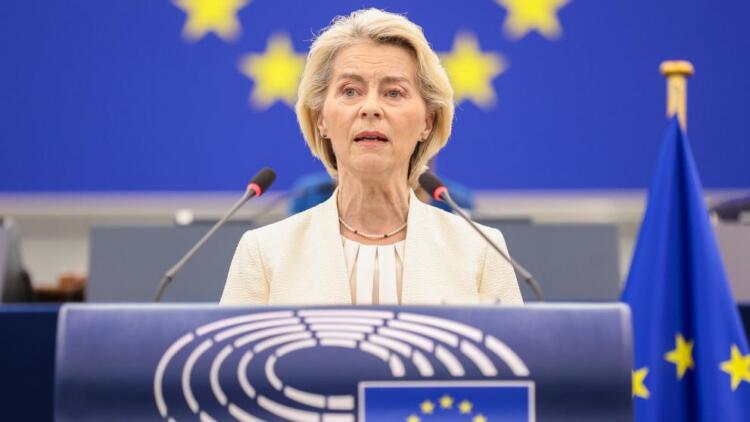
The externalisation of the European Union’s (EU) borders has become one of the central priorities of European migration policy. Commission President Ursula von der Leyen’s 2026 State of the European Union address to the European Parliament confirmed this trend, which has been developing for years. Referring directly to the recent Ceuta migration crisis of July 2026, von der Leyen emphasized the need for full implementation of the Pact on Migration and Asylum and deeper collaboration with third-partner countries. This strategy relies heavily on the intention of strengthening Frontex, the European Border and Coast Guard Agency, expediting returns, establishing “return hubs” outside the EU, and adopting a new European Emergency Response Framework to address exceptional situations involving mass migrant movements that are “engineered and weaponised” against the EU’s external borders. Additionally, Von der Leyen cited a 55% decrease in irregular migration in 2024 and 2025, in support of this approach, claiming that the EU is “on the right path”. However, the EU’s increasing reliance on externalised border control has also raised concerns about whether the reduction of irregular arrivals can be achieved without forgetting the human, legal, and geopolitical costs of migration management onto third countries.
The fight against illicit trafficking and smuggling networks is central to the Commission’s justification for externalising border control. According to the European Commission, over 90% of irregular arrivals to the EU are facilitated by smuggling operations, which they claim deprives sovereign member states of control over their borders. To address this dynamic, the Commission launched the Call to Action for a Global Alliance to Counter Migrant Smuggling in 2023, alongside new legislation to strengthen Europol and counter facilitation networks. Cooperation with and funding of enforcement in third-countries is mainly presented as a humanitarian necessity, with the aim of dismantling the criminal networks before individuals embark on hazardous journeys.
The current framework is the culmination of a decade-long strategy that began with the EU-Turkey migration agreement, signed in 2016. This agreement led to a reduction of 90% in the number of irregular arrivals to Europe via the Eastern Mediterranean, in exchange for financial aid to Turkey. This model established a blueprint for further externalisation, which was quickly adopted by EU Member States, through signing bilateral agreements with third countries. In 2017, Italy signed a self-renewing memorandum of understanding with Libya to intercept departures, which was reinforced by providing funding, equipment, and training to the Libyan Coast Guard to manage maritime and border security. In 2023, the EU signed a migration agreement with Tunisia and a cooperation programme with Morocco, followed by agreements with Egypt and Mauritania in 2024.
Beyond funding third-country enforcement, this strategy has also expanded to include the offshoring of asylum processing. A 2018 European Council proposal to establish regional disembarkation hubs in non-EU countries for migrants rescued at sea was initially stalled due to legal constraints. However, the concept resurfaced at a national level in 2023, when Italy signed an agreement with Albania to create two hubs within Albanian territory. Although the agreement is currently facing legal challenges in both Italian courts and the EU Court of Justice, it signals the trajectory of this approach. It underscores the growing, long-term European effort to manage and deter migrants and refugees before they set foot on EU territory.
Frontex plays a significant role in implementing the EU’s externalisation policies. Its mandate and operational reach have expanded over time, pushing its influence beyond Europe’s territorial borders. According to Frontex, the effectiveness of this mechanism is measured almost entirely through data, while linking the decrease in crossing to the cooperation with third-countries. By framing border management primarily around statistics, Frontex uses these declining figures to justify its growing international presence and ongoing operational expansion.
The humanitarian sector has strongly criticised the European strategy of externalising borders, arguing that it does not stop migration, but merely makes it more dangerous and facilitates human rights violations. The Office for the High Commissioner of Human Rights (OHCHR) documented violent behaviour by the Libyan Coast Guard which forcibly sends migrants and refugees back to Libya even though they are likely to face torture, rape and even death there. Many people end up in detention centres controlled by criminal organisations perpetuating the human trafficking cycle. Additionally, a 2025 Human Rights Watch report analysed how Mauritania has committed repeated and serious human rights violations against asylum seekers and migrants between 2020 and 2025. The EU’s financial assistance contributed to the expansion and fortification of third countries’ migration control apparatus, also thanks to Frontex cooperation. This has led to concerns being raised by various human rights associations about the EU’s potential liability for these violations of human rights.
Externalisation further introduces significant geopolitical vulnerabilities by creating a structural dependency on partner states. Delegating border control confers diplomatic leverage on third-country governments, allowing them to use migration flows as a bargaining tool, a dynamic von der Leyen addressed directly in her speech on 16 September 2026. This is a challenge that European policymakers are already confronting and will increasingly have to manage in the coming years, as they seek strategies that safeguard the EU’s security without leaving its borders exposed to external political pressure.
As the EU moves into this era of migration control, outsourcing border management remains its primary strategy. EU leaders see funding third-country enforcement as a necessary measure to protect the internal Schengen free-movement zone and manage domestic political pressure. However, NGOs and human rights defenders warn that this approach could come at a very high cost. Together with the implementation of its policies, the EU has to face an unresolved dilemma between securing its frontiers and preserving its foundational human rights values.