
By Daniel Tesfa, Shim Masha and Filmon Gebremikael
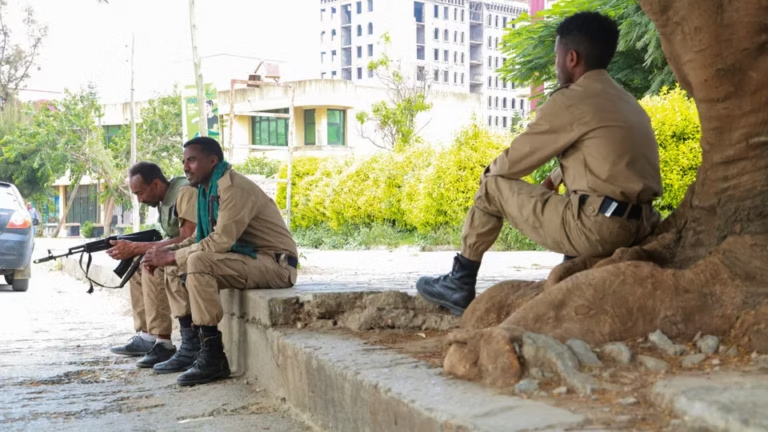
Addis Ababa | Ethiopia | 30 September 2026 (IDN) — Drone warfare reshapes Ethiopia–Tigray’s battlefield, while civilians relive the devastation of past wars.
From Pretoria to Renewed War
The Pretoria Agreement of November 2022, formally known as the Cessation of Hostilities Agreement (CoHA), was intended to end Ethiopia’s devastating Tigray war. Yet implementation faltered almost immediately. Internally displaced persons (IDPs) never returned to Western Tigray, which remained under the control of Amhara Fano militias, ENDF‑affiliated Tekeze Zeb units, and Eritrean forces. Large swathes of Eastern, Central, and Northwestern Tigray continued to be occupied by the Eritrean Army, undermining the credibility of the peace deal.
In response, the TPLF leadership entered into the “Ximdo” alignment with Eritrea, a fragile arrangement that paradoxically extended Eritrea’s authoritarian influence into Tigray. This was accompanied by forced military mobilisation of Tigrayan youth, echoing Eritrea’s notorious Sawa conscription system. The result was a militarised society under duress, with young men and women pressed into service amid deep social exhaustion, while many other youth sought escape by fleeing Tigray. This dual reality, forced conscription at home and mass flight abroad, underscored the collapse of social cohesion and the desperation of a generation caught between authoritarian mobilisation and displacement.
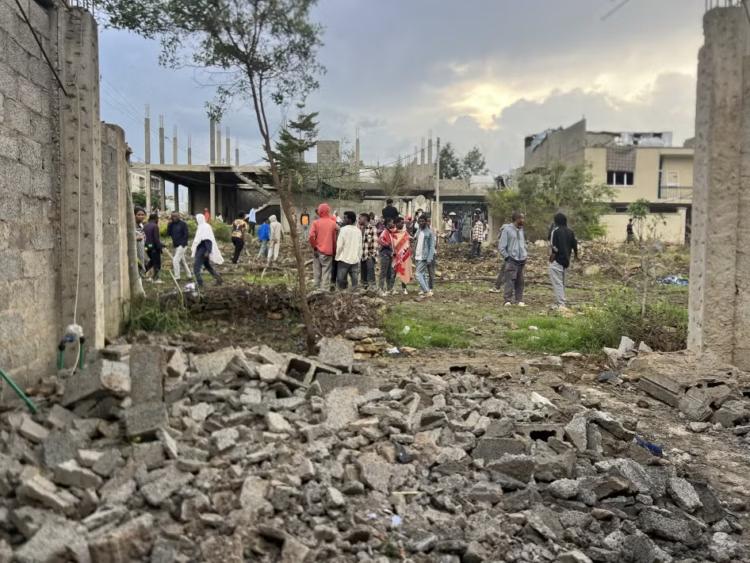
The drone and air strikes by the Ethiopian federal government which began recentely continued escalated in September 2026, targeting civilians, militants and various facilities including schools, fuel depots, anti‑aircraft systems, and command centers. In retaliation, the TPLF seized airports in Mekelle, Axum, and Shire, cutting off telecommunications and internet systems in Tigray.
The war spread rapidly. The Ethiopian National Defense Force forces retook Alamata in southern Tigray. The Alliance for Survival, a coalition of seven armed groups formed to overthrow Prime Minister Abiy Ahmed’s government, advanced in Afar, capturing Abala and Erebti and threatening Ethiopia’s trade corridor to Djibouti. In the Amhara region, clashes erupted in Lalibela, Sekota, and Raya Kobo that claimed the lives of civilians including six people of the same family killed in Selen Weha and many people killed by strikes in Alamata. Meanwhile, the Afar Regional State stated that the Eritrean Defense Force is involved in the ongoing war and occupied three zones in the region.
This escalation underscores the centrality of drone warfare in shaping battlefield outcomes. The following leaked conversations between TPLF commanders reveal the devastating impact of drone strikes on frontline units.
Translated Leaked Conversations among the TPLF Military Leaders
The recordings presented below were circulated on Facebook on 27–28 September 2026. The identities of the speakers indicated in the social media posts could not be independently verified. The translations are presented as rendered from the circulated recordings which were identified as TPLF military leaders by the Facebook page holders who circulated them as leaked call records.
Call 1: Colonel Gebregzabher Gebreselema (Ahferom), Army 22 Command Head, conversation with another unidentified TPLF fighter
Source Channel: Facebook
Source Facebook Page: Mezeker Abadi Zemo
Date of Dissemination: 27 September 2026
Source: https://www.facebook.com/share/r/1Jv9GWRjc7/
Length: 1 minute 11 seconds
Description: TPLF fighters’ Head of Army 22, Colonel Gebregzabher Gebreselema (Ahferom), call with another TPLF fighter. The phone conversation is translated as follows.
Another fighter: The drone has hit one car since I came here.
Colonel Gebregzabher Gebreselema (Ahferom): Are you sure?
Another fighter: Yes, that is right. Those who are under the command of Tsegay have been hit nine times. They are finished. Tell them to regroup those very few who survived.
Colonel Gebregzabher Gebreselema (Ahferom): Are these ours?
Another fighter: Yes, Tsegay’s command has been hit nine times.
Colonel Gebregzabher Gebreselema (Ahferom): Oh, what are you saying?
Another fighter: Nine times. Those who are alive are wounded.
Colonel Gebregzabher Gebreselema (Ahferom): Aha.
Another fighter: The few who are left alive have already gone over during the night.
Colonel Gebregzabher Gebreselema (Ahferom): Do you mean that they dispersed?
Another fighter: Yes.
Colonel Gebregzabher Gebreselema (Ahferom): What?
Another fighter: Yes, I am right. I swear in the name of St. Mary. It has already hit both of them, my son and Kiros.
Colonel Gebregzabher Gebreselema (Ahferom): Is Kiros wounded?
Another fighter: He is martyred [died].
Colonel Gebregzabher Gebreselema (Ahferom): Are you sure?
Another fighter: Yes, of course.
Call 2: Colonel Gebregzabher Gebreselema (Ahferom) conversation with another TPLF fighter referred as John in the call
Source Channel: Facebook
Source Facebook Page: Mezeker Abadi Zemo
Date of Dissemination: 28 September 2026
Length: 31 seconds
Source Link: https://www.facebook.com/share/v/1BsizXUVsR/
Description: TPLF fighters’ Head of Army 22, Colonel Gebregzabher Gebreselema (Ahferom), call with another TPLF fighter named over the call as John. The phone conversation is translated as follows.
A sound of a call begins
Colonel Gebregzabher Gebreselema (Ahferom): John
John: Yes
Colonel Gebregzabher Gebreselema (Ahferom): Mebratu
John: Who is Mebrahtu?
Colonel Gebregzabher Gebreselema (Ahferom): Mebrahtu Agazi
John: Yes
Colonel Gebregzabher Gebreselema (Ahferom): He is also hit.
John: It hit him as well?
Colonel Gebregzabher Gebreselema (Ahferom): Yes, it hit, it hit him.
John: Are you sure?
Colonel Gebregzabher Gebreselema (Ahferom): Yes, he has faced shrapnel injuries. There are also five or more who have been hit from his team relying on the attacked comrades that the team has been able to identify so far.
John: Yes
Colonel Gebregzabher Gebreselema (Ahferom): From our team, around five or six are hit.
Call 3: Colonel Fiseha Beyene (Werki Aynu), Army 11 Command Head, with another unidentified TPLF fighter
Source Channel: Facebook
Source Facebook Page: Mezeker Abadi Zemo
Date of Dissemination: 28 September 2026
Source: https://www.facebook.com/share/v/1DXMfiYsuq/
Length: 1 minute and 7 seconds
Description: TPLF fighters’ Head of Army 11, Colonel Fiseha Beyene (aka Werki Aynu), calls with another TPLF fighter. The phone conversation is translated as follows.
Another TPLF fighter: How are you doing?
Colonel Fiseha Beyene (aka Werki Aynu): Oh, today was so tense, my friend. It has become harsh. We are not able to make a move at all.
Another TPLF fighter: What happened to Ahferom’s army?
Colonel Fiseha Beyene (aka Werki Aynu): No, I didn’t meet him. I was around you here. I don’t know.
Another TPLF fighter: Pardon me?
Colonel Fiseha Beyene (aka Werki Aynu): I wasn’t able to contact him.
Another TPLF fighter: Oh, they told me that the two Core have returned to Zata. That is very far from here. It has a difference of six days of travel.
Colonel Fiseha Beyene (aka Werki Aynu): Ah, I don’t get it at all.
Another TPLF fighter: What happened? Did the Cores defy him?
Colonel Fiseha Beyene (aka Werki Aynu): I have checked that he is back. I met him later on.
Another TPLF fighter: Okay
Colonel Fiseha Beyene (aka Werki Aynu): There are various problems among many of us.
Another TPLF fighter: Yes, there is no doubt about it. We are facing many difficulties [internally]. But what amazed me is that it is both the Cores that are back now. I understand that we internally have many problems that we should have resolved before starting this task [war]. Okay bye, be brave. Be brave
What these Conversations Reveal
The leaked conversations between senior TPLF commanders provide a rare glimpse into the realities of the battlefield. They reveal the devastating impact of drone warfare on the cohesion and morale of TPLF units. Colonel Gebregzabher Gebreselema’s exchanges show disbelief and shock at the scale of losses, with repeated references to “nine strikes” and the death of comrades. His inability to maintain communication with dispersed units underscores the vulnerability of ground forces under sustained aerial assault.
The second conversation of Colonel Gebregzabher with a fighter named John, highlights the indiscriminate nature of drone shrapnel injuries, affecting a significant number of fighters of his team. This illustrates how drone warfare is not limited to strategic targets but systematically erodes the fighting capacity of entire units.
The third conversation, involving Colonel Fiseha Beyene, reveals deeper fractures within the TDF. References to “Cores” returning and unresolved internal problems suggest divisions among the backbone forces of the TPLF. The commander’s admission that “we are not able to make a move at all” reflects paralysis in the face of overwhelming aerial dominance. Together, these conversations portray a force under siege, struggling to maintain cohesion, morale, and operational capacity. They also highlight the human dimension of war, commanders grappling with the loss of comrades, the dispersal of units, and the erosion of trust within their ranks. In essence, the conversations confirm that drone warfare has become the defining feature of Ethiopia’s renewed conflict, reshaping the battlefield and exposing the fragility of insurgent structures.
Another War after 2020-2022: A Cycle of Crisis
The new developments echo the devastation of the 2020–2022 Tigray war, when civilians bore the brunt of violence. That war left 600,000 people dead and millions displaced. Infrastructure was shattered with industrial-scale looting; water systems were destroyed, leaving millions without clean water; the energy grid collapsed, halting electricity‑dependent activities; and municipal governance was paralysed as records were erased and institutions dismantled.
Starvation was used as a weapon of war, with aid blockades leading to widespread famine. Refugee camps such as Hitsats were destroyed, leaving Eritrean refugees without protection, exposed to killing, refoulement and military conscription by the Eritrean army. Reports of massacres, sexual violence, denial of access to basic services and forced displacement underscored the systematic targeting of civilians.
Now, in 2026, Tigray faces another cycle of war, with civilians once again trapped between drone strikes, forced mobilisation, and territorial battles. Communications blackouts, banking shutdowns, and the systematic blocking of bank accounts belonging to Tigrayans across Ethiopia have compounded the trauma of the earlier war. These measures not only isolate communities inside Tigray but also marginalise Tigrayans living elsewhere in the country, cutting them off from financial lifelines and deepening their vulnerability. At the same time, renewed waves of displacement uproot families who had only begun to rebuild their lives after the 2020–2022 conflict.
The repetition of the crisis highlights the profound failure of peace implementation and the persistence of unresolved grievances that continue to fuel instability. What should have been a period of recovery has instead become another chapter of dispossession, where ordinary civilians are forced to relive the devastation of the past under new conditions of blockade, attack and deprivation. This repetition of suffering underscores that the crisis is not confined to battlefields but is lived daily in the anguish of communities, where survival itself becomes a struggle against both violence and deprivation.
Conclusion
The leaked conversations between TPLF commanders are stark testimony to the devastating role of drones in Ethiopia’s renewed war. They reveal not only battlefield losses but also the erosion of command cohesion and morale. More broadly, this resumed war illustrates how the failure to implement the Pretoria Agreement, particularly the non‑return of IDPs, the continued occupation of Tigray by Amhara Fano, Ethiopian and Eritrean forces, and the absence of accountability for wartime atrocities, has destined the region to another cycle of violence.
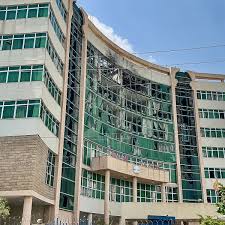
The broader context shows that drone warfare, the Alliance for Survival’s formation, the seizure of airports, communication blackout and the spread of fighting into Afar and Amhara are symbols of a deeper crisis: Ethiopia’s inability to resolve political grievances through dialogue. Drone warfare has tipped the balance in favour of the federal government, but at the cost of escalating civilian suffering. The leaked conversations highlight the human dimension of this war, commanders grappling with loss, confusion, and internal divisions.
The conversations between TPLF military leaders reveal more than battlefield losses; they expose the human cost of forced conscription. The repeated references to units being “finished” and comrades “martyred” point to the significant number of youth who were taken from the homes of their mothers and pressed into service against their will. These young conscripts, often barely trained, were fed directly into the line of drone fire, becoming casualties in a war they did not choose.
Behind every commander’s voice of disbelief lies the echo of countless mothers’ cries, mourning children who were mobilised under coercion and then lost to relentless aerial bombardment. The anguish of these families underscores that war is not only fought on battlefields but lived in the suffering of communities, where the grief of mothers and the silencing of youth futures become the hidden frontlines of conflict. The voices of commanders under fire remind us that this war is not simply a military confrontation but a humanitarian tragedy, one that devastates households and erodes the very social fabric of Tigray and Ethiopia in-general.
These all show Ethiopia stands at a crossroads as the cycle of war in Tigray demonstrates that military solutions cannot substitute for political settlement and accountability. Without genuine implementation of peace agreements, withdrawal of foreign forces, and restoration of civilian rights, the region risks perpetual instability. Breaking the cycle requires more than drones and offensives; it demands accountability, reconciliation, and a commitment to peace that has so far been absent. [IDN-InDepthNews]