
By Jonathan Power
Editor’s Note: This commentary was first published three years ago. It is being republished because British-American filmmaker Christopher Nolan has recently released The Odyssey to widespread acclaim, while also attracting criticism over its historical inaccuracies. In this essay, Jonathan Power revisits what he believes Nolan missed—or chose to avoid—in his Oscar-winning film Oppenheimer, which chronicles the creation of the atomic bomb that devastated Hiroshima.
LUND, Sweden | 29 July 2026 (IDN) — Yes, one can blame Japan’s wartime leadership for persisting with the war when the evidence was overwhelming that Japan, along with Germany, had already lost the Second World War.
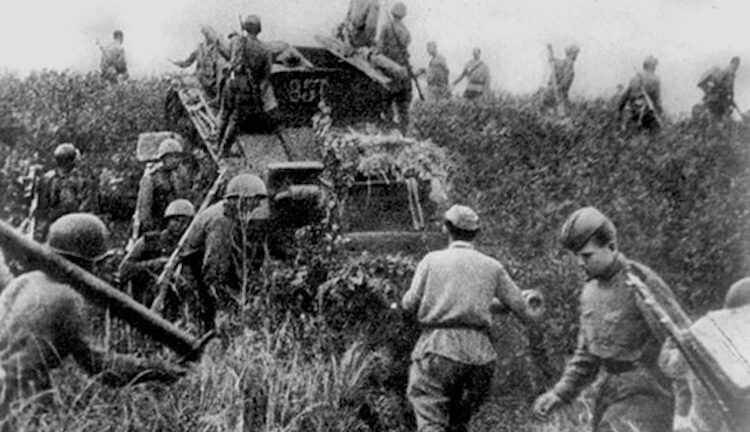
But one can also blame the United States for using the atomic bomb on Hiroshima and Nagasaki when it knew the Allies already had Japan on its knees. No knockout blow was needed. America’s wartime ally, the Soviet Union, was rapidly invading Japanese-held territory from the north.
The events of 1945 were the product of two forces: Japanese pig-headed militarism and American realpolitik.
The atomic bombing of Hiroshima and Nagasaki has long been justified by successive American administrations as an unavoidable step, taken only because there was no other way to force Japan’s surrender and save the lives of hundreds of thousands of American troops. Christopher Nolan’s Oppenheimer does not challenge this interpretation.
Yet the historical evidence suggests otherwise.
What Forced Japan to Surrender?
Documents that have since emerged from Japanese and Soviet archives indicate that the atomic bombings were not the decisive factor in persuading Japan to capitulate.
Japan’s emperor and military leadership were informed of the destruction of Hiroshima, but the bombing did not immediately alter their determination to continue fighting.
The Soviet Union’s entry into the war did.
Without the Soviet invasion, Japan would likely have continued fighting until additional atomic bombs had been dropped, a full-scale American invasion of the home islands had begun, and sustained aerial bombardment and naval blockade had taken an even greater toll.
President Harry Truman, however, had another option.
Rather than relying on nuclear weapons, he could have cooperated with Joseph Stalin in the same manner that Franklin Roosevelt and Winston Churchill had coordinated military strategy on the Western Front.
The Shock of the Soviet Offensive
When the Red Army invaded Manchuria, Japan’s political leadership was caught completely by surprise.
The offensive shattered Tokyo’s strategic calculations. Japanese leaders realised that, unless they surrendered quickly, the Soviet Union would occupy Manchuria, southern Sakhalin, the Kuril Islands, much of Korea and perhaps advance even farther south.
Unlike the Western Allies, the Japanese believed that once Soviet forces occupied territory, they would never leave—as events in Berlin and eastern Germany would later demonstrate.
More importantly, continued resistance would almost certainly have forced President Truman to accept Soviet participation in the occupation of Japan itself.
That prospect—not the atomic bomb—became the decisive factor behind Japan’s surrender.
Conventional Bombing Had Already Devastated Japan
By the summer of 1945, conventional American bombing had already reduced much of urban Japan to ruins.
Sixty-six Japanese cities were attacked. Typical raids involving some 500 bombers delivered approximately five kilotons of explosives.
The Hiroshima bomb, devastating though it was, produced an explosive force equivalent to roughly sixteen kilotons—only about three times the destructive power of a standard conventional raid.
Neither conventional nor nuclear bombing fundamentally altered the thinking of Japan’s military leadership.
Following Hiroshima on 6 August, Japan’s Supreme Council did not convene until two days later.
By contrast, when the Soviet Union declared war on 9 August, news reached Tokyo by 4:30 a.m., and the Supreme Council assembled by 10:30 that same morning.
Emperor Hirohito’s reactions tell a similar story.
After Hiroshima, he merely requested “more details.”
Following the Soviet invasion, however, he immediately summoned Lord Privy Seal Koichi Kido and declared:
“In the light of the Soviet entry… it is all the more urgent to find a means to end the war.”
Saving Face—and Creating a Myth
After the war, Koichi Kido offered a revealing explanation.
“If military leaders could convince themselves they were defeated by the power of science rather than by lack of spiritual power or strategic errors,” he observed, “they could save face.”
The United States was equally willing to encourage that interpretation.
If the atomic bomb alone had defeated Japan, America could claim sole credit for ending the war while simultaneously demonstrating overwhelming military supremacy to the rest of the world.
The resulting narrative became one of the defining political myths of the post-war era.
Time to Revisit History
Before the last generation that experienced the war disappears, Japan should insist on a fuller and more honest account of Hiroshima and Nagasaki.
Christopher Nolan’s Oppenheimer, now viewed by audiences around the world, offers an opportunity—but also a challenge.
A new generation of Japanese citizens is learning about the atomic bombings without being presented with the wider historical and geopolitical context in which they occurred.
That context deserves to be understood.
Only then can a nation still haunted by those events move closer to peace with its own history.
Opening the Archives
The United States, too, has unfinished business.
It is time to open the archives completely and tell the public the full story.
If Americans understood how they were misled by President Harry Truman—who argued that he had no hesitation in using the bomb whenever it appeared necessary to win a war—they might look differently at nuclear weapons and at the danger of their future use.
They might also be more inclined to support political leaders genuinely committed to rapid nuclear disarmament. [IDN-InDepthNews]
Copyright © Jonathan Power