
By Daniel Tesfa, Shim Masha, Bereket Tsegay, Kristína Melicherová, Makeda Saba, Filmon Gebremikael and Mirjam van Reisen | MEKELLE, Ethiopia | 11 June 2026 (IDN) — New routes evolving human trafficking for ransom are emerging following the signing of the cease-fire agreement between Tigray and the national government of Ethiopia, involving refugees fleeing Eritrea.
Mekelle, Tigray Region, Ethiopia – Seventeen-year-old Senait Yibrah should be in school.
For more than two months, she has remained inside the Gerhu Sirnay Police Station in Egela Wereda, waiting to testify against the people accused of trafficking her from Eritrea into Ethiopia.
The irony is not lost on her.
The teenager, who fled Eritrea hoping to find safety and eventually continue her journey abroad, remains confined inside a police station while the man she was asked to testify against has been released on bail.
“I don’t deserve to be forced to stay in this police office for two months to give testimony while the person accused of smuggling and human trafficking is released,” she said.
A few rooms away, another Eritrean refugee, 18-year-old “Mesele Birhane” (name changed), is waiting for the same court process.
Like Senait, Mesele came from Dekemhare in Eritrea.
Like Senait, he was intercepted in Egela after being moved through a trafficking network operating between Eritrea and Ethiopia.
Like Senait, he remains under police protection while awaiting court proceedings against the individuals accused of exploiting him.
Their stories expose more than isolated criminal acts.
All names have been changed for security reasons. The authors conducted, translated and analysed the material collected. Our team conducted interviews and observations in Adigrat and Fatsi in Eastern zone of Tigray; Adwa, Egela, Enticho and Rama in Central zone; Adi Daero, Adi Nebried, Adi Hageray, Sheraro and Shimbelina and Shire located in the Northwestern zone of Tigray. While the field data collection was conducted between February and March 2025, the authors have confirmed from their sources that the human trafficking patterns are still prevalent in Tigray.
Interviews conducted with survivors, law enforcement officials, refugee communities, humanitarian workers, and judges suggest that human trafficking in post-war Tigray has evolved into a highly organised business ecosystem involving recruiters, transporters, document brokers, ransom collectors, armed escorts, and facilitators operating across multiple jurisdictions.
According to survivors, trafficking today functions less as a series of disconnected crimes and more as a transnational commercial enterprise.
When interviewed at the Gerhu Sirnay Police Station in Egela Wereda, where Senait Yibrah was being held as a witness for an ongoing court case, the former Grade 9 student from Dekemhare Secondary School in Eritrea described a journey that began with hope and ended in captivity.
“There was a man from our village living in Addis Abeba,” she recalled. “He selected a mobiliser and told him to convince as many young people as possible to leave Eritrea.”
The mobiliser was someone she knew through friends.
Like many Eritrean teenagers, Senait lived under the constant fear of recruitment in indefinite military conscription.
Eventually, she decided to leave.
A group of young Eritreans gathered at a mountain south of Dekemhare and began moving towards Ethiopia under the cover of darkness.
They travelled only at night and hid during the day. After three days, they reached the border.
What happened next follows a pattern that appears repeatedly in survivor testimonies collected across Tigray.
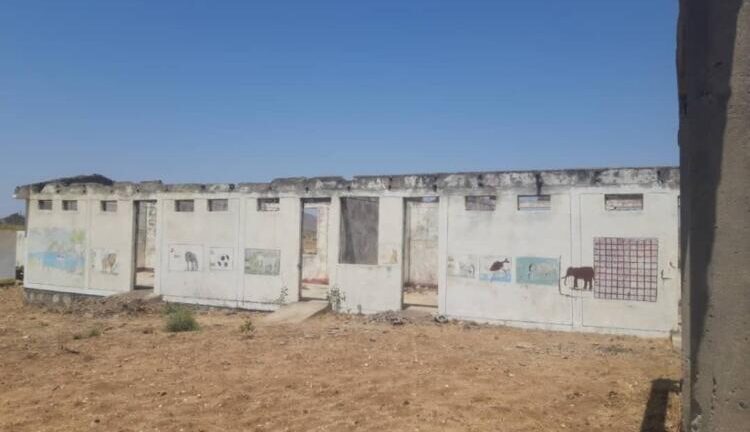
An Eritrean smuggler handed the group over to a Tigrayan counterpart. The refugees were transported to a ruined house near Egela.
Then the extortion of money began.
The traffickers contacted Senait’s family and informed them that their daughter had been abducted. The price for her release was US$5,000.
As a police force in Tigray, where Senait and Mesele were held, started firing bullets attempting to encircle the house, the traffickers and their respective guards escaped through the backyard.
It is now months later, and Senait and Mesele remain trapped in a different kind of captivity. Both now wait inside Egela Wereda Police Station while court proceedings move slowly through the justice system.
Their stories reveal a disturbing reality emerging in post-war northern Ethiopia: human trafficking has evolved into a sophisticated business model that transforms vulnerable refugees into sources of profit.
From Refugee Route to Trafficking Corridor
The war in Tigray devastated refugee protection systems that had previously provided a measure of security for Eritreans fleeing repression.
The destruction of refugee camps, large-scale displacement, weakened institutions and continuing insecurity created conditions in which trafficking networks could flourish.
Field research conducted across Adigrat, Adwa, Egela, Enticho, Rama, Sheraro, Shimbelina, and Shire identified multiple trafficking corridors linking Eritrea to Addis Abeba through Tigray. The routes are remarkably structured and consistent.
One common route begins in Dekemhare and other Eritrean towns, crosses through border areas near Rama, Dawhan, Fatsi or Egela, and proceeds through Adigrat, Adwa, Axum or Mekelle before reaching Addis Abeba. Others pass through Sheraro, Adi Daero, and Adi Kokob before connecting to larger trafficking networks operating toward Shire and, eventually, Addis Abeba.
The routes resemble supply chains rather than spontaneous migration journeys.
The modus operandi is as follows: Recruiters identify potential victims; mobilisers persuade them to leave; cross-border guides move them through Eritrea; local transporters receive them inside Ethiopia; guards secure detention sites; collectors manage ransom payments; document brokers prepare travel papers; further facilitators arrange transportation to Addis Abeba and each participant earns a share.
The Price of a Human Life
Survivor testimonies indicate that ransom payments have become one of the most lucrative components of the trafficking economy. The field research conducted in northern Ethiopia documented ransom demands ranging from US$3,500 to US$7,000. In one case, a family reportedly paid approximately 1.2 million Ethiopian Birr, equivalent to roughly US$7,500.
The amount depends on the victim’s perceived economic value. Families with relatives in Europe, North America or the Gulf States are often expected to pay more. This is consistent with human trafficking for ransom patterns.
Victims are detained until payment is secured. Some survivors reported physical abuse, sexual violence, torture and confinement during the process. Others described threats of being returned to Eritrean authorities if ransom was not paid.
For traffickers, refugees are no longer merely migrants. They are revenue-generating assets.
Follow the Money
The trafficking system depends on the movement of money as much as the movement of people.
According to survivor testimonies and law enforcement practitioners interviewed during fieldwork, payments frequently move through a combination of bank transfers, informal money transfer systems and intermediaries operating across multiple countries.
Families receive instructions regarding where money should be deposited and who should collect it.
Several interviewees described situations in which payments were fragmented among multiple recipients to reduce scrutiny and conceal the identities of organisers.
Researchers investigating trafficking networks increasingly describe the system as a transnational financial enterprise built around ransom extraction.
The refugee is the collateral. The family collects the payment. The trafficking organisation is the beneficiary.
Allegations of Protection and Facilitation
Multiple survivor testimonies collected during fieldwork described alleged collaboration between traffickers and individuals occupying positions of authority.
Interviewees alleged that certain local administrators facilitated access to Tigrayan identity cards that could be used for onward travel to Addis Abeba.
Others described instances in which traffickers appeared to move through checkpoints with unusual ease.
Several survivors alleged that armed actors provided protection to trafficking operations or guarded detention sites where victims were held. The consistency of such accounts across multiple locations raises serious questions about the environment in which trafficking networks operate.
Judges interviewed argue that large-scale trafficking has flourished as a result of local accommodation, whether through corruption, intimidation, complicity or institutional weakness.
The Business of Moving People
The journeys described by Eritrean minors and youth are part of an increasingly organized trafficking economy operating across the Eritrea–Ethiopia border.
An interview conducted with a senior police officer in the Central zone of Tigray, suggests that human trafficking has become both highly structured and highly profitable in the post-war period.
According to the officer, who requested anonymity because of the sensitivity of the issue, said “Based on my observation, one smuggler collects and transports a minimum of 8-15 and a maximum of 51-70 Eritreans crossing the border on a daily basis” in the Eritrea-Egela routes.
The scale described by the officer suggests that human trafficking in northern Ethiopia appears to function as a sophisticated cross-border enterprise that profits from conflict, displacement, weak protection systems and the continuing desire of young people to escape insecurity and limited opportunities.
When Protectors Become Facilitators
Human trafficking networks along the Eritrea–Ethiopia corridor do not operate solely through civilian smugglers. According to a lawyer in eastern Tigray who has represented and monitored cases involving Eritrean refugees, some members of security institutions have become part of the trafficking ecosystem itself.
A lawyer in the Eastern zone of Tigray recounted a case that illustrates how vulnerable Eritrean minors can become after crossing the border into Ethiopia. According to the lawyer, several Eritrean teenagers aged between 15 and 17 were intercepted by Tigray Defense Force shortly after entering the country. Instead of being transferred to refugee protection mechanisms or legal procedures, the youths were reportedly held captive in a hotel.
When concerns were raised about their situation, those detaining them insisted that they were not being trafficked but were merely undergoing screening. As the lawyer recalled, the armed actors claimed that they would release the children after “asking them some security questions.”
The teenagers remained in captivity for three days. By the time the lawyer followed up on the case, the youths had already been transported to Addis Ababa through informal channels. When questioned about how they secured their release, the teenagers reportedly explained that their families abroad had “paid approximately USD 1,000” for each to the Tigray Defense Force members for their onward movement from Adigrat to Mekelle.
In another, a 15-year-old Eritrean boy from Senafe was allegedly handed over to senior security personnel in Adigrat, detained in a hotel and later transported to Addis Ababa through informal networks.
For the lawyer, the incident raised serious concerns about the misuse of security procedures to facilitate trafficking. He argued that some vulnerable refugees, particularly undocumented minors, are detained outside formal legal processes and then required to pay for documentation, release or transportation. “Military personnel exploit national security issues to disguise their involvement in human trafficking,” he added, noting that the youths were not processed through legal refugee procedures but instead moved through informal networks after payment was made.
According to the lawyer, payments for such movements were deposited into bank accounts and subsequently distributed among multiple actors, including individuals linked to security structures.
He argued that weak refugee protection mechanisms, combined with poor border oversight and economic hardship in the post-war period, have created conditions in which some military and security personnel exploit national security responsibilities to conceal trafficking activities. The result is a system in which vulnerable refugees struggle to distinguish between those assigned to protect them and those seeking to profit from their movement.
A Post-War Economy of Exploitation
The trafficking networks emerging across northern Ethiopia bear the characteristics of what researchers describe as conflict-enabled criminal economies.
The war disrupted governance structures. It displaced populations. It weakened protection systems. It expanded opportunities for illicit actors. The trafficking organisation adapted quickly.
The same routes once used for military movement, displacement and smuggling became channels for trafficking. The same insecurity that forced Eritreans to flee became a resource for criminal entrepreneurs.
The result is a trafficking economy that feeds on instability.
The traffickers who allegedly organised their journeys remain largely protected rather than questioned by the system in Tigray.
The overall organisation continues to operate. New refugees continue crossing the border. New ransom demands continue being issued. And new victims continue entering the system.
A Criminal Ecosystem
The trafficking of Eritrean refugees in post-war Tigray is often presented as a humanitarian problem.
It is also a governance problem. It is a protection problem. It is a criminal justice problem. Increasingly, it is a criminal economic system.
The evidence emerging from Tigray suggests that trafficking has become embedded within a wider ecosystem of brokers, facilitators, recruiters, transporters and financial intermediaries who seek criminal gains.
But for Senait and Mesele and their families, the situation is deeply personal and consequential. Senait and Mesele occupy a space combining being a victim, witness and refugee. Despite the misery, they pray and keep hoping that their situation will resolve at some point in the future. Above all, they both hope that they will be able to find a place where they can finish school.