
By Kalinga Seneviratne
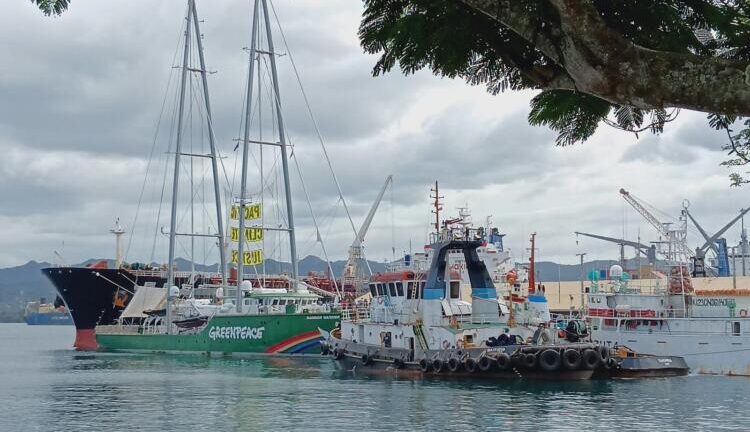
SYDNEY, Australia | 9 June 2026 (IDN) — At the Foreign Ministers’ meeting of the QUAD (Quadrilateral Security Dialogue) in New Delhi late May, a grand “aid” scheme to develop ports in the South Pacific was announced, starting with the Fiji Islands.
As QUAD looks for relevance in an environment in Asia where there is widespread sentiments across the region that it needs to protect itself from the US and their allies’ imperial ambitions, the militarist stance of the grouping projecting itself as an Asian NATO to contain China, has now given away to a development assistance focus, reflecting very much the principles behind China’s Belt and Road Initiative (BRI), a project the media in the QUAD member countries have smeared as a “debt trap” since its launch in 2013.
In the past decade, China has expanded its development assistance to the Pacific island countries, for whom port access is a major issue. China has built or redeveloped ports in the Solomon Islands, Tonga, Nauru, and Kiribati.
Fiji has been wooing China since 2023 to develop its ports. This offer by QUAD, without an official request from Fiji, is seen as a counter to this move.
Hysteric Reactions
This is not a new policy for QUAD member Australia. In late 2020, when a Chinese company (Fujian Zhonghong Fishery) signed a Memorandum of Understanding (MOU) with the Papua New Guinea (PNG) government to build a $200 million “multi-functional fishery industrial park” in Daru, which is about 200 nautical km from Australia’s northern coast, there was hysteric reactions in the Australian media and defense fraternity, projecting this as a Chinese plot to build a naval base on Australia’s doorstep.
Through the Australian Infrastructure Financing Facility for the Pacific (AIFFP), Australia stepped in offering to fund the upgrade of the Daru Port, in the impoverished Western Province of PNG, “into a fit-for-purpose, sustainable green port facility”. This was included in an AUD 95 million PNG port development project, announced by Australian Foreign Minister Penny Wong in February 2025, which involves upgrading 4 PNG ports.
Though this upgrading project was due to end at the end of 2026, it is not clear if work in Daru has begun. PNG has a history of announcing foreign joint-venture projects that do not go beyond the planning stage, and China’s Daru project is one of them.
In March 2023, the Solomon Islands government awarded a multi-million-dollar contract, via a competitive tender, to the Chinese state-owned China Civil Engineering Construction Company to upgrade an international port in Honiara, a project funded by the Asian Development Bank[1]. The United States and its allies, including Australia and Japan, immediately expressed concerns that the harbour would become China’s first South Pacific naval base because the Solomon Islands struck a security pact with Beijing a year earlier.
Meanwhile, Fiji Port’s acting chief executive, Suresh Prasad, has told the AFP news agency that the QUAD announcement came as a “surprise” to him. But, he has expressed hope that the QUAD initiative will support a long-standing project to relocate the Suva Port at a cost of about $1.8 billion.
Suva Port is a strategically important hub for the entire Pacific region. It also includes Fiji’s naval base and has hosted visits by China’s Yuan Wang 7, a space- and missile-tracking vessel. About 100 Chinese fishing vessels operate in the Pacific out of the Suva port.
U.S. and Australia Keen to Counter China in Fiji
Fiji’s Prime Minister Sitiveni Rabuka has discussed Chinese assistance to modernise his country’s ports and shipbuilding industry during a meeting with China’s President Xi Jinping in Beijing in 2023, and it was followed by a 10-day state visit to China in August 2024, when he visited the city of Xiamen, where he toured the Silk Road Maritime Management Centre and the state-of-the-art Xiamen port. During this tour, he discussed potential partnerships with Beijing regarding port modernisation.
Since then, the US and Australia have been busy hatching an alternative plan, with Australia’s foreign minister, Penny Wong, visiting Fiji several times, including just before the QUAD meeting. US Deputy Secretary of State Christopher Landau visited Fiji in February this year, meeting Fiji Port officials, and additional US officials visited Fiji in April to discuss possible infrastructure funding.
During Landau’s visit, Fiji and the US signed a ‘Compact Development Funding Agreement’ under which the US government-supported Millennium Challenge Corporation (MCC) will develop a compact program for infrastructure development. Fiji was selected by MCC’s Board in August 2025 to develop the program.
The MCC has attracted controversy worldwide, particularly in Asia, because its performance-based grants often intertwine with US geopolitical strategy and require recipient nations to surrender sovereign domestic authority over specific projects. The MCC is frequently viewed as a tool of US soft power designed to counter the economic influence of China’s BRI.
In 2017, a $500 million grant to Nepal to help reduce electricity and transport costs led to years of parliamentary gridlock and massive street protests by leftist and anti-imperialist groups. In 2019, a major issue in Sri Lanka’s presidential campaign was a planned agreement, negotiated in secret by the then-government, for a compact with MCC to map Sri Lanka’s farmland, which nationalist groups said would compromise Sri Lanka’s sovereignty.
“The Quad’s latest Fiji port announcement is being sold as development assistance. But to many in the Pacific it looks uncomfortably familiar: distant powers gathering behind closed doors, shaping regional futures and expecting island nations to accept decisions already made elsewhere,” argues Michael Field, Auckland-based editor of South Pacific Tides[2]. “Details are sparse, and it is still unclear how the Quad’s ‘first-ever joint infrastructure project’ maps onto the plans Fiji had been developing.”
Close on the heels of the QUAD announcement from New Delhi, Solomon Islands’ newly installed Prime Minister Mathew Wale flew into Canberra for a leaders’ meeting on June 3rd. Wale, who took power in a parliamentary coup in May, has been critical of his country’s defence agreement with China, and he announced in Canberra that it will be reviewed.
After China’s port development incursions into the South Pacific, Australia has sought to bind South Pacific countries closer by striking treaties with a string of small, but strategically located island states – Tuvalu, Nauru and PNG – offering significant economic support in return for curbs on Chinese development and security ties.
But, Field warns that with its “thin level of engagement” with Suva, the QUAD project looks more like “turning Fiji into a quasi-QUAD maritime base”, which they don’t want China to do in the region. [IDN-InDepthNews]
[1] https://www.maritimeprofessional.com/news/china-firm-wins-solomon-islands-383789
[2] https://devpolicy.org/the-quad-meets-fiji-waits-outside/