
By Daniel Tesfa, Filmon Gebremikael and Mirjam van Reisen
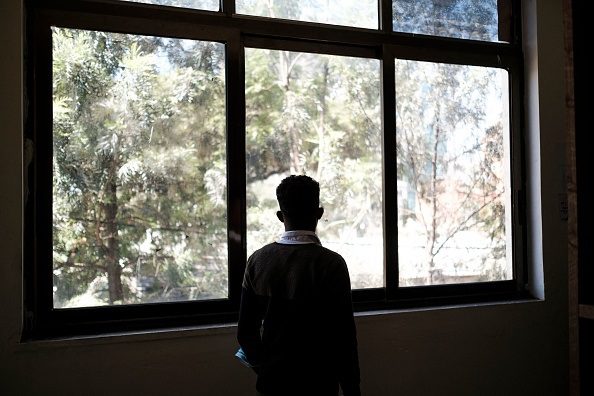
ADDIS ABEBA | Ethiopia | 30 September 2026 (IDN) – On 21 September 2026, police detained dozens of Tigrayans in Addis Abeba without charge. Among them was Haile Kiros* who recalls being denied food and even the dignity of using a bathroom regularly.
“They don’t treat us as humans…” Facing abuses Haile asked, “is being Tigrayan a curse in Ethiopia?”
His release came only after relatives mobilised ransom handed to a broker working with the police who detained him.
EEPA, Ethiopia Observer and Human Rights First–Ethiopia have documented similar cases of arbitrary detention, noting that detainees are often released only after ransom payments. These arrests are part of a wider cycle of coercion: youth fleeing forced military conscription in Tigray find themselves criminalised in the capital, while renewed war and regional instability deepen their vulnerability. This article traces those lived experiences, the systemic repression behind them, and the broader implications for Ethiopia and the Horn of Africa amid the outbreak of another cycle of war.
Testimonies from Addis Abeba detentions
In late September 2026, two young men from Tigray, Haile Kiros, a 32‑year‑old excavator operator, and Tsegay Hagos*, a 35‑year‑old driver, found themselves among the many Tigrayans suddenly rounded up by police in Addis Abeba, held for five days without explanation and released only after their families paid large sums of money.
Both men had recently fled Tigray to escape TPLF’s forced military conscription, only to find themselves trapped in another form of persecution. Haile recalls being arrested while heading to renew his driving license at Kaliti Driving and Mechanic Training Center. During his detention without any charge, he said:
“They don’t treat us as humans… one police told me, ‘አያገባኝም ሱሪህ ላይ ሽና’” [translated as I don’t care, you can urinate in your trouser].
Culturally, such an utterance is used to demean a person, like ‘you can’t do anything about it, as I have power over you. Thus, you should keep silent and beg for my mercy’. He was held at Gelan Condominium Police Station for five days, denied food and basic dignity, and released only after relatives mobilised 20,000 Ethiopian Birr in cash (equivalent to 112 Euro), handed to a broker working with police.
Tsegay’s account illustrates the systemic nature of these arrests and dire conditions. He describes overcrowded conditions: “We were 120 people in three rooms, 40 in each room, all Tigrayans.” He explained how brokers coordinated ransom payments, demanding cash only to avoid accountability, with relatives instructed not to use bank transfers or mobile banking.
“I feel that I am a second‑class citizen in Ethiopia. They can cause whatever harm to Tigrayans anytime they want.”
His release followed the same extortion process: relatives negotiated with brokers, who registered names, set ransom amounts based on perceived family wealth, and passed lists to police for coordinated releases. This system of extortion, described by detainees as institutionalised, mirrors findings in the EEPA situation report no 764 on 24 September 2026, which confirmed that detainees were released only after relatives paid cash to intermediaries, with police refusing traceable transactions to prevent complaints.
Both men emphasised that those without relatives in Addis Abeba remained detained, their fate unknown. Haile noted that detainees were forced to beg to the police to buy them a bread with the few coins they had. Tsegay describes the psychological toll of living in constant fear even after release. Their testimonies reveal that extrajudicial arrests are carried out – without any legal justification offered, detainees are held in degrading conditions, and families are coerced into paying bribes for release. The extortion system has become so entrenched that detainees share information among themselves about how to secure release, creating an illegal economy based on ransom payments, to the police officers involved.
Despite the difference in magnitude, the patterns of arrest resemble the context of arbitrary arrests of Tigrayans in Addis Abeba during the 2020-2022 Tigray war, with detainees often denied food, legal representation, or court appearances. The testimonies of Haile and Tsegay illustrate that the Tigrayan identity itself has become criminalised, with Tigrayans being targeted for who they are. As Haile concluded, “As long as I am Tigrayan, I still am vulnerable to another round of arrest.”
Patterns of arbitrary arrests
Haile Kiros and Tsegay Hagos described how police offered no explanation or legal justification for their detention, instead responding vaguely that they were “investigating.” Haile noted that no investigation ever took place during his five days he was detained, while Tsegay recalled being told by an officer:
“A colleague arrested you, and he has handed you all over to us to keep you here.”
Their accounts highlight a recurring theme: arrests carried out without charges, detainees held in degrading conditions, and eventual release contingent on ransom payments.
The extortion system described by the detainees appears to be coordinated. Tsegay explained that brokers worked directly with police, registering the names of detainees and setting ransom amounts based on perceived family wealth.
“They determine the amount of money after they study each detainee’s condition, whether the detainee has many wealthy families or relatives who can afford to pay a grand sum of money.”
Payments were demanded in cash only, with police warning relatives not to use bank transfers or mobile banking to prevent traceability. Once payments were made, brokers passed lists of names to police, who then notified detainees of their release.
The Ethiopia Observer published similar accounts, noting that detainees were released only after relatives paid ransom.
Haile noted that many remained in police detention because they had no relatives in Addis Abeba to mobilise money for ransom. “We don’t even know the whereabouts of those who were not yet released, as they don’t have any relative to mobilise money in Addis Abeba,” he said, raising fears that detainees could be transferred to military camps or be forcibly conscripted to the army.
Trapped between war and repression: Why Tigrayan youth fled to Addis Abeba
Both Haile Kiros and Tsegay Hagos explained that they left their homes not because of criminal activity but to escape the forced mobilisation campaigns in Tigray that intensified in 2026. Haile stated, “We left our families behind and came to save ourselves from the forced military conscription in Tigray.” His words echo the local testimonies on TPLF’s military mobilisation, where parents in Central and Eastern Tigray described selling livestock or property to send them to Addis Abeba to protect their children from recruitment. A father in Edaga Arbi, Central zone of Tigray, recounted, “We will no longer put our children into war… so you [the TPLF] can continue in power”. These accounts reveal a society caught between coercion and survival, where families made costly decisions to send youth to Addis Abeba in the hope of safety.
The mobilisation campaigns were not voluntary. Reports from Tigray documented the TPLF recruited children at the age of 15, with households ordered to contribute grain, cash, and food items alongside human recruits. For many families, the choice was stark: surrender children to military training centers or risk arrest themselves. This coercive environment pushed thousands of youth to flee, with Addis Abeba becoming a primary destination.
Haile and Tsegay’s testimonies illustrate the tragic irony of this flight. Seeking refuge from forced mobilisation, they found themselves targeted again, this time by police in the capital. Tsegay reflected on this cycle:
“It was due to the forced military conscription proclamation that we left Tigray. And now we are stuck in the middle of arrests of Tigrayans here in Addis Abeba.”
His words highlight the successive vulnerability of Tigrayan youth, caught between the threat of conscription in their home region and arbitrary detention in the capital.
The economic hardship of displacement compounds this vulnerability. Tsegay explained that he shared a single rented room with three roommates, unable to afford the 8,000 ETB (equivalent to 45 Euro) monthly rent alone. After his arrest, he remained indoors to avoid further detention, but this left him without income to buy necessities. “I am struggling between staying at home to avoid further arrest versus going out for work so that I can have a proper meal for the day,” he said.
The reigniting of war in Tigray
The arbitrary arrests of Tigrayans in Addis Abeba in September 2026 unfolded against the backdrop of a renewed war in northern Ethiopia. The Pretoria Agreement, signed in November 2022 to end hostilities, had promised disarmament, reintegration, and the return of displaced populations. Yet by mid‑2026, these commitments have collapsed. The interim administration in Tigray is contested, forced mobilisation campaigns have started, and the fragile peace has unravelled. As one TPLF official declared on Dimtsi Weyane television, “The people of Tigray have two choices now. It is either to perish or to fight and survive as a people”. This rhetoric of existential struggle from both sides sets the stage for renewed confrontation.
The failure to implement the Pretoria Cessation of Hostilities Agreement (CoHA) in November 2022 paved the way for Ethiopia’s renewed war in Tigray. While the accord promised disarmament, reintegration, and the withdrawal of foreign forces, none of these commitments has been fulfilled. On the Ethiopian federal side, internally displaced persons were never returned to Western Tigray, Amhara militias entrenched themselves in the Western Zone of Tigray, and Eritrean troops remained stationed across Eastern, Central and Northwestern Tigray despite the agreement’s stipulations.
At the same time, the TPLF leadership, facing internal fragmentation, entered into the controversial “Ximdo” alignment with Eritrea. This paradoxical arrangement extended Eritrean influence into Tigray while simultaneously forcing the mass mobilisation of youth through coercive proclamation. These failures of Ethiopia’s refusal to demilitarise Western Tigray and Eritrea’s continued occupation, combined with the TPLF’s reliance on forced conscription and unstable alliances that sidelined the Tigray Interim Regional Administration, reignited hostilities.
The expansion of the Ximdo alignment into the broader Alliance for Survival marked a turning point in Ethiopia’s conflict. Initially a tactical arrangement between the TPLF and Eritrea, Ximdo evolved into a coalition of seven armed groups united by the goal of overthrowing Prime Minister Abiy Ahmed’s federal government. The alliance sought to pool fragmented opposition forces, presenting itself as a front for survival against what it described as authoritarian repression. Its formation reflected both desperation and pragmatism: groups with long histories of mistrust found common cause in resisting federal dominance. The Ethiopian government responded with escalation, deploying drone strikes across Tigray, Amhara and Afar, targeting fuel depots, anti‑aircraft systems, schools and command centers. Federal forces also retook the strategic regional capitals of Mekelle, Adigrat, and Shire, while clashes spread into Afar and Amhara, underscoring the government’s determination to crush the alliance militarily rather than to negotiate.
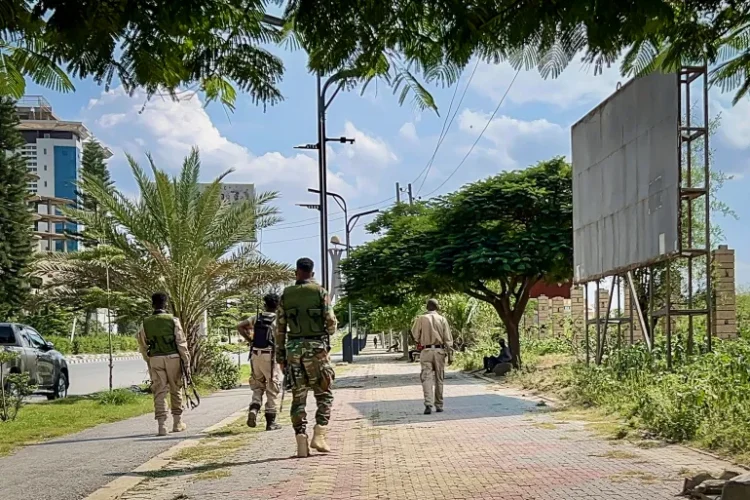
The role of Eritrea further complicated the conflict. Once an adversary during the 2020–2022 war, Eritrea re‑emerged as a tactical ally of TPLF forces. While some TPLF cadres framed Eritrean support as a strategic asset, many civilians rejected the partnership, recalling the devastation inflicted by Eritrean troops during the 2020-2022 war. This unstable alliance underscored the transactional nature of wartime politics, where yesterday’s enemy could become today’s partner. For ordinary Tigrayans, however, the result was continued displacement, military conscription and repression.
The arrests in Addis Abeba reflect this wartime atmosphere. Tsegay Hagos warned that detainees feared being transferred to military camps or conscripted: “You don’t know whether they want to take you to Awash Arba or conscript you to the military.” His words illustrate the fear that urban policing has blurred into wartime mobilisation, with detainees uncertain whether they are prisoners, recruits, or hostages. In this way, the war in Tigray extends its reach into the capital, transforming Addis Abeba into another front of detention and abuse against Tigrayans.
Regional and global dimensions
The renewed war in Tigray has drawn in multiple actors, each with their own interests, and the repression of Tigrayans in the capital reflects the intersection of local insecurity with regional geopolitics. Eritrea, long a central player in Ethiopia’s conflicts, has re‑emerged as a decisive actor.
During the 2020–2022 war, Eritrean forces were accused of committing atrocities in Tigray, including massacres and widespread sexual violence. In 2026, Eritrea’s role shifted again, with reports of tactical alignments through the controversial “Ximdo” arrangement, whereby TPLF leaders sought Eritrean support against federal forces. For ordinary Tigrayans, however, this alliance was deeply unsettling, as many recalled the devastation inflicted by Eritrean troops.
Sudan’s instability further complicates the picture. Border clashes and refugee flows have created a volatile environment, with Tigrayan refugees crossing into Sudan only to face insecurity and exploitation. While human trafficking networks preyed on displaced Tigrayans and Eritrean refugees, armed groups in Sudan exploited the chaos to assert control over refugees and border regions. The arrests in Addis Abeba resonate with these dynamics: displaced Tigrayans are vulnerable wherever they go, whether in Sudanese camps or Ethiopian police stations.
Egypt’s Nile dispute adds another layer of tension. Ethiopia’s construction of the Grand Ethiopian Renaissance Dam (GERD) has heightened regional rivalries, with Egypt and Sudan opposing Ethiopia’s “unilateral actions.” The United Nations warned that renewed hostilities risk destabilising the Horn of Africa. Eritrea’s shifting alliances, Sudan’s instability, Egypt’s Nile dispute, and international condemnation all converge to halt Ethiopia’s aspiration to secure access to the Red Sea. Saudi Arabia has meanwhile lent backing to the Eritrea–Egypt bloc, reinforcing Cairo’s position against Ethiopia, while Israel and the United Arab Emirates have aligned more closely with Addis Abeba, providing drones, surveillance technology, and financial support to strengthen federal military capacity. With the failure to enforce accountability mechanisms, the Horn of Africa has entered into another cycle of war and perpetual instability.
*Name changed for the safety of the interviewees. [IDN-InDepthNews]
References
ACLED (2026, Oct. 11). Conflict in Ethiopia. Access ACLED data on Ethiopia https://acleddata.com/country/conflict-ethiopia
Amnesty International (2021, Jul. 16). Ethiopia: End arbitrary detentions of Tigrayans, activists and journalists in Addis Ababa and reveal whereabouts of unaccounted detainees. https://amnesty.ca/human-rights-news/ethiopia-end-arbitrary-detentions-tigrayans-activists-and-journalists-addis-ababa-and-reveal/
Anadolu Agency (2026, Aug. 03). Several dead after projectiles target refugee camps along Sudan-Ethiopia border. https://www.aa.com.tr/en/middle-east/several-dead-after-projectiles-target-refugee-camps-along-sudan-ethiopia-border/4017251
Daniel Tesfa and Mirjam van Reisen (2026, Aug. 7). The Ximdo Gamble: TPLF-Eritrea Alliance and the Fragile Peace in Tigray and the Horn of Africa. IndepthNews. https://indepthnews.net/the-ximdo-gamble-tplf- eritrea-alliance-and-the-fragile-peace-in-tigray-and-the-horn-of-africa/
Daniel Tesfa, Shim Masha and Filmon Gebremikael (2026, Sept. 30). Tigray’s Renewed Conflict: How Drone Warfare is Reshaping the Battlefield. InDepthNews. https://indepthnews.net/tigrays-renewed-conflict-how-drone-warfare-is-reshaping-the-battlefield/
Daniel Tesfa, Shim Masha, Bereket Tsegay, Kristína Melicherová, Makeda Saba, Filmon Gebremikael and Mirjam van Reisen (2026, Jul. 12). Post-war Business of Eritrean Refugees in Post-War Tigray: Emergence of new Human Trafficking Routes. InDepthNews. https://indepthnews.net/post-war-business-of-eritrean-refugees-in-post-war-tigray-emergence-of-new-human-trafficking-routes/
Daniel Tesfa, Shim Masha, Joëlle Stocker and Mirjam van Reisen (2026, Apr. 28). Preparing for War, Lacking Consensus: Tigray’s Divided Political and Social Landscape. https://indepthnews.net/preparing-for-war-lacking-consensus-tigrays-divided-political-and-social-landscape/
Dimtsi Weyane Television (2026, Mar. 12). DW International ”ቃልስና ብሄራዊ ረብሓ ዘቐደመ ይኹን “ ጎደፋይ ጥላሁን. https://youtu.be/oAWtk3FePBQ
Ethiopia Observer (2026, Oct. 2). Arrests of young people across Addis Ababa as fears grow. https://www.ethiopiaobserver.com/2026/10/02/arrests-of-young-people-across-addis-ababa-as-fears-grow/
Europe External Programme with Africa (EEPA) (2026, Sept. 24). Situation Report – Horn of Africa & News Highlights No. 764. https://www.eepa.be/wp-content/uploads/2026/09/Situation-Report-EEPA-Horn-No.-764-24-September-2026.pdf
Global Security (2026, Sept. 22). Ethiopian Alliance for Survival. https://www.globalsecurity.org/military/world/para/alliance-for-survival.htm
Horn Review (2026, Sep. 01). The New Red Sea Axis: With Saudi Arabia, Turkey and Egypt at the Heart. https://hornreview.org/2026/01/09/the-new-red-sea-axis-with-saudi-arabia-turkey-and-egypt-at-the-heart/
Human Rights First (2026, Sept. 17). Human Rights Situation Update July – August 2026. https://hrfe.org/human-rights-situation-update-july-august-2026/
Human Rights Watch (2026, Jul. 6). Ethiopia: Tigray Authorities Forcibly Recruiting Civilians: Unlawful, Abusive Campaign Creates Climate of Fear. https://www.hrw.org/news/2026/07/06/ethiopia-tigray-authorities-forcibly-recruiting-civilians
Lucy Kassa (2026, Oct. 6). Tigray rebel groups ‘forcibly recruiting boys as young as 15’ as fighting spreads. The Guardian. https://www.theguardian.com/global-development/2026/oct/06/ethiopia-tigray-conflict-tplf-rebels-forcibly-recruit-boys-war-crimes
Michael Teferi and Basillioh Rukanga (2026, Sept. 21). Seven Ethiopian rebel groups form new alliance. https://www.bbc.com/news/articles/ckp84pj8zpngo
Middle East Eye (2026, Feb. 06). Egypt and Saudi Arabia focus on Eritrea as UAE bolsters ties to Ethiopia. https://www.middleeasteye.net/news/egypt-and-saudi-arabia-focus-eritrea-uae-bolsters-ties-ethiopia
Tesfa, D. & Van Reisen, M. (2024). Regional War by Design: TheInvolvement of Eritrea in the Tigray War. In: Van Reisen, M. & Mawere,M. (eds.) Tigray. The Hysteresis of War, Volume 1. Langaa, Bamenda. Pp. 141-190. https://www.researchgate.net/publication/385302102_Regional_War_by_Design_The_Involvement_of_Eritrea_in_the_Tigray_War
Tesfa, D. and Van Reisen, M. (2025). The Ximdo Gamble: TPLF–Eritrea Alliance and the Fragile Peace in Tigray and the Horn of Africa. GAIC-Papers. https://www.researchgate.net/publication/394190560_The_Ximdo_Gamble_TPLF-Eritrea_Alliance_and_the_Fragile_Peace_in_Tigray_and_the_Horn_of_Africa
The Conversation (2026, Sept. 29). Ethiopia’s peace deal is unravelling – what went wrong with the Tigray agreement. https://theconversation.com/ethiopias-peace-deal-is-unravelling-what-went-wrong-with-the-tigray-agreement-293005
The Jerusalem Post (2026, Oct. 10). Ethiopian-Eritrean fighting raises fears of wider war as Egypt builds Red Sea alliance – analysis. https://www.jpost.com/international/article-911223
UN News (2026, Oct. 10). UN chief ‘gravely concerned’ by renewed fighting in northern Ethiopia, warns against escalation. https://news.un.org/en/story/2026/10/1168570
Yandex map of Gelan Condominium Police Station in Addis Abeba, Ethiopia. https://yandex.com/maps/org/galan_condominium_police_station/162279886071/?ll=38.770964%2C8.886798&z=13