
By Jonathan Power
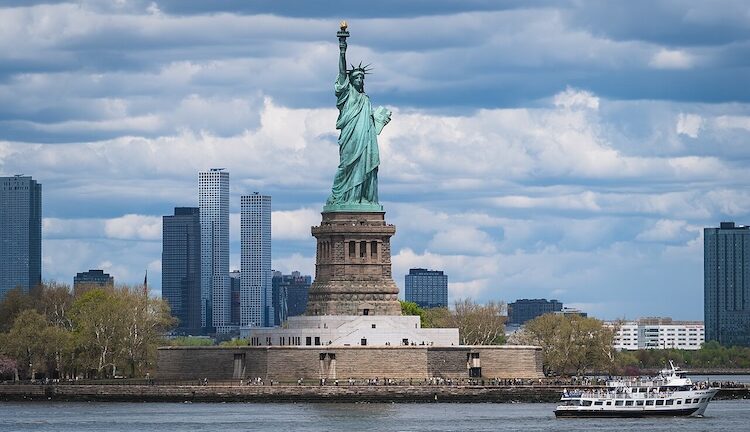
LUND, Sweden | 15 July 2026 (IDN) – Is the world being captured by what the late Harvard academic, Joseph Nye, has termed American “Soft Power”? President Donald Trump says he’s pushing for this.

The debate about American influence on the world at large is not new. Charles Dickens, the great British nineteenth-century novelist, on a visit to the US had no compunction in thinking America’s culture had little to offer the world. He said it was “a clamorous gang of fakes, fools and tricksters”. (And he hadn’t heard of Trump.) In the early twentieth century, the writer Virginia Woolf of the Bloomsbury Group, one of the guiding spirits of London’s intellectuals, treated America with a mixture of disdain and disinterest. In 1931 a former viceroy of India complained to parliament that Hollywood had helped shatter “the white man’s prestige in the East”.
In modern times, the disdain has continued—at least among the well-educated. First, it was the penetration by Coca-Cola and McDonald’s. In more recent times came Starbucks. This time, bankers and businesspeople flock to savour its high-priced coffees, but the true coffee cognoscenti don’t. All the while Hollywood’s tentacles push further afield, prevailing over often better films from the UK and the rest of Europe. Today, many US films earn more abroad than at home, but Hollywood now takes care to mix in foreign actors and British accents to make them more globally appealing.
A Long Debate Over American Influence
Many welcome American influence and indeed have done so for decades. The great Yugoslav writer Milovan Djilas argued in 1992 that if the power of the US is weakened, “then the way is open to everything bad.” This, in the eyes of many, is not just an argument for NATO but for Walmart too (the builder of massive shopping stores).
In Europe, we are so infused, penetrated and invaded by American Soft Power that we too often take America at its word—Nobel prizes, for example. Yes, America wins hands down in the sciences, yet, in truth, a large number (40%) of its prize winners have been born abroad, often in India and China. Britain, Germany and France, with much smaller populations, rank second, third and fourth in Nobel prizes in physics and chemistry. France, with a population of only one-quarter of the US, ranks first in Nobel Prize winners in literature. Britain, Germany and Spain are third, fourth and fifth. Put all of Europe together, and it would far outpace America.
All the European countries, plus Canada, Japan and Singapore, have a higher life expectancy and lower infant mortality than the US. Sri Lanka, Malaysia and Barbados have better rates than many US states.
Britain is first and Germany second in attracting applicants for political asylum. Soccer, Europe’s leading sport, is far more popular globally than American football or baseball. Likewise for cricket in India, Pakistan, the West Indies, Sri Lanka, Australia, New Zealand, Zimbabwe and South Africa.
Looking Beyond the American Model
European classical music and composers reign in US concert halls and are increasingly popular in Asia. China produces some of the world’s best piano and string soloists. The Beatles of Liverpool have left the most indelible mark on the culture of most nations.
So why do Europeans and Asians say they are overwhelmed by American culture? This is partly nonsense. Recently I lived in Calcutta in the state of West Bengal, where there is very little US cultural penetration. The Bengalis are rightfully proud of their language and their Nobel prize-winning poet, Tagore. Indeed, West Bengal has produced six Nobel Prize winners, and today Bengali novelists are becoming much appreciated in many parts of the world. Bollywood films dominate the cinema in India (although US films are also popular).
By and large, Indians don’t feel they need the US and its Soft Power. The same goes for Sri Lanka and, to a lesser extent, Pakistan.
A More Diverse Cultural Landscape
In Africa, traditional culture and European colonial influence still dominate, not American. In Latin America, there is certainly more US influence. But in Brazil, the continent’s largest and most populated country, one would have to search hard for it. Brazil and Argentina are culturally entwined with Portugal and Spain. Worldwide, the BBC is the most far-reaching of all the media. When Gorbachev was imprisoned in his villa, it was BBC radio that kept him informed of what was going on in Moscow.
Business is another matter. American business has enormous influence worldwide. It is a pacesetter with Artificial Intelligence even more so. Yet, in almost every case, apart from aeroplane manufacturing, local companies are the mainstay of their economies. On the other hand, European, Chinese, South Korean and Japanese companies—from Volvo trucks to Lenovo computers to Samsung phones to Sony electronics—dominate parts of the US market.
The one area where American exports are supreme is arms supplies. Is that something to be proud of?
American Soft Power certainly exists, and I think much of it is welcome, although much of it is dross. It is a better thing than selling guns, as the war in Ukraine attests. [IDN-InDepthNews]
Copyright: Jonathan Power