By Jaya Ramachandran
Independent UN experts say the right to food and international humanitarian law must remain central to FAO’s work, warning that staff should not face reprisals for documenting starvation and famine in Gaza.
GENEVA | 14 October 2026 (IDN) — A group of United Nations human rights experts has called on the Food and Agriculture Organisation (FAO) to reaffirm human rights as a core part of its mandate and to ensure that staff can work on politically sensitive issues without fear of retaliation.
In a statement issued on 13 October, the experts expressed concern over recent remarks by FAO Director-General Qu Dongyu that, in their view, appeared to play down the role of human rights in the organisation’s work. They also raised questions about how FAO treated staff involved in examining violations of the right to food and international humanitarian law in Gaza.
“Human rights principles are not peripheral to the FAO’s mandate; they are central to it,” the experts said. They stressed that FAO and its management, as part of the UN system, are bound by the purposes and principles of the UN Charter, including respect for human rights.
Concern Over Treatment of Senior Staff
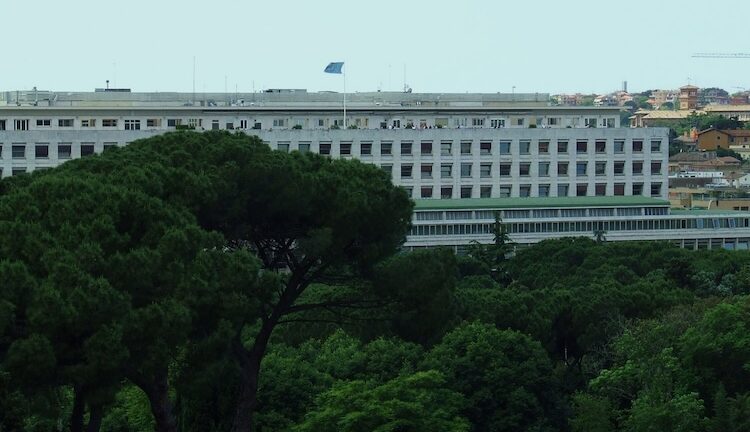
The experts referred in particular to remarks made at a high-level event at FAO headquarters in Rome on 29 September.
According to information they received, FAO’s senior management decided not to renew the contract of a long-serving division director who had worked within the UN system for 26 years. The experts said the decision was reportedly linked to allegations that the official had breached the requirement of impartiality while carrying out technical work on starvation and famine in Gaza.
They rejected the suggestion that such work was incompatible with impartiality.
“FAO has an explicit mandate to protect humanity’s freedom from hunger and must not shy away from addressing conflict-related food insecurity, famine and starvation,” they said.
The experts argued that FAO’s responsibilities include documenting the use of starvation as a method of warfare and examining the consequences under international humanitarian and human rights law.
They cited an International Court of Justice advisory opinion of 22 October 2025, which, according to their statement, affirmed obligations concerning essential supplies, including food, and the facilitation of humanitarian relief by the United Nations and its agencies.
Warning of a ‘Climate of Fear’
The experts warned that how staff are handled in such cases could have repercussions beyond individual employment decisions.
“There is a risk of creating a climate of fear among staff,” they said, adding that the impartiality required of international civil servants does not mean remaining silent when serious breaches of international law or UN Charter principles are at stake.
They argued that insufficient action in such circumstances could itself create doubts about an organisation’s independence and give rise to perceptions that it is deferring to powerful donor governments.
“All staff members across the UN system must be able to carry out their work without fear of adverse consequences,” the experts said.
They warned that measures perceived as intimidation or reprisals could undermine confidence in FAO and damage the United Nations’ reputation more broadly.
Right to Food at the Centre
The intervention is significant because FAO’s core mission is closely tied to the international recognition of the right to food.
The organisation was created to combat hunger, improve nutrition and strengthen food security. The experts maintained that human rights cannot therefore be separated from the technical dimensions of its work, particularly when hunger results from armed conflict or deliberate restrictions on access to food.
They said publicly disregarding human rights as a guide to FAO’s technical work would amount to “a shocking inversion of institutional purpose”.
The group includes independent experts on the right to food, human rights defenders, development, education, the environment, freedom of expression, displaced persons, minority rights, Palestine, and other areas.
Special Rapporteurs and members of UN working groups are appointed by the Human Rights Council but serve independently. They are not UN employees and do not receive salaries from the organisation.
Looking Ahead to FAO Leadership in 2027
The experts called on FAO to uphold the principles of the UN Charter and ensure that the Standards of Conduct for international civil servants are applied in a manner that protects both professional independence and institutional integrity.
They also urged FAO member states to raise the issue in the organisation’s governing bodies and hold its leadership accountable to internationally recognised human rights standards.
Their intervention also looks beyond the immediate controversy.
With the next election for FAO Director-General due in 2027, the experts said an explicit commitment to human rights—including the rights to life and food and respect for human dignity—should form part of the discussion surrounding the organisation’s future leadership.
They have written directly to the FAO Director-General, setting out their concerns.
The dispute therefore reaches beyond an internal personnel matter. At stake is a broader question facing the UN system: whether agencies charged with addressing hunger, displacement and humanitarian crises can carry out their technical responsibilities while openly confronting the human rights consequences of war. (IDN-InDepthNews)