
By Jonathan Power
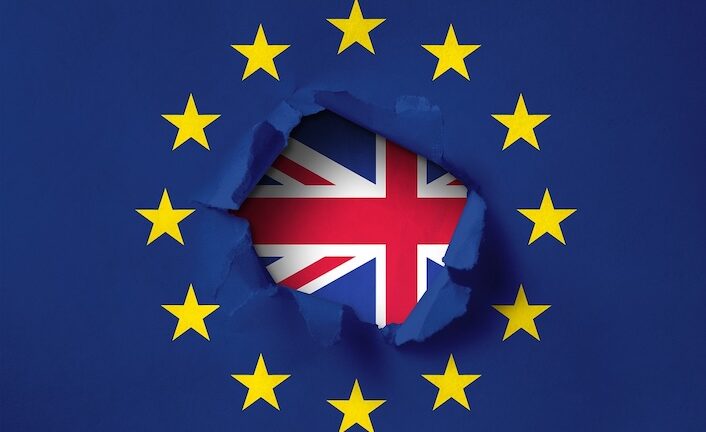
LUND, Sweden | 14 October 2026 (IDN) — At last, a British prime minister who is not afraid to say Europe is good for Britain. After a slow start on the issue, Andy Burnham has now made it fairly clear that Britain will seek to rejoin the European Union. It is not going to happen tomorrow, but it will surely not take 10 years to complete the entry negotiations, as some commentators are saying. Once completed, Britain will be able to go forward once again. It will be joining a success- a continent for thousands of years riven by war, but since 1945 has had no wars among its members. (Ex-Yugoslavia and Ukraine have never been members.)
The European Union is certainly not failing. In fact, it is about to get stronger. Adding the second-largest European economy will strengthen it. The British have learnt their lesson. So have the European Union members, albeit in a different way.
Europe’s Long Road to Unity
Writing in 1751, Voltaire described Europe as “a kind of great republic, divided into several states, some monarchical, the others mixed but all corresponding with one another. They all have the same religious foundation, even if divided into several confessions. They all have the same principles of public law and politics unknown in other parts of the world.”
Sixty-nine years ago, in a way that Charlemagne, Voltaire, William Penn, and Gladstone, the early advocates of European unity, could only dream of, a united Europe became a reality. Later in 2002 came the launch of the single currency, which was the most dramatic of the steps taken towards what maybe one day will be a single political entity.
War, time and time again, has interrupted the pursuit of that objective. Continued civil war across the continent, across the centuries, has pitted French against Germans, British against Italians and Germans, Czechs against Poles, Russians against the French, the Swedes and the Germans, Spaniards against Spaniards, Gentiles against Jews, reaching its dreadful climax in World War 2. As Jan Morris has written in her “Fifty Years of Europe”, “great cities lay in ruin, bridges were broken, roads and railways were in chaos. Conquerors from East and West flew their ensigns above the seats of old authority, and proud populations would do almost anything for a pack of cigarettes or some nylon stockings. Europe was in shock, powerless, discredited and degraded. Over the ages, no other continent has seen so much war.
Many, if not most, of that generation wondered in 1945 if they’d ever see Europe again in any state of grace or glory much less unified.
Europe’s Greatest Political Achievement
The fact that the urge to bury the hatchet and forge common institutions has come so far in such a short time against such a background is the twentieth century’s greatest political achievement. (Following the Declaration of Independence, it took the US nearly 90 years to establish a fully mature common currency; Europe travelled the same course in 49 years.)
Yet this astonishing triumphal moment begs the question: what glue holds it all together? After all, what is Europe? Geographically, it is no more than a peninsula protruding from the landmass of Asia. Culturally, it has always been a potage of languages, peoples and traditions. Politically, it is a moveable feast- of the 35 sovereign states in post-Iron Curtain Europe, nine have been created or resurrected since World War 2.
Indeed, it is religion, not politics nor economic and monetary union, that through the ages has made Europe one, held it together through its vicissitudes (many, tragically, of religious origin) and provided the common morality and common identity that made the EU and make a single currency possible today and political union a tangible, if still hotly debated, goal tomorrow.
Christianity and the Idea of Europe
Broadcasting to a defeated Germany in 1945, the great poet T.S. Elliot reminded his audience that despite the war and “the closing of Europe’s mental frontiers because of an excess of nationalism, it is in Christianity that our arts have developed, it is in Christianity that the laws of Europe- until recently- have been rooted. An individual European may not believe the Christian faith is true; and yet what he says, and makes, and does, will depend on the Christian heritage for its meaning.”
Of course, today one can ask what do the contemporary cults of finance, Artificial Intelligence, sports, TV, mobile phones, the internet, pop culture and eroticism have to do with a Christian heritage? Nevertheless, despite all, the fact is through changing fashions, through wars big and small, the idea of Europe that persists is essentially Christian, even among non-believers. Economic self-interest alone never would have created the European Union and, later, the monetary union. Economic and monetary union has been driven all along by men and women who were essentially idealistic and visionary.
From Jean Monnet, the founder of modern Europe, to Helmut Schmidt, Valery Giscard D’Estaing, Francois Mitterrand and Helmut Kohl, the founders and creators of the Euro, the urge to remove the causes of belligerency and to form institutions that would further the development of a common democracy has been a central purpose. Nor should we forget the words of Winston Churchill who said in Amsterdam in 1948: “We hope to see a Europe where men of every country will think as much of being European as of belonging to their native land”
Europe is not first and foremost a political concept or a financial convenience. It is an ideal. That’s why, for example, absorbing Russia should be on the agenda. Even Lenin was a proponent of a united Europe; Mikhail Gorbachev certainly was; and so was Vladimir Putin in his first years in the presidency.
We Europeans will work at it all our lives, as will future generations.
Copyright: Jonathan Power. (IDN-InDepthNews)