The body charged with maintaining international peace remains constrained when a permanent member is involved in the war.
By J. Nastranis
NEW YORK | 24 September 2026 (IDN) – The warning that the war in Ukraine has entered a dangerous new phase may sound familiar after more than five years of fighting. Repetition, however, should not dull its meaning.
Attacks are becoming more intense. Energy installations and transport routes remain vulnerable. Long-range weapons allow both sides to strike far beyond the front. Each escalation increases the possibility that the conflict will cross another border, damage a nuclear facility or draw neighbouring states more directly into the fighting.
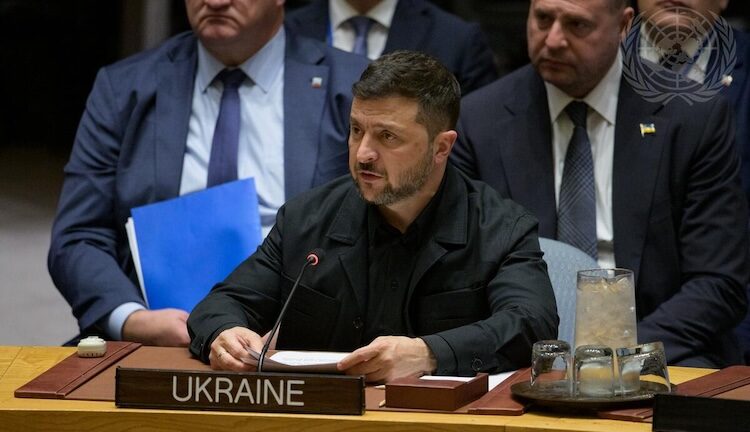
A high-level meeting of the United Nations Security Council on 23 September considered these dangers. Ukrainian President Volodymyr Zelenskyy also used his General Assembly address to argue that Russia’s actions were making the wider world less secure.
The meeting once again revealed the Council’s deepest weakness. Russia is both a permanent member of the body responsible for maintaining international peace and a party to the war under discussion.
Moscow can block any substantive resolution directed against it. Ukraine and its supporters can document attacks, defend territorial sovereignty and maintain diplomatic pressure, but they cannot secure binding Council action without Russian consent.
This does not make the proceedings worthless. Statements delivered in the Council become part of the international record. Governments must explain their positions in public. The meetings also prevent the war from being discussed solely within European or military alliances. But an unmistakable gap remains between recording a conflict and influencing it.
The Security Council was designed after the Second World War on the assumption that collective security could survive only if the strongest powers remained inside it. The veto was the price of their participation. The arrangement becomes almost unworkable when one of those powers is accused of violating the Charter.
Ukraine is paying the most direct price, but the damage does not stop at its borders. The Black Sea region remains vital to international food supplies. Interruptions to ports, shipping routes and grain exports affect countries in Africa and West Asia that have little connection with the conflict but are exposed to rising prices and shortages.
Energy attacks carry similar consequences. Damage to production and transport infrastructure influences world markets, while strikes on electricity systems leave civilians facing winter without reliable heat or power.
Nuclear installations add an even graver risk. A military attack, prolonged power failure or operational mistake could release radiation across national boundaries. The International Atomic Energy Agency can send inspectors and warn the parties, but it cannot impose a settlement or guarantee that fighting will remain outside safety zones.
Even under these conditions, limited diplomacy remains possible. Prisoner exchanges, humanitarian arrangements and discussions on grain exports or nuclear safety have shown that the parties can negotiate when the subject is narrowly defined. Such agreements save lives and preserve communication channels.
The UN is best placed to concentrate on civilian protection, humanitarian access, nuclear safety, food security, independent documentation and support for credible negotiations. The General Assembly also matters. Its resolutions are not binding as Security Council decisions can be, but votes there reveal whether international support claimed by either side actually exists.
Many developing countries judge Western appeals to the Charter against Western conduct in Gaza, Iraq and other conflicts. Charges of double standards do not justify the invasion of Ukraine, but they weaken the credibility of those demanding respect for international law. Rules invoked selectively soon cease to look like rules.
Changing the veto system remains extremely difficult. A practical first step would be for a permanent member to refrain from using its veto when it is directly involved in the conflict before the Council. That would not end the war. It would establish a principle that should never have been controversial: a party to a conflict should not also possess the final authority to prevent an international response.
Source note: Based on UN Security Council proceedings and statements delivered during the General Assembly high-level debate on 23 September 2026. (IDN-InDepthNews)