By Somar Wijayadasa*
NEW YORK | 30 June 2026 (IDN) — The United Nations Children’s Fund (UNICEF) has described the ongoing ceasefire in Gaza as a “cruel and deadly illusion” as Israel continues to attack the besieged enclave.
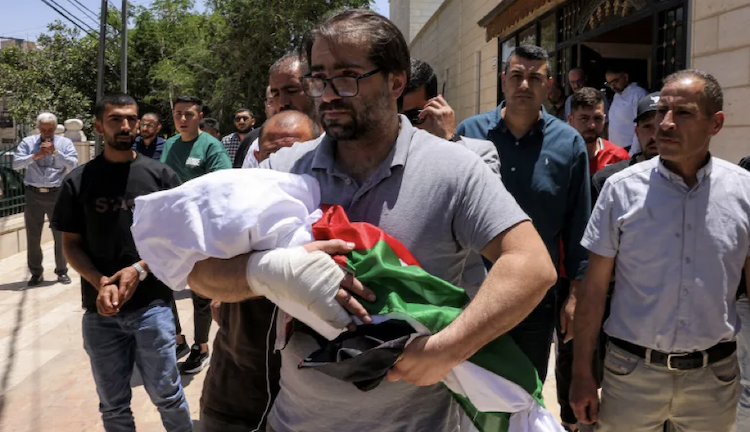
“During a period supposedly defined by restraint and protection, a child has been killed, on average, every single day for more than eight months,” said UNICEF’s Children’s spokesperson James Elder. “That is an absurd and devastating figure”, as the children “were not killed in a war zone” but rather in their homes, schools, or while playing football or fishing.
According to Palestinian health authorities, more than 72,000 Palestinians have been reported killed and over 172,000 injured during Israeli airstrikes.
Today, nearly 1.9 million people have been displaced in Gaza, many repeatedly, while more than 1.2 million have lost their homes. According to UNICEF, more than 770,000 children are experiencing heightened distress after repeated exposure to violence, loss and displacement.
According to the latest United Nations report and the Gaza Government Media Office, since the ceasefire was declared in October 2025, Israel has allegedly violated the agreement 3,338 times, resulting in the reported deaths of 1,012 Palestinians and injuries to 3,208 others.
The United Nations stated that military strikes, drone attacks, and gunfire have continued despite the ceasefire, with civilians continuing to lose their lives and no genuine halt to hostilities.
Srinivasan Muralidhar, Chairman of the UN Independent International Commission of Inquiry on the Occupied Palestinian Territory and Israel, stated that the commission had found what he described as “indisputable evidence” of the deliberate targeting and killing of Palestinian children, as well as torture, inhumane and degrading treatment, sexual and gender-based violence, and attacks on infrastructure essential to children, including orphanages, healthcare facilities, and schools.
The Commission reported that Israeli forces killed more than 20,000 Palestinian children and injured over 44,000 others between October 2023 and October 2025. UNICEF findings indicate that by February 2026, the number of children reported killed had risen to 21,289, while approximately 44,500 had been injured.
Muralidhar said children accounted for around 30% of those killed in the occupied Palestinian territories and described attacks against them as a “continuing activity.” He also cited reports from medical personnel documenting a pattern of single gunshot wounds to the head or upper body, which the commission said may indicate deliberate targeting.
The Commission concluded that Israeli violations against Palestinian children may constitute genocide, crimes against humanity, and war crimes in Gaza, as well as war crimes in the West Bank and East Jerusalem.
Humanitarian Catastrophe
The report stated that Israel’s blockade of Gaza, including restrictions on the entry of food, fuel, medical supplies, and other humanitarian assistance, has exacerbated malnutrition, disease, preventable deaths, and long-term psychological trauma.
It states that fuel shortages continue to severely hamper humanitarian operations, forcing aid organizations to prioritize fuel for life-saving services while suspending non-critical activities. Rising temperatures, overcrowded displacement sites, inadequate sanitation, pest infestations, and limited access to safe drinking water have further increased the risk of disease outbreaks.
According to the World Health Organization (WHO), no hospital is fully operational in Gaza, while UNICEF warns that water remains a daily uncertainty for 1.1 million children.
Another UN report emphasised that “Today, Palestinians in Gaza remain deprived of the basics that you would all demand for your own families: safety, shelter, clean water, healthcare, education”. Tom Fletcher, head of the UN’s humanitarian agency, told the UN Security Council that 70% of the population still needs proper shelter, as sanitation conditions deteriorate and essential services are “on the brink”.
As strikes continue, severe restrictions remain on many essentials in Gaza – from some essential medical supplies to cooking gas, fuel to parts for lifesaving water and sanitation systems.
Though the peace agreement states that Israel will not occupy Gaza and will progressively hand over territory it had seized in the war, Israeli Prime Minister Benjamin Netanyahu said in May that he had directed the IDF to increase the area of Gaza under its control to 70% of the territory. The “ceasefire” distorts the reality of what’s happening.
Ongoing Violence in the West Bank
The West Bank is another hot spot, following in Gaza’s footsteps. Israeli settlers live in communities built in the West Bank – a territory Israel captured in the 1967 Six-Day War – that Palestinians seek as part of a future state.
Meanwhile, Israeli forces have launched another wave of raids in the occupied West Bank, with houses and cars set on fire and routinely attacking Palestinians. Just like Gaza, Palestine’s West Bank is still being carved apart by Israeli soldiers, settlers, checkpoints and barbed wire.
Comparing the violence by Israeli settlers against Palestinians in the West Bank to attacks on Jews during the Holocaust, Israel’s former Mossad chief Tamir Pardo said, “My mother was a Holocaust survivor, and what I saw reminded me of the events that happened against Jews in the last century,” and Pardo said, “what I saw today made me feel ashamed to be Jewish”.
The UN says that Israel has, in one year, forcibly displaced more than 36,000 Palestinians across the occupied West Bank.
A Historic Gamble
In 1967, during the infamous Six-Day War, Israel seized the Gaza Strip, West Bank, the Old City of Jerusalem, the Sinai Peninsula and the Golan Heights – territories that today remain a major point of contention in the Arab-Israeli conflict.
Since then, the UN Security Council has urged Israeli forces to withdraw from all occupied territories, which Israel – to date – refuses to adhere to.
For eight decades, the world has witnessed the dreadful status of the Palestinians in Gaza. It is a vivid example of how Israel blatantly defies UN resolutions, rulings of the International Court of Justice (ICJ), and other UN bodies, and the impotence of the United Nations.
The facts are in, and the suffering of the Palestinians are undeniable, but the whole world has shamefully turned a blind eye to this humanitarian catastrophe. As the UN Secretary-General António Guterres said, “Palestinians in Gaza are enduring a humanitarian catastrophe of epic proportions”.
In July 2024, in a “watershed” ruling, the UN’s top court, the ICJ, ruled that Israel’s occupation of Gaza, the West Bank and East Jerusalem since 1967 is illegal, and that it must withdraw its military forces and settlers from all Palestinian territories, desist from creating new settlements, and evacuate those already established.
It concluded that where Palestinians have lost land and property, Israel should pay reparations. The ICJ perceived it as “plausible” that Israel has committed acts that violate the Genocide Convention.
The Road Ahead
As of 2026, 157 of the 193 United Nations (UN) member states officially recognise the State of Palestine as a sovereign nation. This represents just over 81% of the entire UN community.
Currently, Palestine holds a “non-member observer state” status at the UN. All UN member states should ensure that Palestine is recognised as a full member of the UN and “the two-state“ solution prevails.
Israel’s war on the Palestinians never stopped: the world just stopped watching.
*Somar Wijayadasa, an international lawyer from Sri Lanka, was a Faculty Member of the University of Sri Lanka (1967-1972); worked for UN Agencies IAEA and FAO (1973-1980); delegate of UNESCO to the UN General Assembly (1980-1995); and was the Director and Representative of UNAIDS at the United Nations in New York from 1995-2000. [IDN-InDepthNews]