
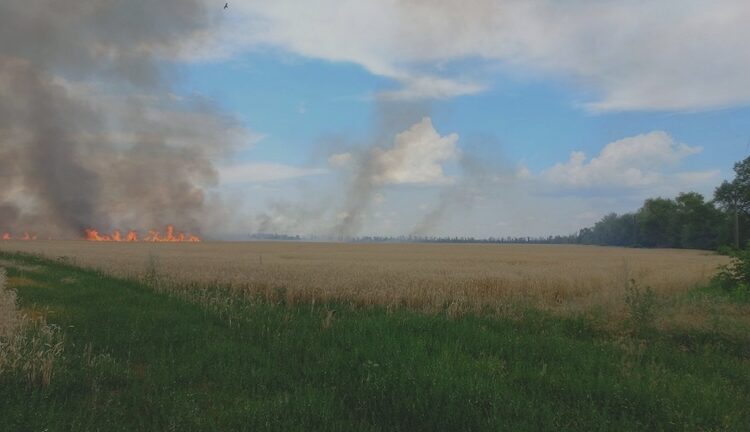
By Wolfgang Bittner*
GÖTTINGEN, Germany | 10 November 2026 (IDN) — Ukraine, which has been at war with Russia since Russia’s full-scale invasion in February 2022, is known for its fertile black soil—chernozem—a nutrient-rich humus soil that in some areas reaches considerable depth and produces high agricultural yields.
Chernozem covers a substantial part of Ukraine, particularly in the east and south. Ukraine possesses tens of millions of hectares of agricultural land and one of the world’s largest concentrations of black soil.
Ukraine is also the second-largest country in Europe after Russia. In recent years, its extensive mineral resources—including coal, iron ore, lithium, graphite, manganese, oil and natural gas—have increasingly become a subject of international interest.
Less attention is paid to the strategic importance of its agricultural land. Before the war, Ukraine was among the world’s leading exporters of corn and wheat and held important shares of global markets for barley, sunflower oil and rapeseed.
Grain Cultivation and Export
Before the full-scale war, Ukraine routinely produced around 60 million tonnes or more of grain annually, mainly corn, wheat and barley, with a large proportion exported.
In 2019, the country achieved a record grain harvest of around 75 million tonnes. In 2020, production amounted to approximately 64 million tonnes. Since 2022, however, conditions for cultivation, storage and distribution have deteriorated sharply.
The war has damaged agricultural land, disrupted logistics and reduced access to fields, particularly in frontline and occupied areas. Cereal exports remain well below pre-war levels.
After the political upheaval surrounding the Maidan protests and the change of government in 2014, Ukraine received extensive financial and political support from Western governments and international institutions.
Following Russia’s full-scale invasion, the European Union suspended import duties, quotas and trade-defence measures on Ukrainian exports as part of its Autonomous Trade Measures. The resulting increase in agricultural imports created serious tensions in several neighbouring EU countries, particularly Poland, Hungary, Slovakia, Romania and Bulgaria. The European Commission subsequently introduced temporary safeguards for selected Ukrainian agricultural products.
Commercial shipping from Ukrainian Black Sea ports largely halted after the invasion. In July 2022, Türkiye and the United Nations brokered the Black Sea Grain Initiative involving Russia and Ukraine, establishing safe passage for commercial food exports from Odesa, Chornomorsk and Yuzhny/Pivdennyi.
The initiative enabled the export of nearly 33 million tonnes of grain and other foodstuffs before it ended in July 2023.
Russia said it would not renew the agreement because commitments concerning Russian food and fertilizer exports had not been sufficiently implemented, including banking and payment restrictions. The United Nations acknowledged that obstacles remained, although Russian grain exports had reached high levels and fertilizer exports were recovering.
Ukraine subsequently established an alternative Black Sea shipping corridor, although its ports and export infrastructure have remained vulnerable to military attack.
Who Controls the Black Earth?
The question of who benefits from Ukraine’s agricultural resources has long generated political controversy.
Following the change of government in 2014, international institutions pressed Ukraine to undertake wide-ranging economic reforms.
In April 2014, the International Monetary Fund approved a $17.01 billion Stand-By Arrangement for Ukraine. This programme was separate from the Association Agreement with the European Union, although both formed part of the wider economic and political realignment taking place at the time.
Land reform subsequently became one of the most controversial issues in Ukrainian politics.
For nearly two decades, Ukraine maintained a moratorium on agricultural land sales. Parliament adopted legislation in 2020 that opened the land market from July 2021. Initially, only individual Ukrainian citizens could purchase agricultural land, with legal entities owned by Ukrainians permitted to enter the market from January 2024.
Foreign individuals and foreign-owned companies remain prohibited from purchasing Ukrainian agricultural land unless such ownership is approved in a national referendum.
This distinction is important because debate over foreign control has often blurred the difference between ownership and leasing.
In November 2024, Barbara Bonte of the Patriots for Europe group submitted a written question to the European Commission entitled “Ukrainian farmland increasingly US-owned”. She cited reports alleging that US and Saudi agribusiness and investment companies—including Cargill, ADM, BlackRock, Oaktree Capital Management and Bunge—had gained control over substantial areas of Ukrainian farmland.
The European Commission’s formal answer in February 2025 stated, however, that Ukrainian law excludes foreign purchases of farmland. It added that some large agricultural companies operating in Ukraine use leased land, with researchers estimating that large agricultural enterprises lease between 3 million and 4.3 million hectares.
The issue, therefore, is less straightforward than claims that foreign corporations have simply “bought up” Ukraine’s black earth. The more relevant questions concern leasing arrangements, corporate control over agricultural production, access to capital, supply chains and the influence of international investors.
Economist Frédéric Mousseau, director of the Oakland Institute in California, argued as early as 2015 that IMF- and World Bank-backed reforms were encouraging greater private investment in Ukrainian agriculture.
He wrote that the agricultural sector had become a primary target for foreign investment and criticised reforms that, in his view, reduced regulation and encouraged corporate expansion.
Mousseau also drew attention to the growing presence of major agricultural companies such as Monsanto, Cargill and DuPont.
These arguments reflected a wider concern about whether liberalisation would primarily benefit Ukrainian farmers or large domestic and international agribusiness groups.
The World Bank, by contrast, argued that opening a transparent land market could improve productivity, investment and access to finance while stressing the need for safeguards against excessive concentration of ownership.
The war and the refugee crisis have pushed much of this debate into the background. Equally important is the physical damage being done to some of Ukraine’s richest agricultural land through mines, artillery, military movements and environmental destruction.
Minerals and the Trump Administration
Donald Trump’s return to the presidency dramatically altered the political context surrounding Ukraine.
The Trump administration placed particular emphasis on Ukraine’s critical minerals and on obtaining an economic stake in the country’s reconstruction.
In April 2025, the United States and Ukraine established the United States-Ukraine Reconstruction Investment Fund, covering future revenues from minerals, hydrocarbons and related infrastructure.
The agreement gives the United States and Ukraine equal representation in the fund’s governance and provides for investment in future projects rather than a simple transfer of ownership of existing Ukrainian resources.
The fund has since begun investing in strategic sectors, including critical minerals, energy and emerging technologies.
The strategic importance of Ukraine’s resources had been emphasised well before the agreement.
In a CBS interview on 10 June 2024, Republican Senator Lindsey Graham pointed to estimates that Ukraine possessed trillions of dollars’ worth of critical minerals and argued that these resources should not fall under Russian control.
Graham remained one of Washington’s strongest supporters of Ukraine until his death in July 2026.
His comments illustrated the extent to which economic and strategic considerations had become intertwined with the war.
A Land Damaged by War
Meanwhile, the fighting continues to leave profound scars on Ukraine’s agricultural regions.
Since 2022, large areas in eastern and southern Ukraine have been subjected to artillery fire, drones, mines and military operations. Agricultural land has been contaminated, damaged or rendered inaccessible.
The destruction of the Kakhovka dam in June 2023 caused extensive flooding and damage along the Dnipro River and severely disrupted irrigation systems that had supported farming in southern Ukraine.
These consequences will endure long after the fighting ends.
Ukraine is a country extraordinarily rich in agricultural land, minerals and other natural resources. Yet much of its infrastructure, housing, energy system and productive capacity has been damaged.
The scale of reconstruction is much greater than “billions”. The latest joint assessment by the Government of Ukraine, the World Bank, the European Commission and the United Nations estimates reconstruction and recovery needs at almost $588 billion over the next decade, based on damage recorded through the end of 2025.
Agriculture alone faces recovery needs of more than $55 billion.
A country blessed by nature has therefore suffered extraordinary destruction.
Whatever political settlement eventually ends the war, the struggle over Ukraine’s future will not concern territory and security alone. It will also concern agricultural land, minerals, investment, reconstruction and the question of who ultimately benefits from one of Europe’s richest natural-resource endowments.
*The writer and journalist Dr. jur. Wolfgang Bittner lives in Göttingen. His most recent book, Geopolitik im Überblick: Deutschland-USA-EU-Russland [Geopolitics at a Glance: Germany, the U.S., the EU, and Russia], was published by Hintergrund in Berlin in 2025.
Editor’s Note: This article is published as opinion. The views and interpretations expressed are those of the author and do not necessarily reflect the editorial position of IDN-InDepthNews.