
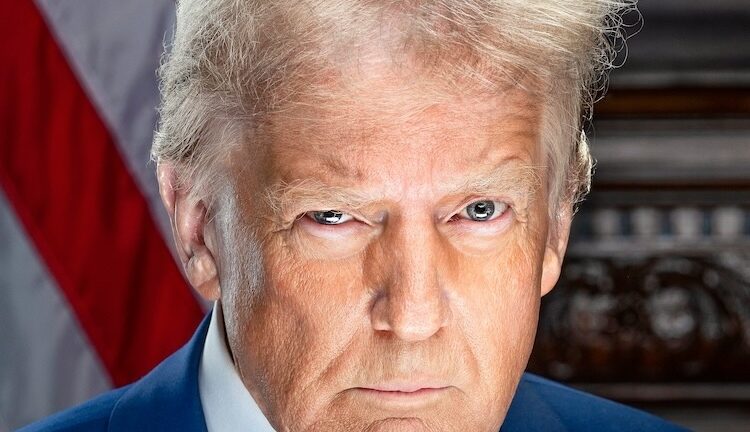
By Seevali Abeysekera*
LONDON | 1 October 2026 (IDN) — Little did the American electorate realise that the paradigm change it embraced in 2008 would, less than two decades later, be followed by another transformation—one that has raised fundamental questions about American power at home and abroad.
By electing Barack Obama, the first Black president of the United States, America appeared to announce to the world that it was no longer the exclusive domain of white Americans of European descent, but a genuinely multicultural and multi-ethnic nation.
Or so many of us assumed.
Fast forward to 2016, and it became apparent that a substantial section of the electorate regarded the changes represented by Obama with resentment or alarm. Race was by no means the only factor behind Donald Trump’s rise, but research into the 2016 election found racial attitudes and perceptions of threatened social status among the forces associated with support for Trump.
From Obama to Trump
Enter Donald Trump, in many respects the antithesis of Barack Obama.
Obama was a constitutional-law teacher, US senator, and president. Trump came from the worlds of property development, business and television. Six Trump-associated businesses went through Chapter 11 bankruptcy proceedings. In 2024, he became the first former US president convicted of felony offences when a New York jury found him guilty on 34 counts of falsifying business records. A separate civil jury found him liable for sexually abusing and defaming writer E. Jean Carroll; the US Supreme Court rejected his attempt to overturn the $5 million verdict in June 2026. The Associated Press
Trump has been married three times and has five children, not six as stated in the original version of this article. Trump Presidential Library
His political appeal, however, cannot be understood through his personal history alone. He tapped into deep currents of dissatisfaction within American society—over immigration, race, globalisation, economic insecurity and America’s changing place in the world. His promise to “Make America Great Again” offered supporters a restoration of something they believed they had lost.
Trump won the presidency against Hillary Clinton in 2016, lost to Joe Biden in 2020, and subsequently returned to the White House. Whatever one’s judgment of him, his political durability demonstrated that Trumpism was not a temporary aberration but represented a powerful current in American politics.
The power of the presidency
The office Trump reclaimed is extraordinarily powerful. The American constitutional system rests on checks and balances among the executive, legislative and judicial branches, but presidents retain considerable authority, particularly in foreign affairs and as commander-in-chief.
That becomes especially consequential in times of international crisis.
The president commands the world’s most technologically sophisticated armed forces and sits at the centre of the command system governing America’s nuclear arsenal. Decisions taken in the White House can therefore have consequences far beyond the United States.
This is where the question of hubris becomes important.
History provides many examples of powerful states mistaking military superiority for political omnipotence. Napoleon discovered its limits in Russia. Hitler’s armies discovered them on the Eastern Front. The United States discovered them in Vietnam and, decades later, in Afghanistan and Iraq.
Military power can destroy. It cannot necessarily produce the political outcome its wielder expects.
That lesson has returned with Iran.
Hubris and the war with Iran
Trump and Israel entered the 2026 confrontation with Iran possessing overwhelming technological and military advantages. But Iran did not collapse.
The US-Israeli attacks began on 28 February. A ceasefire announced in early April ended the initial 40-day war, but hostilities subsequently continued intermittently. Seven months later, the conflict has killed thousands, damaged Iran’s military capabilities and economy, disrupted energy supplies and widened instability across the region. Reuters
Washington has achieved no decisive political outcome. Reuters described the Iran conflict in late September as a prolonged stalemate and one of the most difficult foreign-policy challenges of Trump’s second term. Reuters
This is precisely where the danger of hubris lies. Superior firepower does not guarantee political submission.
But the story did not begin with the February attacks.
Iran had already been shaken by one of the gravest internal crises in the Islamic Republic’s history.
Protests erupted on 28 December 2025 after a sharp collapse of the rial amid inflation, economic hardship and longstanding political discontent. They began with shop closures and strikes in Tehran’s Grand Bazaar and developed into nationwide demonstrations demanding much broader political change. Amnesty International
US economic pressure contributed to Iran’s deteriorating economic position. Treasury Secretary Scott Bessent himself said that US policy had helped create a dollar shortage and currency crisis in Iran, describing this as economic statecraft. Independent economists interviewed by PolitiFact agreed that US pressure aggravated an economy already weakened by structural problems and years of sanctions. PolitiFact
That is a significant fact. It does not, however, establish the stronger claim that Washington deliberately manufactured the protests or controlled what happened on Iran’s streets.
Iranian authorities portrayed the unrest as foreign-engineered and accused outside powers of fomenting violence. Those accusations must be distinguished from independently established evidence. I have found no reliable evidence establishing that CIA and Mossad “sleeper cells” were activated to organise the protests and attack government buildings, as has sometimes been claimed.
There was unquestionably violence. Iranian cleric Ahmad Khatami claimed that 350 mosques, 126 prayer halls, hundreds of medical facilities and numerous emergency vehicles were damaged during the unrest. Those figures originated with Iranian authorities and should therefore be treated as claims rather than independently verified totals. The Times of Israel
Much firmer independent evidence shows the brutality of the state’s response.
From protest to war
Amnesty International and Human Rights Watch documented mass killings by Iranian security forces during the crackdown, particularly on 8 and 9 January. Amnesty reported that security forces fired rifles and shotguns at protesters and that thousands were killed. Human Rights Watch likewise found evidence of mass killings of protesters and bystanders. Amnesty International
The precise death toll remains disputed, in part because the authorities imposed a sweeping internet blackout. Iran’s Supreme Council of National Security subsequently put the death toll at 3,117. The UN Special Rapporteur on Iran said in January that at least 5,000 had been killed and cited medical information suggesting that the number might have reached 20,000. Other estimates were higher. What can responsibly be said is that thousands died; claims of 70,000 deaths have not been independently substantiated. Amnesty International
The repression was followed by mass arrests, enforced disappearances and allegations of torture and other ill-treatment. Amnesty says repression intensified further after the US-Israeli attacks of 28 February. Amnesty International
Washington, meanwhile, increasingly linked pressure on Iran to demands for fundamental changes in Tehran’s behaviour. What followed was not the quick collapse that proponents of overwhelming military pressure might have expected.
Instead came war, retaliation, disrupted energy supplies and eventually renewed diplomacy.
And here there is another irony.
The United States and Iran are again talking.
During the UN General Assembly in September, Iranian Foreign Minister Abbas Araghchi and US envoy Steve Witkoff participated in lengthy discussions through Qatari mediators. Iran subsequently proposed arrangements that could reopen the Strait of Hormuz and lead to negotiations over its nuclear programme and the wider conflict. The Guardian
Trump initially rejected Iran’s proposal, while Tehran maintained that negotiations remained possible. As September ended, mediators were still trying to bridge the considerable differences between the two sides. Reuters
Steve Witkoff, a property developer who became Trump’s special envoy, and Jared Kushner, Trump’s son-in-law and former White House adviser, have both played unusually prominent diplomatic roles during Trump’s second presidency. Their involvement has attracted criticism from former diplomats who question the administration’s reliance on personal envoys rather than traditional diplomatic structures. But describing them as representatives of Israel or as “cheats and swindlers” goes beyond what the available evidence establishes. Foreign Policy
The larger question, then, is not whether Iran or the United States has “won”. Seven months after the war began, neither side has achieved all it sought.
The deeper issue is what the confrontation says about American power.
For decades after 1945, the United States possessed an extraordinary capacity to shape the international system. That power rested not simply on aircraft carriers, nuclear weapons and economic might, but also on alliances, diplomacy and the belief—sometimes justified, sometimes not—that Washington could translate power into political outcomes.
Iran is demonstrating once again that military supremacy has limits.
History repeatedly punishes empires that confuse the ability to strike with the ability to prevail.
That is the danger of hubris.
Seevali Abeysekera is a retired businessman based in London.
Editor’s Note: The views expressed in this commentary are those of the author and do not necessarily reflect the views of IDN-InDepthNews or its editorial team. (IDN-InDepthNews)