
By Gina Romero*
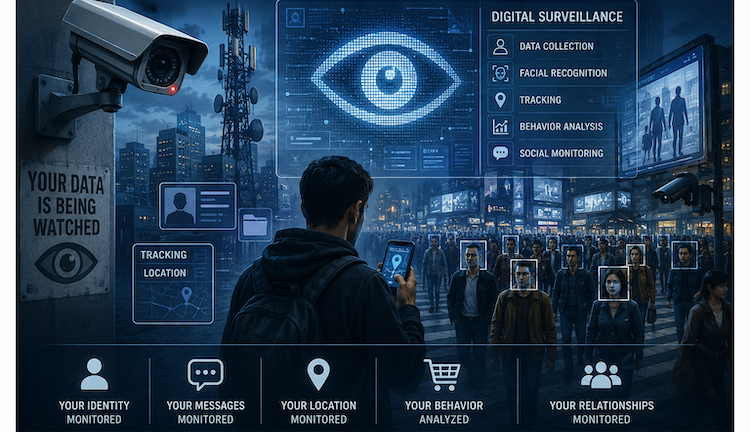
BOGOTA, Colombia | 15 June 2026 (IDN) — The modern digital world we live in today is characterised by an interconnected, massive network of monitoring tools—a surveillance ecosystem. Governments frequently justify this intrusion by poorly vague national security narratives and cybercrime frameworks. We have then moved far beyond occasional governmental monitoring into a permanent state of digital enclosure, where being constantly monitored has simply become a normal part of everyday life that no one can avoid.
This wide surveillance occurs remotely, mostly invisibly, and combines information from multiple sources to drastically increase the spying power of both governments and private corporations. This has completely changed the structure of our digital and physical worlds. Once-secure public spaces have been turned into places of permanent automated suspicion, where any form of collective action is seen as an inherent security risk.
Because surveillance is everywhere, everyday citizens, activists, civil society members, journalists and human rights defenders permanently assume that they are always being monitored. They are monitored through digital footprints we all leave behind on everyday apps, remote biometric systems, Wi-Fi networks, and detected or suspected smartphone spyware, among others. This environment has created a precautionary style of policing in which data is gathered and retained without clear or immediate justification, and then becomes a latent threat that authorities can pull out and use against individuals or groups at any moment to crush public criticism, opposition, and dissent.
The Chilling Effect of Surveillance
Besides, it creates a profound and enduring chilling effect. This is the focus of the Global Study “Pushed into the Shadows”: Evidencing digital surveillance chilling effects and the erosion of the rights to freedom of assembly and of association” (By Romero, Fussey and Murray), which is the research that sustains the report I will be presenting at the Human Rights Council on June 23rd. The study includes information from 84 States and entities from all continents and different type of political regimes, demonstrating the widespread nature of this phenomenon.
A “surveillance-induced chilling effect” means that people change how they normally act because they are afraid of the information that can be collected through a given form of monitoring. This ranges from their searches on the Internet to private conversations and includes whether they participate in events (public or private) and with whom they meet. These effects are deeply layered and long-lasting. They often force groups and associations to use softer, less critical language or operate in the shadows to protect themselves from being publicly smeared, criminalisation, and arbitrary detention.
Traditional human rights analysis often misses how massive this problem is because it focuses only on one right at a time. The study and report show that surveillance measures are not isolated incidents. Instead, they form a connected, constantly active surveillance ecosystem that builds over time and causes compounded harm: it attacks multiple rights and freedoms at the same time, including privacy, expression, assembly, association, and participation, among others.
The very heart of the study and report focuses on how these chilling effects, the fear and change in behaviour, affects the rights to peaceful assembly and of association. Because these two rights are the engine that allow people to act -they serve an enabling function for democratic agency- chilling them does much more than just silence few individuals; it undermines the essence of collective action and the capacity of civil society to advocate for and defend all other human rights.
Civic Space Under Pressure
Some of the main impacts of the digital surveillance-related chilling effects evidenced in the Study are:
The widespread use of surveillance tools and methods has fundamentally compromised people’s ability to organise or participate in community actions. Because these tools make the planning of assemblies—both online and offline—entirely visible to government monitoring, they act as a built-in brake that strips movements of their organic energy, spontaneity and creativity. As a result, regular and legitimate democratic activities are turned into dangerous, high-risk actions, forcing participants to navigate an environment in which their identities and closest personal relationships are permanently exposed to authorities.
By stretching out the window of time that activism, participation in peaceful movements and protests, or the organisation of public events are monitored and recorded, people choose to stay quiet and/or keep a low profile, therefore self-censorship becomes an unavoidable survival strategy. This creates a powerful wall of fear that empty streets and erodes the basic capacity of communities, associations and movements to stand up and take action.
The ability to remain anonymous in public is being eroded by laws that criminalise face coverings at protests. This leaves activists vulnerable to targeted retaliation, fines, and punishments, altering the safety and feasibility of regular people participating in public civic life.
When street-level monitoring become too intense, it pushes activists to move their actions into the digital world. However, online spaces have become the latest site of digital enclosure. Governments frequently shut down internet, or use social media for public smearing. In highly restrictive countries, digital surveillance destroy online lifelines by tracking online activity to facilitate arrests, while using private messaging apps to threaten activists and their families. The combination of physical punishment and digital harassment often forces members of civil society to stop their work entirely, as virtual worlds offer no safe refuge from government intrusion.
Constant monitoring breeds an atmosphere of intense suspicion that results in de-socialisation, tearing down human connections. People and organisations deliberately limit contact with one another to avoid punishment for being guilty by association. This fear breaks apart solidarity networks and causes activists to isolate themselves from partners and even donors. This essentially destroys the supportive spaces built by communities and their associations from the inside out.
Surveillance-induced chilling effects forces social movements to fragment their projects and decentralize their structures to prevent the perceived danger of one activity from contaminating or ruining another. This strategic fragmentation makes it incredibly difficult to run collective activism, significantly hinders the ability to reach out new supporters or expand their memberships beyond existing, high-trust circles. Ultimately, these barriers to safe communication break down the core mechanics of movement building, forcing organizations to focus on their own survival instead of speaking out for their causes.
Human Rights and Democratic Risks
Several vital roles of civil society are being suffocated, including its ability to act as a public watchdog that holds power accountable. Because of the constant fear of being monitored, whistleblowers and human sources are becoming increasingly reluctant to speak to civil society groups or the media. In some places, the repurposing of labour and data protection laws allows governments and non-state actors to access private cell phone location data, revealing sensitive meetings with human rights defenders, journalists or unions.
The actual ability of several civil society organisations to do their daily work is being paralysed because they need to divert organisational budgets away from core strategic objectives toward logistical workarounds and digital security measures. To protect their staff and the people they serve and work with, organizations are forced to navigate expensive and time-consuming systems—from crypto-remittances for salaries to physical travel for sensitive meetings. These financial burdens disproportionately harm smaller and rural associations, leaving the most vulnerable communities increasingly isolated and undefended.
The constant digital surveillance takes a profound psychological toll on individuals, manifesting as a state of chronic hypervigilance and systemic mistrust that cripples interpersonal relationships. Every simple conversation and relationship starts to feel like a hidden danger, forcing activists to live under the permanent assumption that their private lives are being watched. The ubiquity of surveillance creates a stifling environment in which even the most ordinary daily actions are overshadowed by a persistent sense that something is wrong. This hyper-alertness and mental strain is regularly backed up by direct personal physical intimidation, such as break-ins and anonymous calls that reveal knowledge of an individual’s private whereabouts, effectively creating a permanent state of anxiety. Because of this constant pressure, activists, defenders and community leaders are reporting intense struggles with deep depression, emotional exhaustion, burnout, and trauma-related conditions like PTSD.
These chilling effects disproportionately burden vulnerable, marginalised, and racialised communities as digital surveillance inflicts intersectional harms that amplify historical discrimination and silence diverse voices, including LGBTQI+ activists, Afro-descendant and indigenous communities, individuals and children.
The Study indicates that a lack of transparency regarding State power and non-state interaction creates an informational vacuum, making it nearly impossible to contest surveillance through litigation and fundamentally undermining the right to an effective remedy. Therefore, moving forward, States and corporations must integrate an interdisciplinary and precautionary approach to risk into their human rights impact assessments and due diligence processes. This requires moving beyond a simple “cause-and-effect” model to evaluate how the overall surveillance apparatus creates a human rights compound harm and impacts the broader civic space over the long term.
We hope that this Study and its related report serve as the basis for a broader understanding of the phenomena and help advance multistakeholder strategies to better address the risk of serious or irreversible harm to human dignity and democratic functioning before the damage becomes irreparable.
*Gina Romero is UN Special Rapporteur for the rights to freedom of assembly and of association. [IDN-InDepthNews]
Link to global study: https://www.ohchr.org/en/special-procedures/sr-freedom-of-assembly-and-association/pushed-shadows
Link to report: https://www.ohchr.org/en/documents/thematic-reports/ahrc6245-unmasking-chilling-effects-digital-surveillance-ecosystem