The Impact of the Iran War on West African Power and Conflict
By Ramesh Jaura
This article was first published on rjaura.substack.com
BERLIN | 25 April 2026 (IDN) — The war involving Iran, Israel, and the United States is centred in the Middle East, but its effects are quickly changing geopolitical boundaries far beyond that region. In just the past few months, several diplomatic delegations from Russia and Iran have visited Bamako and Niamey, military procurement talks have accelerated, and oil shipments bound for West Africa were delayed at least twice due to disruptions around the Strait of Hormuz.
At the same time, Burkina Faso’s recent announcement of new security agreements with both Moscow and Tehran highlighted the shifting alliances driven by global tensions. This is especially clear in Africa, and most of all in the fragile and conflict-ridden Sahel.
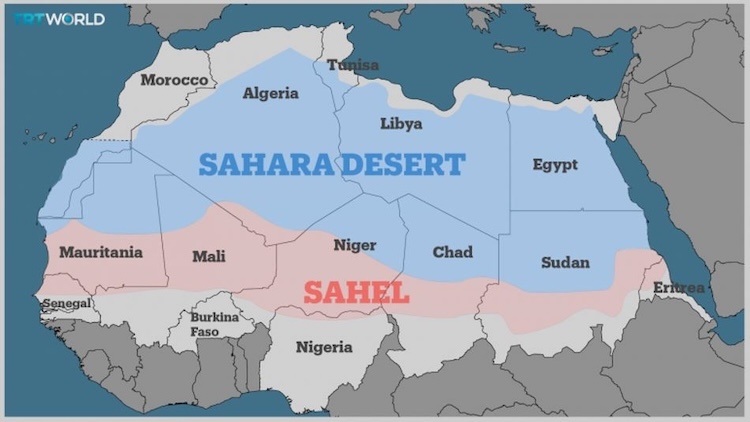
The Sahel, which stretches from Mauritania to Sudan, has long been known as one of the world’s most unstable regions. Now, it is also becoming a major stage for global competition. The Iran war has accelerated changes already underway: Western influence is fading, new outside powers are entering, and African states are gaining more say but also facing new risks as they navigate a complex world order.
Leaders in cities like Ouagadougou, Bamako, and Niamey are rethinking their alliances. Russia, China, Iran, Israel, Turkey, and even Ukraine are now competing for influence in ways that would have seemed unlikely ten years ago. At the same time, Europe and the United States are trying to determine their roles after years of retrenchment.
“The Sahel is no longer a peripheral crisis,” says a West African diplomat based in Dakar. “It has become a testing ground for what the new world order will actually look like.”
A Region Already on Edge
The Sahel was already under heavy pressure before the Iran war began. Today, it is seen as the world’s main hotspot for terrorism, with more than half of all terrorism-related deaths happening there.
Since 2020, a series of military coups in Mali, Burkina Faso, and Niger have replaced weak democracies with military governments. These new leaders focus on sovereignty and security instead of working closely with Western countries. They have expelled French forces, moved away from ECOWAS, and are building closer ties with non-Western powers.
Meanwhile, jihadist groups linked to al-Qaeda and the Islamic State have spread their reach by taking advantage of weak governments and open borders. This has trapped the region in ongoing violence, political instability, and economic hardship.
“The state is retreating in large parts of the Sahel,” notes a security analyst in Bamako. “And wherever governance disappears, external actors—state and non-state—step in.”
The Iran war did not cause these problems, but it has made them worse.
The Iran War’s Economic Shockwaves in Africa
The conflict’s most immediate effect has been economic. Disruptions in the Strait of Hormuz, where about one-fifth of the world’s oil passes, have caused fuel prices to rise sharply across Africa.
In some countries, fuel prices have jumped by as much as 150 per cent since the conflict began in late 2023, according to the African Development Bank’s April 2024 Economic Outlook. This puts a huge strain on families and governments that are already dealing with inflation and debt.
“The price of instability is now being paid at the petrol station,” says an economist in Abuja. “For millions of Africans, geopolitics has become a daily economic burden.”
The effects go beyond just energy. Fertilizer supplies, many of which come from the Gulf, have also been disrupted. This raises concerns about lower crop yields and more food insecurity.
In Sahelian countries, many people rely on subsistence farming, making these disruptions devastating. Governments have to allocate their limited resources to subsidies and emergency aid, leaving less to spend on security or development.
These economic pressures are not just financial—they are also changing political alliances.
Iran’s Strategic Turn Toward the Sahel
For Iran, the Sahel is both an opportunity and a necessity.
As Iran’s influence in the Middle East faces challenges, Tehran is looking to expand its presence in Africa. Analysts say Iran is using anti-Western feelings and support for Palestine to form new partnerships in the region.
“Iran is repositioning itself as a partner of the Global South,” says a North African political researcher. “The Sahel offers a receptive environment—politically isolated, security-driven, and increasingly sceptical of Western intentions.”
Security cooperation is a key part of Iran’s strategy. Military governments in the Sahel, cut off from Western support, are now more willing to work with partners who offer training, intelligence, and equipment without demanding political reforms.
Iran’s approach is similar to Russia’s. Both use diplomacy, security cooperation, and messaging to weaken Western influence and make themselves essential partners in the region. However, while Russia focuses mainly on direct military aid and the deployment of private security contractors, Iran tends to invest more in media campaigns, ideological outreach, and intelligence sharing. Both countries avoid demanding political reforms, but Russia’s presence is often more visible on the ground, while Iran works more quietly through advisory roles and regional networks. Together, their tactics complement each other, reinforcing their shared aim of reducing Western leverage in the Sahel.
This balancing act is already clear in Burkina Faso. The government keeps its relationship with Russia while also looking to build closer ties with Iran. High-level visits and security talks show how important this new relationship is becoming.
“Iran doesn’t need to dominate the Sahel,” observes a European policy adviser. “It only needs to complicate Western influence—and in that, it is already succeeding.”
Russia: The Security Partner of Choice
Russia remains the most influential external power in security in the Sahel.
By providing military support, private security contractors, and political backing, Moscow has made itself the main ally of the Sahel’s military governments.
The creation of the Alliance of Sahel States, which includes Mali, Burkina Faso, and Niger, has made this relationship even more official. Russia has promised military help, including equipment and training, to support joint efforts against terrorism.
“For governments fighting insurgencies with limited resources, Russia offers immediacy,” says a regional defence expert. “There are fewer questions asked, fewer conditions imposed.”
For local governments, Russia’s appeal is clear. It offers quick security support without the political strings that often come with Western help.
However, this partnership has its risks. Some critics say that depending on outside military forces can hurt long-term stability and good governance. A recent report from the International Crisis Group documented how the reliance of Mali’s government on the Wagner Group, a Russian private security contractor, has coincided with increased reports of human rights abuses and strained relations with local communities.
In 2023, following a joint operation between Malian forces and Wagner personnel in Moura, allegations emerged of widespread civilian casualties and abuses, leading to international outcry and further isolating Mali diplomatically. This incident is often cited as a warning of what can happen when external military actors are heavily involved without meaningful oversight.
“Security delivered without accountability can become another form of instability,” warns a human rights researcher in Ouagadougou.
Still, in a region facing serious threats, immediate survival often takes priority over these concerns.
China: Economic Power and Strategic Hedging
While Russia leads in security matters, China’s main influence in the region is economic.
The Iran war has pushed Beijing to look for new energy sources, leading China to work more closely with African producers.
At the same time, China continues to invest in infrastructure, mining, and telecommunications across Africa. China’s approach is practical—it maintains good relations with everyone and avoids direct involvement in military matters.
“China’s strength is that it doesn’t force binary choices,” says an African trade official in Addis Ababa. “It offers partnerships that are flexible, and that resonates in today’s multipolar environment.”
In the Sahel, this means China is hedging its bets. It supports development projects and economic integration while carefully managing the region’s unstable politics.
This two-sided approach lets Beijing grow its influence without getting caught up in the region’s conflicts.
Israel, Surveillance, and New Alignments
Israel’s role in Africa is changing quickly.
Israel used to focus mainly on diplomacy and technology in Africa but is getting more involved in security. Several African countries now depend on Israeli surveillance technology, especially for fighting terrorism.
“Technology has become Israel’s diplomatic currency in Africa,” says a cybersecurity analyst in Nairobi. “Surveillance tools, border control systems, intelligence-sharing—these are highly valued in fragile security environments.”
This technology partnership has become even more important because of the Iran war. Working with Israel is now seen as a geopolitical move, showing the wider global divides.
In Burkina Faso, allowing an Israeli ambassador shows a willingness to work with Israel, even though it is a sensitive issue in the region. At the same time, the government has not publicly condemned attacks on Iran, which shows how carefully it is balancing its relationships.
For Sahelian countries, ties with Israel are not about ideology. They are practical decisions based on security needs and access to technology.
Ukraine’s Quiet Entry into African Geopolitics
One of the more surprising changes is Ukraine’s growing presence in Africa.
As part of its effort to push back against Russian influence, Kyiv is working to build diplomatic and security ties throughout Africa.
“Ukraine understands that this is a global contest,” says an Eastern European analyst. “Africa is not secondary—it is part of the same strategic map.”
Ukraine’s role is still small compared to that of other countries, but its involvement shows how conflicts are becoming more global.
Europe’s Search for Relevance
For Europe, the Sahel is both a challenge and a test.
With French forces leaving and Western influence fading, other powers are rushing to fill the gap. European policymakers are now trying to figure out how to re-engage.
Germany has become a key player in these efforts. Through projects like the Sahel Alliance, Berlin is working to coordinate development aid and build stable partnerships.
“Europe is trying to move from a security-first approach to a partnership-first approach,” says a Brussels-based policy expert. “But it is still searching for the right balance.”
Diplomatic efforts continue, with EU representatives active across West Africa. Still, Europe faces a big question: how can it stay relevant in a region that is more and more resistant to its influence?
The United States: A Hesitant Return
The United States is also trying to regain its presence in the Sahel, but so far with limited success.
The removal of U.S. forces from Niger and the closure of key military bases marked a significant setback for American influence in the region. Since then, Washington has attempted to restore its relationships through increased diplomatic engagement and targeted support. However, these efforts are fragmented and lack a clear strategic direction. “There is activity, but no clear doctrine guiding it,” says a former U.S. diplomat.
Recent military actions have faced criticism and raised doubts about their effectiveness. At the same time, incidents where civilians have been harmed risk damaging the United States’ credibility.
Africa’s Agency in a Multipolar World
In this complicated situation, African states are not just passive players.
Many governments are actively using the competition between outside powers to their own benefit. By working with several partners, they can get resources, technology, and political support.
“This is not a new scramble for Africa,”cargues a political scientist in Accra. “It is Africa negotiating a new place in the world.”
This approach is part of a bigger move toward ‘multialignment’. Instead of picking sides, countries are choosing flexible and practical partnerships.
However, this strategy also comes with risks.
“Balancing is a strategy—but it can also become a trap,” warns a governance expert. “If external rivalries intensify, domestic stability may suffer.”
The Risk of Conflicts Merging
The most concerning possibility is that the Iran war is already overlapping with tensions in the Red Sea and the Horn of Africa. Experts warn that these linked crises could turn into a larger regional conflict.
“What we are seeing is not isolated crises, but a chain reaction,” says a Middle East analyst. “And Africa is increasingly part of that chain.”
If that happens, the Sahel will not stay isolated. It would become part of a bigger zone of instability that stretches from West Africa to the Middle East.
A New Scramble for Africa
The changes in the Sahel show that global politics are undergoing a major shift.
What we see now is not a return to the two-sided Cold War, but a more complex and flexible world order. Power is spread out, alliances change, and competition never stops.
Africa, and especially the Sahel, is at the heart of this change.
“The question is no longer whether Africa matters,” says a senior African Union official. “The question is who will shape its future—and on whose terms.”
The Iran war has accelerated existing trends and sparked new ones. It has revealed weaknesses, changed alliances, and intensified rivalries.
For Sahel countries, the challenge is to navigate these changes without losing their independence or stability.
For outside powers, the stakes are just as high. Competing for influence in Africa is now central to the future of the world order, not just a side issue.
For the world, the Sahel is a clear reminder that in today’s connected world, no conflict stays limited to one place.
About the author: Ramesh Jaura is affiliated with ACUNS, the Academic Council of the United Nations, and an accomplished journalist with sixty years of professional experience as a freelancer, head of Inter Press Service, and founder-editor of IDN-InDepthNews. His expertise is grounded in extensive field reporting and comprehensive coverage of international conferences and events. [IDN-InDepthNews]
Original link: https://rjaura.substack.com/p/conflict-ridden-sahel-at-the-crossroads
Related links: https://www.eurasiareview.com/20042026-conflict-ridden-sahel-at-the-crossroads-analysis/
https://www.world-view.net/conflict-ridden-sahel-at-the-crossroads/