
By Jonathan Power
LUND, Sweden | 13 May 2026 (IDN) — Do we, especially our politicians and media, focus more on threats than on opportunities, dwell on losses more than on gains, and insist on learning more from past failures than from successes?
When we are children, we are frightened of bogeymen. When we are adults, we often inflate dangers. Steven Pinker and Barack Obama have both argued that, despite global crises, humanity today enjoys unprecedented advances in health, literacy, and living standards. Yet many people remain unaware of these gains because bad news dominates public consciousness.

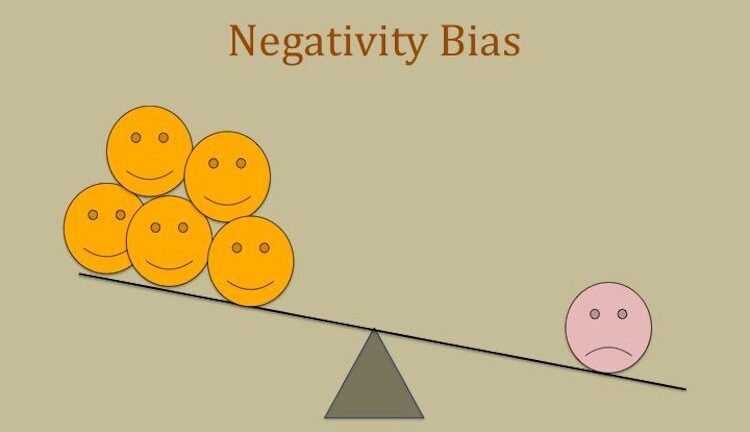
Oxford professors Dominic Johnson and Dominic Tierney describe this tendency as a “negativity bias” — a subconscious human predisposition to focus more on danger than opportunity. Psychologists argue that this evolved as a survival mechanism in early human societies, where ignoring threats could mean death. Neuroscience also shows that the brain reacts more rapidly to danger signals than to positive information.
Wars Built on Fear
The author argues that negativity bias has repeatedly distorted international relations. Examples include Britain’s exaggerated fear of Russia in the nineteenth century, Cold War fears of Soviet missiles, the Iraq invasion justified by false claims about weapons of mass destruction, and current tensions involving Russia, NATO, Iran, and China. Media and political leaders, driven by fear and historical analogies, often amplify threats rather than encourage cooperation and restraint.
Although many people today are educated and informed enough to resist fear-driven thinking, the influence of negativity remains strong in politics and journalism. Terms like “appeasement” are often misused to attack diplomacy and caution. Yet in both daily life and international affairs, compromise and restraint can prevent conflict. The challenge, the author concludes, is to ensure that “the bad” no longer outweighs “the good” in human thinking and decision-making. [IDN-InDepthNews]
Copyright Jonathan Power