
The Race to Keep War Under Human Control
By Ramesh Jaura
This article was first published on https://rjaura.substack.com/
BERLIN | 18 August 2026 (IDN) — As artificial intelligence moves from supporting military operations to becoming a weapon that can choose and launch attacks, governments must now decide, without further delay, whether machines should ever be allowed to make life-and-death decisions.
For most of the nuclear age, humanity’s greatest fear has been that a human being might push the button. The danger with autonomous weapons is that the decision to launch an attack could slowly move from a human to a machine.
A machine does not understand death, never doubts, and cannot appreciate the moral value of the lives it is programmed to destroy. This raises serious ethical concerns. And it is no longer just science fiction.
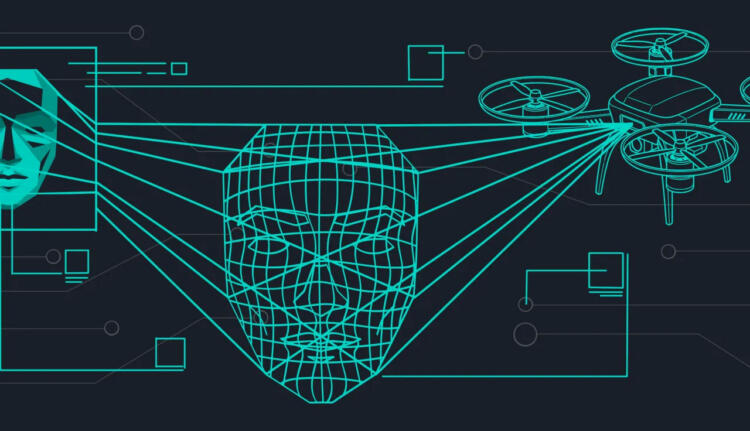
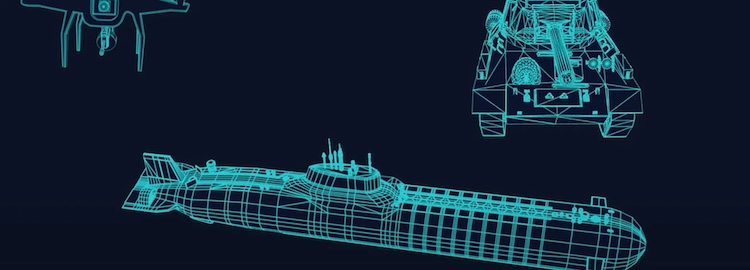
Weapons that can identify, track, and attack targets with less and less human involvement are being developed and used at a growing pace. Artificial intelligence now helps military systems analyse surveillance data, recognise objects, navigate without satellite signals, coordinate drones, and suggest targets. In some cases, once activated, a weapon can pick its target and use force without any more human input.
It is getting harder to tell the difference between automated help and machines making deadly decisions on their own.
Conflicts in Ukraine, Gaza, Sudan, and elsewhere are speeding up this shift. Drones that keep moving toward their targets even after losing contact with operators are useful when electronic control is disrupted. AI-assisted systems can process information faster than humans. Swarms of drones can break through defences by working together in large numbers. Governments under pressure to protect their troops and act quickly are unlikely to give up these advantages.
But international rules have not kept pace.
The International Committee of the Red Cross (ICRC) states that autonomous weapons are already a reality and cautions that introducing unpredictable types of AI could greatly raise the risk to civilians.
António Guterres, the United Nations Secretary-General, has called for a legally binding measure which includes prohibitions and restrictions; so too have humanitarian organisations, religious leaders, arms-control experts and an increasing number of governments.
Ahead of the Seventh Review Conference of the Convention on Certain Conventional Weapons, set to take place in November 2026, Soka Gakkai International (SGI) cautions that autonomous targeting can erase the individual behind the data and trivialise killing. Daisaku Ikeda, former president of SGI, maintained that autonomous weapons produce both a physical and an “ethical disconnect”, distancing those who initiate an attack from the reality of the consequences.
SGI calls for action. “To save succeeding generations from the scourge of war, which twice in our lifetime has brought untold sorrow to humanity.” Decisions having profound implications for human life “must never be handed over to AI.”
This June marked the 81st anniversary of humanity’s shared pledge, inscribed in the Preamble to the Charter of the United Nations—a pledge born from profound and painful reflection on the two world wars, which claimed the precious lives of people worldwide.
SGI points out that since the founding of the United Nations, the international community has continued to pursue conflict resolution and peacebuilding, even amid repeated crises, including the prolonged division of the world during the Cold War. The conclusion of various disarmament treaties has likewise advanced step by step, aided by strong civil society support.
“Today, however, circumstances have arisen that threaten to erode the internationalcommunity’ss decades-long efforts at their very foundation” In recent years, as conflicts and the use of military force continue to spread across Ukraine, the Middle East, Africa and other regions, the situation—in which “the basic tenets of international humanitarian law are routinely and deliberately being violate””—shows no sign of abating.
As a result, countless civilians, including children, women, older persons, and those suffering from illness, continue to suffer the devastating consequences of these conflicts time and time again.
The weapons are arriving before the rules
The language around autonomous weapons is often debated and sometimes kept deliberately vague.
The ICRC describes an autonomous weapon as one that, once activated, chooses and uses force against a target without any human involvement. Sensors collect data about the environment, after which the software compares it with a previously defined “target profile”. If the necessary conditions are met, the system carries out an attack.
Not all autonomous weapons use artificial intelligence, and not every military use of AI counts as an autonomous weapon. Making this distinction is important for understanding the legal and ethical issues.
A missile-intercepting defensive system might work automatically since no human could react quickly enough. It targets a clearly defined military target in a fairly controlled environment. On the other hand, an AI decision-support system could analyse intelligence and suggest a target while leaving the final decision to a human commander.
Categories that appear clear in writing can blur in practice. An AI system might rank suspected threats, decide which objects should attract attention, and work out how much time is available to act. When an operator has to deal with hundreds ofmachine-generated recommendations and only a few seconds to approve them, formal human authorisation offers only limited real control.
A person is still involved, but may only be checking what the machine has decided. A 2025 study by the Stockholm International Peace Research Institute (SIPRI) stressed the importance of distinguishing between autonomous weapons and AI-enabled decision-support systems, while acknowledging that both change how humans are involved in targeting.
The danger does not stem solely from a machine firing off the shot by itself; it also arises when people become reliant on systems whose reasoning they cannot fully examine. The institute’s comparative study highlighted the risks of unintended harm and unresolved issues under international law.
The fast pace of modern warfare makes these problems worse.
When a commander faces an incoming drone swarm, he may have only a short time to react. Artificial intelligence promises to reduce the time taken between detection and attack. Soldiers call this compressing the “kill chain”. However, the quicker the chain becomes, the less time there is for verification, legal evaluation, hesitation or restraint.
Speed is not morally neutral. It can stop an attack, but it can also turn a mistake into a deadly act before anyone realises what happened. Highlighting the moral weight of quick decisions pushes us to think about the ethical limits of faster warfare.
AI systems can misidentify an object, base their decisions on incomplete data, or act unpredictably when used under conditions different from those in which they were tested. A civilian vehicle might look similar to a military one. A wounded combatant could be taken for an active threat. Someone who is surrendering might make movements which the software sees as hostile. It is very difficult to convert cultural gestures, fear, confusion and changes in civilian behaviour into reliable rules that machines can understand.
Machines can spot patterns, but they do not truly understand the situation as humans do.
Ukraine and the laboratory of war
The Ukraine war has turned into a huge laboratory for the use of drones, electronic countermeasures, artificial intelligence and the automation of warfare.
Both Russia and Ukraine operate in areas crowded with surveillance drones, attack drones, and electronic warfare. Radio links can be jammed, and satellite navigation can be disrupted or changed. Weapons that can find their targets and finish their mission without constant communication offer a big military advantage. Pointing out these risks is meant to help people see the broader impact and the need for regulations.
Reports say AI-assisted drones can home in on targets and fly through the final phase of their approach on their own. Software packages can turn relatively cheap drones into systems that track moving objects even after losing contact. Compared to an unguided weapon, these capabilities can increase accuracy and allow the choice of target to be moved further away from immediate human control.
In 2025, Reuters stated that autonomous and AI-assisted weapons were playing a greater role in conflicts in places such as Ukraine and Gaza, while global regulation had been unable to keep up with technological development. The report highlighted the growing gap between battlefield innovation and international rules.
The strongest argument for military autonomy is that greater precision can save lives.
A weapon used to identify a military vehicle from surrounding civilian traffic can do less damage than conventional artillery. A drone which can cancel an attack if civilians enter the target area would be safer than a weapon that cannot be recalled. Automatic defensive systems can protect cities and military bases from missiles, and uncrewed machines can carry out hazardous missions without putting soldiers at risk.
One should not rule out these possibilities. Technology is not by nature inhumane, and human soldiers are no more free from error, fear, anger or prejudice than other people. Atrocities have been committed by humans using the simplest of weapons.
The real comparison is not between a perfect machine and a reckless soldier, but between different systems working in real-world situations. These situations include incomplete information, opponent deception, software flaws, commercial pressures, and commanders making decisions under heavy stress.
A machine can calculate faster than a person, but that does not mean it can make wiser judgments.
Accuracy does not resolve the ethical issue since an entirely accurate weapon could still be used against the wrong individual. Identifying a target is not the same as lawfully determining it. International humanitarian law calls for distinguishing between civilians and combatants, assessing proportionality between expected civilian harm and anticipated military benefit, and taking precautions to reduce suffering. These requirements are not simply exercises in visual classification; they involve judgment based on context and on the law.
The ICRC points out that existing autonomous systems are mostly used against clear military targets such as incoming missiles, radars, or warships, particularly in situations where civilians are not present. Applying autonomy to people or to areas inhabited by civilians would involve a much greater risk.
This is why its 2026 position paper suggests limiting autonomous weapons to objects that are military objectives by nature. The ICRC’s position paper also supports banning systems whose effects cannot be adequately understood, predicted, and explained.
Above all, the ICRC is calling for a ban on weapons which are designed or used to target human beings directly.
When a person becomes a target profile
The case against anti-personnel autonomous weapons is not grounded only in the possibility of malfunction. A machine could function precisely as designed and still cross an unacceptable moral boundary.
To choose a human target, a system has to turn the person into data.
The subject can be identified by reference to their appearance, position, clothing, manner of movement, electronic communications or by the fact that they are associated with other people. Machine-learning systems could be trained to recognise patterns linked to hostile behaviour. However, such patterns necessarily rely on previous data and human assumptions.
If the basic information is based on prejudice, poor intelligence, or discriminatory policing and surveillance, the system will be able to reproduce and amplify these distortions; individuals who belong to certain ethnic, racial or religious groups may be seen as more threatening since the historical data links their communities with conflict, and a particular pattern of behaviour can be turned into an assumption of guilt.
In everyday civilian life, it is already dangerous since algorithmic decisions can affect employment, credit, travel, and policing; on the battlefield, an incorrect classification can result in death.
A person will never discover why the system chose him. His family will never find out what specific data, probability, or software process caused the attack. The commander will not be able to explain. The developer might claim that the system was used beyond the conditions for which it was intended. The manufacturer might assign the responsibility to the military operator. Responsibility can then vanish within the chain of humans, institutions and machines.
International humanitarian law does not allow that disappearance. Weapons are not legally or morally responsible. People are.
The United States Department of Defence insists that commanders and operators should exercise “appropriate levels of human judgment” when using force; its new directive aims to reduce the risk of unintended engagements and provides extra review for certain autonomous systems. Ton’s 2023 directive shows that even governments unwilling to back a new treaty realise autonomy must not be unlimited.
Expressions like “appropriate human judgment,” “meaningful human control,” and “human in the loop” are still open to interpretation.
What is there in it for the operator if he has no opportunity to examine the recommendation? Can human supervision be real if a single person has to keep an eye on dozens or even hundreds of weapons at the same time? Is it possible to speak of effective control if a machine’s behaviour is not sufficiently predictable? And who is to be held responsible when an operator acts on the advice of a machine because military culture has led him to believe that the algorithm is more reliable than himself?
These are not just wording questions. They determine whether real human responsibility remains or becomes impersonal.
For meaningful human control, you need sufficient knowledge of how the system works; the ability to understand the operational environment; enough time to assess a target; the authority to intervene or abort the action; and clear legal responsibility for the consequences. Without these elements, the human role could become a mere formality.
Distance has always been encouraged by war. Compared to a soldier on the street, a pilot flying over a city sees less. A drone operator thousands of kilometres away finds a target on a screen. With the introduction of autonomous weapons, another kind of separation emerges: the person who orders the use of force may no longer be able to identify the specific individual or object being attacked.
It does not see any human face or hear any cry. It cannot see a human face or hear a cry. It cannot see itself as an enemy and has no conscience or remorse. It has operated for over ten years within the framework of the Convention on Certain Conventional Weapons (CCW).
The forum has united militarily powerful states with those calling for stronger humanitarian protections. Although it has produced useful principles, technical discussions, and a general acknowledgement that international humanitarian law should apply to autonomous weapons, it has not established binding rules.
The failure is partly due to the organisation’s structure, since the CCW usually reaches decisions by consensus, and a small number of militarily powerful states can halt negotiations even when many more states support them.
Russia and the United States have opposed adopting a new legally binding measure, arguing that current international law, together with domestic review procedures, is adequate or that the technology in question has not yet been properly defined. Other technologically advanced states are also careful about agreeing to rules that might limit capabilities they regard as essential to national defence.
Those in favour of the treaty reply that holding on to a technically universally accepted definition could end up being an excuse for forever failing to take any action. Rather than base arms-control agreements on a single description of the technology, they usually set out to regulate the effects and human behaviour.
There is also a strategic trap: since no major military power wants to limit itself when it thinks its rivals will keep developing autonomous systems, the fear of being left behind encourages the very arms race regulation is meant to stop.
According to the SGI statement, the number of states in favour of negotiations on a legally binding instrument increased from 42 in September 2025 to 70 by March 2026, and the next Group of Governmental Experts meeting will take place from 31 August to 4 September, before the November Review Conference.
The ICRC sees the Review Conference as a vital chance to start talks on a new protocol and supports a two-tier method: it involves banning unpredictable autonomous weapons as well as those designed to target humans and subjecting all the other systems to strict restrictions regarding their targets, the length of time they can be used, the geographical area in which they operate, and the requirement for human oversight. In its appeal of June 2026, it emphasises that the aim is not to prohibit every form of autonomous capability but rather to avoid the most unacceptable ones.

In his 2026 encyclical Magnifica Humanitas, the Vatican states that military AI must be governed by strict ethical constraints, with human dignity and the sanctity of life at their heart.
Yet the chairman of the 2026 Geneva talks has admitted that it is unlikely that a binding treaty will be completed this year. According to Reuters in March, the talks were focusing on “context-appropriate human judgment and control”, while fundamental disagreements about the treaty still existed.
If the CCW is unable to act, states that support regulation might eventually shift the negotiations to another area, as happened in the case of anti-personnel mines and cluster munitions. Even if treaties are negotiated without early involvement from major powers, they can still establish norms, stigmatise certain weapons, and affect military behaviour over time.
But waiting has a price. Once autonomous anti-personnel systems are widely used, built into military plans, and produced by a growing defence industry, banning them will be much harder.
Software also spreads differently from nuclear materials or advanced missiles.
Algorithms can be copied, altered, and transmitted. Drones, relatively cheap to produce, can be assembled from components available on the commercial market. Autonomous capabilities may one day be obtained not only by major military forces but also by smaller states, armed groups, criminal organisations and individuals.
The real nightmare is not just an army of humanoid robots, but thousands of cheap, disposable machines that can hunt people based on target profiles, on a scale no human force could match.
The human right to hesitate
The argument for keeping human control is often portrayed as if human conscience serves as a reliable check against brutality, but history demonstrates that this is not the case; people do obey illegal orders, dehumanise their enemies and kill civilians.
That does not mean that conscience should be eliminated from warfare.
A person can refuse an order. A soldier can identify when surrender has taken place. An operator can observe a child appearing in the area. A commander may conclude that the legal authority to launch an attack does not mean that an attack has to take place. Humans can be made responsible, feel remorse and give evidence about what occurred.
No machine can carry out any of these tasks.
Sometimes, a person might hesitate for only a brief moment. In the military, this is often called inefficiency or delay. Yet, this hesitation can be one of the last defences stopping society from falling into machine-driven violence.
Preserving this does not mean we reject all use of artificial intelligence or autonomy in defence. AI could improve early warning, logistics, mine clearance, navigation, cyber defence, and intercepting incoming weapons. Autonomous systems can carry out dangerous tasks and reduce risk to both soldiers and civilians.
The boundary should be set at the point at which machines start selecting people for attack, or when their behaviour becomes so unpredictable that humans can no longer understand and control it.
An international instrument which is credible ought therefore to ban autonomous weapons that are aimed at people; it should ban any systems whose effects cannot be adequately predicted; it must ensure that there is proper and appropriate human judgment in every instance of the use of force; it should impose restrictions on the places where, the times at which and the targets against which autonomous systems may operate; it had to require thorough testing and legal examination; and it must set up an uninterrupted chain of human command and accountability.
It must also look at AI decision-support systems; a weapon does not have to act autonomously to compromise human responsibility. Even if an opaque algorithm generates target lists at a speed that makes scrutiny impossible, automated killing can still occur through administrative procedures.
This debate is about more than weapons technology. It is about what kind of relationship humanity wants to create between intelligence, power, and responsibility.
The Charter of the United Nations starts with a commitment to preventing future generations from suffering the effects of war. Eighty-one years on, the international community are now discussing whether machines should be allowed to decide when human life should be taken.
The November Review Conference will not solve every technical or military problem. Still, it can set a principle before real-world events make it outdated: technology should remain a tool for human judgment, not replace it in life-and-death decisions.
People have already found out how difficult it is to control a weapon once it has been accepted as legitimate, once resources have been put into making it, and once it has been incorporated into a nation’s security policy. Autonomous weapons offer a short-term, rapidly disappearing chance to act earlier.
The essential question is not whether machines can kill more efficiently.
It is whether people are willing to create a world where killing no longer needs a human to decide, to take responsibility, or even to pause.
About the author: Ramesh Jaura is affiliated with ACUNS, the Academic Council of the United Nations, and is an accomplished journalist with sixty years of professional experience as a freelancer, head of Inter Press Service, and founder-editor of IDN-InDepthNews. His expertise is grounded in extensive field reporting and comprehensive coverage of international conferences and events. Subscribe for free or pay to stay updated. Buy SKYWARD HAVEN – A Speculative Novel. Visit: https://www.rameshjaura.com [IDN-InDepthNews]
Original link: https://rjaura.substack.com/p/when-machines-decide-who-dies
Related links: https://www.eurasiareview.com/11082026-when-machines-decide-who-dies-oped/