
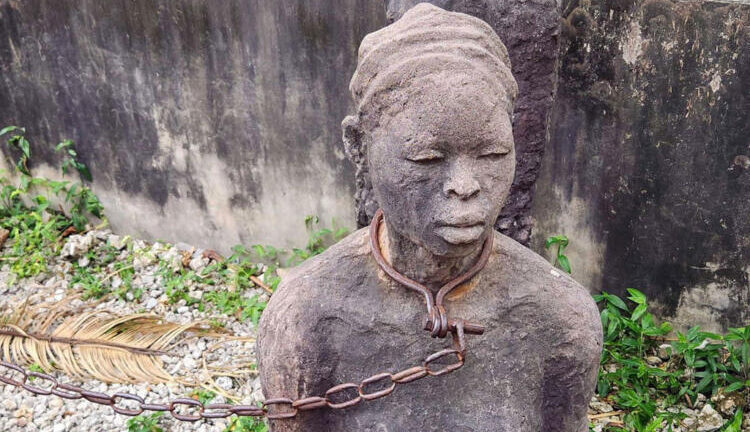
50 million Modern Slaves and America’s Battle Over Historical Memory
By Ramesh Jaura
This article was first published on https://rjaura.substack.com
BERLIN | 30 May 2026 (IDN) — More than 50 million people around the world are living in modern slavery today, according to the latest estimates from the International Labour Organisation (ILO) and the United Nations. This number includes people forced into labour, human trafficking, debt bondage, and forced marriage.
While global institutions warn that slavery is still deeply rooted in today’s economy, the United States faces its own struggle: deciding how slavery’s history should be remembered, taught, and recognised in public life.
Even though the scale of the problem can feel overwhelming, individuals can make a difference. Supporting anti-slavery organisations, choosing products from companies with transparent labour practices, and learning how to spot and report signs of trafficking are all ways to contribute to change.
In 2026, slavery is not confined to the pages of history books. It is a living reality and a flashpoint in today’s fiercest political arguments. For instance, the recent uproar over the removal of slavery exhibits from national historical sites sparked protests and heated debates in Congress, while several states have seen legal action over attempts to restrict the teaching of slavery and racial injustice in school curricula. These controversies underline just how present and politically charged the memory of slavery remains.
Two powerful forces are now shaping this debate.
On one side, international groups like the United Nations and the International Labour Organisation are urging governments to recognise how slavery still affects global inequality and human rights. On the other side, a political movement in the United States, led by President Donald Trump’s administration, is trying to change how the public remembers slavery and racial injustice by removing or changing exhibits and stories about these topics.
This conflict reveals a deeper battle over memory, identity, power, and the very meaning of historical truth.
The UN’s Warning: Slavery Never Disappeared
In early 2026, the United Nations General Assembly adopted a landmark resolution describing the transatlantic slave trade as “the gravest crime against humanity,” emphasising that the legacy of slavery continues to shape global inequality, racism, and underdevelopment.
At the same time, the ILO released updated global estimates concluding that roughly 50 million people are currently trapped in modern slavery. Of these, approximately 28 million are subjected to forced labour, while another 22 million are trapped in forced marriages. Women and children remain disproportionately affected.
These findings shatter the widespread belief that slavery vanished in the nineteenth century. Instead, global organisations insist slavery has simply changed its shape, not disappeared.
Modern slavery is often hidden within legal industries like agriculture, construction, fishing, domestic work, mining, and global manufacturing. Migrant workers can become trapped by debt, having their passports taken away, not being paid, or being threatened with deportation.
Recognising the signs of modern slavery can be challenging, but there are warning signals to look out for: people who appear to be under constant surveillance, show signs of physical abuse or exhaustion, seem fearful or hesitant to speak freely, live and work at the same location, lack control over their identification documents, or receive little or no pay. Being aware of these red flags can help individuals identify exploitation in daily life and support efforts to combat modern slavery.
Everyday products in wealthy countries may be tainted by forced labour from distant corners of the world. The logic is old: companies chase profit, often sacrificing human dignity along the way.
France and the Reckoning with Colonial Slavery
This renewed global spotlight on slavery has ignited fierce debates across Europe, with France at the centre.
A recent New York Times opinion essay looked at France’s ongoing struggle to face the legacy of its colonial slave-trading past. French ports like Nantes and Bordeaux became very wealthy from the transatlantic slave trade, while colonies such as Saint-Domingue, now Haiti, were key to France’s empire.
President Emmanuel Macron has acknowledged the need for broader public debate over France’s role in slavery and colonial exploitation, though he has stopped short of endorsing direct reparations.
Critics say symbolic gestures are not enough. They argue that the economic scars of slavery and colonial extraction still shape the gulf between Europe and its former colonies.
For example, many point to the significant wealth gap between France and Haiti, its former colony: while France remains one of the richest countries in Europe, Haiti continues to struggle with widespread poverty. Some experts highlight that Haiti was forced to pay reparations to France throughout the nineteenth century, draining its economy and hampering development—a burden that echoes into present-day disparities.
The continuing debate over whether European countries should pay reparations or return looted artefacts further illustrates how unresolved economic and social consequences of slavery persist.
France abstained from the recent UN vote that declared slavery the gravest crime against humanity. This decision drew criticism from historians and activists, who saw it as evidence that France remains uncomfortable confronting its colonial past. This situation raises a broader global question: Can nations honestly acknowledge that some of their prosperity was built on human bondage?
America’s New Battle Over Slavery’s Memory
While Europe wrestles with colonial accountability, the United States faces its own struggle over historical memory.
Under President Donald Trump’s second administration, federal policy has increasingly targeted museums, educational programs, and historical exhibits that address slavery, racism, and systemic injustice.
Trump’s Executive Order, called “Restoring Truth and Sanity to American History,” told federal agencies to review exhibits and educational materials that were seen as “divisive” or too critical of America’s past.
As a result, exhibits dealing with slavery at national parks and historical sites have been removed, revised, or subjected to political review.
One of the most debated cases happened at the President’s House Site in Philadelphia’s Independence National Historical Park. This is where George Washington lived as president and where he enslaved at least nine people.
In January 2026, the National Park Service took down the exhibit “Freedom and Slavery in the Making of a New Nation.” This exhibit told the stories of enslaved people, including Ona Judge, who escaped from Washington’s household in 1796.
Philadelphia Mayor Cherelle Parker fought the removal in federal court, saying the exhibits showed real history, not political views. Historians, legal experts, and civil rights advocates said the administration was trying to cover up parts of America’s past.
U.S. District Judge Cynthia M. Rufe later ordered the exhibits restored, warning against the dangers of government-directed historical erasure.
This controversy became a symbol of the larger battle over who gets to shape the public’s memory of history.
Supporters of Trump’s policies argue that historical institutions should promote national unity and patriotism rather than emphasise oppression and division. They believe that focusing too much on negative aspects of history, like slavery and systemic racism, risks diminishing national pride, deepening social rifts, and fostering resentment among citizens.
From this perspective, history should emphasise progress, shared values, and the achievements that have brought the country together. At the same time, some recognise that fostering unity and engaging in honest reflection about the past need not be mutually exclusive. There is a case to be made that acknowledging hard truths can strengthen a shared commitment to justice and the nation’s founding ideals, while still fostering a sense of belonging and pride.
Critics counter that the removal of slavery exhibits amounts to historical revisionism. They argue that neglecting or minimising the painful chapters of America’s past endangers a truthful understanding of the country’s development. For critics, fully acknowledging the role of slavery and injustice is vital for social healing and preventing history from repeating itself. They maintain that honest discussions about the nation’s flaws foster a stronger, more inclusive democracy and encourage accountability for ongoing inequalities.
By limiting public discussion of slavery and systemic racism, opponents argue, governments weaken citizens’ ability to understand contemporary inequalities and democratic struggles.
Historians warn that how we remember the past shapes our sense of identity as citizens. If slavery is pushed aside or softened in schools and national monuments, future generations may not understand how much it influenced the United States.
The debate also reflects competing visions of patriotism itself.
Some people see patriotism as celebrating and affirming the country. Others believe real patriotism means facing hard truths honestly.
Slavery’s Legacy Lives On
The fight over slavery’s memory is not just about the past. It is also a struggle over today’s systems of inequality and exploitation.
Many descendants of enslaved people still face higher rates of poverty, discrimination, and social exclusion. According to a 2024 Pew Research Center study, Black Americans whose ancestors were enslaved have a median household wealth less than one-tenth that of white households, and studies show they also face disproportionate barriers in health care, housing, and education. Former colonial powers still benefit from wealth gained through centuries of forced labour and resource extraction.
At the same time, modern slavery persists across the global economy.
Human traffickers now use digital technology, migration crises, and economic hardship to take advantage of vulnerable people. Climate change, wars, and global inequality also create situations where forced labour can happen.
The UN and human rights groups warn that slavery continues where institutions are weak, there is no accountability, and economic systems reward exploitation.
Why Memory Matters
Historical memory is inseparable from justice. Societies that confront their painful histories are often better equipped to tackle injustice today. For example, in South Africa, the establishment of the Truth and Reconciliation Commission in the 1990s allowed victims and perpetrators of apartheid-era crimes to publicly confront the past, helping the country transition peacefully to democracy and laying the groundwork for national healing.
Similarly, in Germany, a continued commitment to Holocaust education and memorialization is widely credited with helping to foster a more open, democratic society determined to resist hate and authoritarianism.
In the United States, the creation of civil rights museums and memorials, such as the National Civil Rights Museum in Memphis and the National Memorial for Peace and Justice in Montgomery, offers spaces for public acknowledgement of racial injustice and the legacy of slavery.
These institutions encourage honest reflection, education, and dialogue, and have become important resources for fostering understanding and promoting reconciliation. These examples show how honest reckoning with history can lead to meaningful social progress. Ignoring or softening past crimes, by contrast, weakens democracy and public accountability.
The debate in the United States over slavery exhibits, school lessons, and public monuments has effects that go far beyond museums.
It raises fundamental questions:
Who decides what history is remembered?
Can democratic societies acknowledge both achievement and injustice simultaneously?
And can nations confront the enduring consequences of slavery without perceiving truth itself as a threat?
The United Nations’ warning about modern slavery and the political battles unfolding in the United States point toward the same conclusion: slavery’s legacy did not disappear with abolition.
It survives economically, politically, and psychologically.
The way societies choose to remember or erase that history will shape the future of democracy itself. [IDN-InDepthNews]
About the author: Ramesh Jaura is affiliated with ACUNS, the Academic Council of the United Nations, and an accomplished journalist with sixty years of professional experience as a freelancer, head of Inter Press Service, and founder-editor of IDN-InDepthNews. His expertise is grounded in extensive field reporting and comprehensive coverage of international conferences and events. Subscribe for free or pay and stay updated. Buy SKYWARD HAVEN – A Speculative Novel.
Original links: https://rjaura.substack.com/p/the-long-shadow-of-slavery
Related links:
https://www.eurasiareview.com/29052026-the-long-shadow-of-slavery-analysis/