
By Jonathan Power
LUND, Sweden | 22 April 2026 (IDN) — Rightly, the debate over how to end the Iranian nuclear (bomb?) crisis is now the number one issue in Western foreign policy. Compared with that, the civil war in Ukraine seems almost trivial—one that could be resolved in a week if only the West made it clear that Ukrainian membership of NATO is not on the table, and that Russia could reclaim its old Russian-speaking provinces.
Likewise, the struggles to defeat ISIS, to contain the Houthis in Yemen, or to protect Taiwan are of lesser consequence. These are serious challenges, but they can be contained. None of them threatens the world in the same existential way.
The Nuclear Taboo at Risk

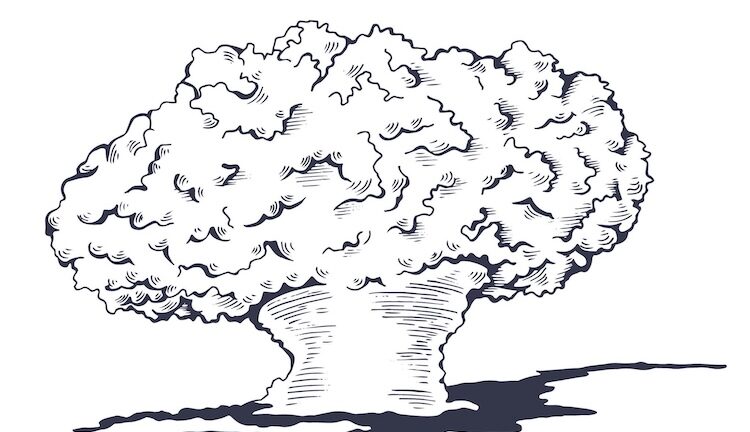
But nuclear weapons are different. One nuclear bomb going off would bring the world figuratively to its knees. Fear would spread instantly—fear of a second, a third, a fourth strike.
The long-standing taboo against their use—held since the atomic bombings of Hiroshima and Nagasaki—would be shattered.
From there, escalation becomes frighteningly easy to imagine: Pakistan against India, China against Japan, Israel against Iran, North Korea against South Korea, or even one day Russia against China or the United States—or vice versa.
The Iranian “bomb” negotiations are therefore critical. Success would help limit both the spread of nuclear weapons and the risk of their use.
A Quiet Success Story in Nonproliferation
Few people appreciate how successful the fight against nuclear proliferation has been. Outside the five permanent members of the UN Security Council, only four additional countries have acquired nuclear weapons.
On several occasions, countries have come close to developing nuclear arms—only to step back. Libya under Muammar al-Gaddafi voluntarily dismantled its program. South Africa gave up its weapons. Sweden, Iraq, South Korea, Argentina, and Brazil all halted or restrained their ambitions—though Brazil still maintains a large enrichment program tolerated by the United States.
Yet perhaps the most dangerous case was West Germany.
Only 13 years after its defeat in World War II, West German leadership seriously considered building a nuclear bomb. Had it proceeded, the Soviet Union would almost certainly have taken preemptive action, potentially devastating Germany for a second time in a generation.
Germany’s Lesson—and Today’s Warning
Despite the creation of NATO and the Marshall Plan, West German leaders doubted U.S. security guarantees. Chancellor Konrad Adenauer warned against a world where “America is a fortress for itself,” leaving Europe exposed.
In 1956, he wrote to U.S. Secretary of State John Foster Dulles that Europe had lost confidence in American reliability. Soon after, he vowed to acquire “the most modern weapons for Germany.”
By 1958, West Germany had entered into a secret nuclear cooperation agreement with Italy and France. Although pressure from Washington and London officially ended the project, clandestine ambitions persisted.
President John F. Kennedy attempted to resolve the issue through a Multilateral Force (MLF) within NATO, integrating nuclear capabilities under shared command. But even this raised an alarm.
Adenauer, while endorsing the proposal, suggested decisions on nuclear use should be made before consulting the U.S. president—a position that deeply unsettled both Washington and Moscow.
Soviet leader Nikita Khrushchev warned that the MLF would create a dangerous “crack” in nonproliferation efforts. His successor, Alexei Kosygin, cautioned that the Soviet Union would take all necessary measures if West Germany gained access to nuclear weapons in any form.
Given the devastation inflicted by Nazi Germany just years earlier, such fears were understandable.
Washington ultimately abandoned the MLF and applied strong pressure to halt German ambitions. Under Chancellor Willy Brandt, West Germany signed the Nuclear Non-Proliferation Treaty in 1969.
Germany had been stopped in its tracks.
Yet today, debate has quietly re-emerged in Germany about whether it should possess nuclear weapons—an unsettling reminder that history’s lessons are never entirely secure.
Iran and the Cost of Strategic Missteps
This is why the United States is right in principle to be alarmed about Iran—if indeed Tehran intends to build a bomb.
Tragically, President Barack Obama negotiated a highly effective agreement with Iran, only to see it dismantled by President Donald Trump during his first term.
Now Trump faces the near-impossible task of persuading Iran to reverse course.
How depressing it is to watch the United States, once again, shooting itself in the foot. [IDN-InDepthNews]
Copyright: Jonathan Power