
By Jonathan Power*
LUND, Sweden | 10 December 2025 (IDN) — There is a new peace agreement (as there have been many) between the government of the Congo and the rebels in the east, which includes the notorious and murderous M23 rebel movement. It captured Goma, the capital of North Kivu province, and Bukavu, the capital of South Kivu, earlier this year. The
“peace” has been brokered by President Donald Trump, who, at a ceremony in Washington last week, stressed that the accord would open up the region to intensive US investment, mainly including mining. Felix Tshisekedi and Paul Kagame, the two leaders from the Congo and Rwanda, signed the agreement.
For years, the Rwanda-allied M23 rebels and the Congolese army have accused each other of violating earlier ceasefires, which never fully came into effect.
When peacekeepers turned to force
Back in 2013, the UN Security Council authorised the deployment of troops to the eastern Congo, armed with tanks and helicopter gunships, to defeat the one remaining dissident militia in the Congo. Not long after, UN officials declared that the war in the Congo, which on and off has consumed the nation for over 60 years, seemed to be over. The UN, instead of using its blue helmets to keep the peace, used its soldiers to blast the enemy. But clearly, the “peace” supposedly in place has disintegrated—in fact, it has disintegrated several times since 2013.
Trump has not yet called for intervention by “peacekeepers”, whether under a UN mandate or that of the Organisation of African Unity. But he should if the accord is to have any chance of success. Should the UN again try a military-style peacekeeping mission to keep the present negotiations on track? Or aren’t the peacekeepers undermining the non-violent precepts laid down when UN peacekeeping was created?
Article 42 and the UN’s war-making power
Rarely discussed but looming in the background is Article 42 of the UN Charter, which states, “The Security Council may take such action by air, sea or land forces as may be necessary to maintain or restore international peace and security.”
In 1947, the UN’s Military Staff Committee prepared a proposal that the Big Five powers agreed to on the strength and size of a UN force. There was to be an air force with 700 bombers and 500 fighters—a naval force with three battleships, six aircraft carriers and 14 submarines. The army would have 450,000 men.
The British delegation drew up a list of possible areas for deployment that, except Jordan and Saudi Arabia, would not look out of place in the last 25 years:
a) The Balkans: Yugoslavia and Albania.
b) The Middle East: Syria, Lebanon, Palestine, Jordan, Iraq, Saudi Arabia and Egypt.
c) South-east Asia: Burma, Thailand, Malaya, Vietnam and East Timor
We can ponder what the world would have looked like if the Cold War had not intervened and this forward thinking had not been rapidly shelved. Would there have been a Suez Crisis? The Vietnam War? Numerous Middle Eastern wars? The Falklands War, the Yugoslav wars, the genocide in Rwanda and civil wars in the Congo, Nigeria, Central America, Sudan, Syria and Palestine/Israel. Probably not, as violence often begets violence.
Restraint, not triggers
The question now is whether the UN membership will continue to support the use of peacekeepers to bring peace to areas of conflict, such as in Congo? It can be American-led, as it was in Korea in 1950, Iraq in 1991, Somalia in 1992/93 or, on a smaller scale, Australian-led as it was in East Timor in 1998 or British-led as it was in Sierra Leone in 2001 or Italian-led as in Lebanon in 2006/7 or British and French-led in Libya in 2011. In all these cases, the Security Council authorised a particular lead country. Today, Russia leads the deployment in the Western Sahara and contributes to the force in Cyprus, among others. Earlier, before the conflict with Ukraine escalated, Russia suggested that the UN send peacekeepers to the Russia/Ukraine border. Presently, there are 11 UN peacekeeping operations.
A more robust UN, as some argue for, has its dangers—it will inevitably devalue the old-time peacekeeping, a tool fashioned out of necessity when the imperatives of the Cold War froze more ambitious plans. Brian Urquhart, who for many years was head of UN peacekeeping and for a brief period ran the now mythical campaign in the Congo in the early 1960s, wrote in his autobiography of the many tensions implicit in that quite terrifying peacekeeping operation that left Urquhart himself beaten unconscious and Secretary-General Dag Hammarskjold killed in a still unexplained air crash as they sought to mediate. Many of the soldiers, Urquhart recounts, from Swedes to Indians to Ethiopians, wanted to use force.
Urquhart and his boss, the American Ralph Bunche, gradually persuaded them of the virtue of restraint. “They simply did not want to understand either the principle involved or the bottomless morass into which they would sink if they descended from the high ground of a non-violent international peacekeeping force. The moment the UN starts killing people, it becomes part of the conflict it is supposed to be controlling and therefore part of the problem. It loses the one quality that distinguishes it from and sets it above the people it is dealing with”.
Bold words and with a sizeable element of truth, as Bunche, Urquhart and their successors demonstrated in a large number of successful and largely forgotten peacekeeping interventions—in the Lebanon, in Cyprus, in Sinai and Namibia, in El Salvador, Iran/Iraq, in Cambodia and Macedonia.
The question is whether Security Council members should be more open to using military force under the UN flag. I think not, as I argue in my book, Conundrums of Humanity—The Big Foreign Policy Questions of Our Day, there are many alternatives before it comes to that. We have to be cleverer in anticipating situations of violence and abuse and move to head them off by a mixture of non-violent intervention, astute diplomacy, political and economic pressure and the deployment of peacekeeping troops. The use of force must be the last thing considered. Fingers pulling the trigger are not needed in 95% of the situations. The UN in Congo and Rwanda, if its numbers are beefed up, now has the chance to show the truth of this.
*Jonathan Power has been an international foreign affairs columnist for over 40 years and a columnist and commentator for the International Herald Tribune (now The New York Times) for 17 years. [IDN-InDepthNews]
Copyright: Jonathan Power
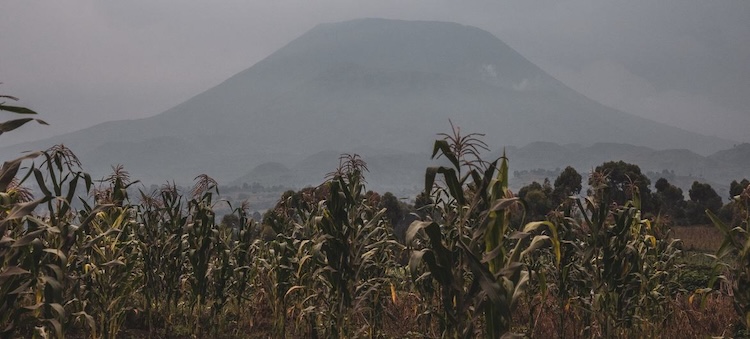
Image: Farmlands in eastern Democratic Republic of the Congo, where many communities have been displaced due to conflict and disasters. (file photo) © UNICEF/Vincent Tremeau