Prosperity Party Left 75 Seats to the Opposition in Bid to Legitimize Elections
By Daniel Tesfa, Filmon Gebremikael, Shim Masha, Kristína Melicherová, Mirjam van Reisen and Joëlle Stocker
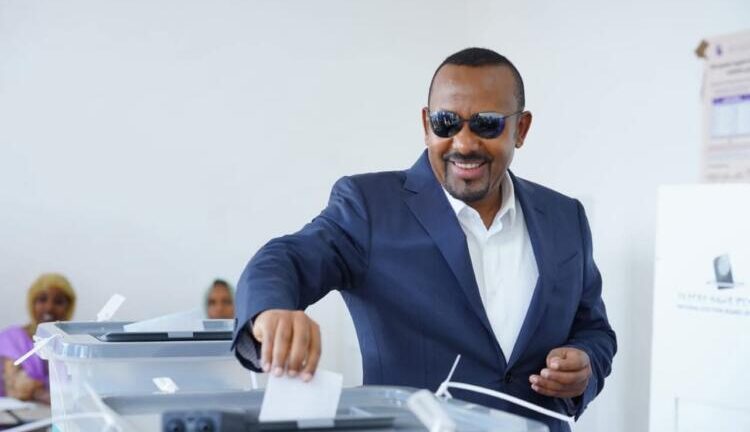
ADDIS ABEBA, Ethiopia | 2 June 2026 (IDN) — The 7th Ethiopian general election, being conducted on 1st June 2026, represents one of the most administratively expansive and politically contested electoral processes in the country’s recent history.
Official communication from the National Election Board of Ethiopia, the Ethiopian News Agency and affiliated state institutions consistently framed the election as a milestone in Ethiopia’s democratic consolidation, emphasising administrative readiness, technological modernisation, and unprecedented levels of citizen participation.
At the level of electoral administration, the scale of the election was frequently highlighted as evidence of institutional capacity. More than 50 million citizens were registered to vote, positioning the election as one of the largest electoral exercises in Africa. Gender-disaggregated data further emphasised representational inclusion, with approximately 46 percent of registered voters being women and 54 percent men, reinforcing the state narrative of broad-based democratic participation.
Institutionally, the National Election Board of Ethiopia and state media reported extensive electoral preparation across the federation. These included voter registration drives, stakeholder consultations, polling station organisation, media debates and the nationwide distribution of election materials. Ethiopian News Agency reported that electoral authorities completed preparations, including coordinating logistical infrastructure, accrediting observers and journalists, and organising voter education campaigns in multiple languages. The National Election Board of Ethiopia facilitated multilingual debate forums and national civic education programs designed to enhance electoral awareness across Ethiopia’s linguistically diverse population.
The electoral process also involved a large-scale accreditation system that further reinforced the image of institutional preparedness. According to official reporting, more than 220,000 political party representatives, 1,814 journalists, and over 64 media institutions were accredited to participate in election observation and coverage. In addition, 169 civil society organisations were engaged in voter education, while 55 organisations were granted formal observer status, which indicated a broad institutional arrangement to incorporate non-state actors into the electoral process.
Politically, the election involved participation from multiple parties across federal and regional levels. However, this participation did not necessarily translate into competitive pluralism. While dozens of political parties fielded candidates, only a limited number reached the threshold required for meaningful national competition. The ruling Prosperity Party (PP) and Ethiopian Citizens for Social Justice (EZEMA) emerged as the only parties capable of fielding a sufficiently large number of candidates to theoretically contest governance at the federal level.
Despite these extensive administrative preparations, the election was simultaneously shaped by insecurity, territorial fragmentation, and contested sovereignty, which significantly affected both participation, competition and legitimacy. This duality, high administrative mobilisation alongside uneven political inclusion, forms the core analytical tension of the 2026 electoral process.
The Legitimacy Debate: Elections under Conflict, and Fragmented Sovereignty
The legitimacy of the 7th Ethiopian general election was widely debated in relation to ongoing insecurity across multiple regions of the country. While official discourse emphasised preparedness and national participation, independent reporting and critical commentary highlighted the extent to which conflict conditions shaped both electoral access and democratic credibility.
Reuters reported that the election took place amid “significant unrest across much of Africa’s second most populous country,” including ongoing instability in Oromia and Amhara regions. In these areas, insecurity not only disrupted campaigning but also limited political assembly, voter outreach, and electoral mobilisation. Such conditions challenge one of the core principles of democratic elections: the ability of political actors to compete under equal and secure conditions.
From a legitimacy perspective, insecurity introduces structural inequality into electoral participation. Elections are not only about the act of voting but also about the broader conditions that make meaningful competition of parties and participation of citizens possible. When insecurity constrains movement, communication, and political organisation, electoral legitimacy becomes unevenly distributed across territory and population groups.
The National Election Board itself acknowledged aspects of this fragmented reality through its security classification systems, categorising regions using “Green, Yellow, and Red” zones depending on security conditions. While this classification reflects an attempt at administrative management, it also reveals that electoral governance was deeply conditioned by security concerns. Rather than operating in a uniformly stable environment, the election was effectively embedded within a landscape of differentiated risk and political instability.
Critically, electoral participation in such contexts risks becoming “merely procedural,” with voting occurring without necessarily reflecting fully open or competitive democratic conditions. This distinction is central to the legitimacy debate: procedural elections may satisfy administrative criteria, but they may fall short of substantive democratic standards if political freedoms are uneven or constrained.
The legitimacy question is not whether elections occurred, but whether they occurred under conditions that allow for meaningful political competition, equal participation, and genuine voter choice. In Ethiopia’s 2026 election, this question remains contested and certainly not addressed.
Tigray, Parts of Amhara, and Oromia as Sites of Electoral Absence
One of the most significant features affecting the legitimacy of the 2026 election was the uneven territorial participation across Ethiopia’s federal system. Tigray has been fully excluded from the election, while parts of Amhara and Oromia, are partially excluded from the electoral process due to ongoing conflict and insecurity.
While the federal government extended the 6th election, due in 2020, to 2021, citing the COVID-19 pandemic as justification, the Tigray People’s Liberation Front (TPLF) proceeded with the election in 2020, and both sides delegitimised each other, leading to the bloody war that devastated Tigray. While the federal government conducted the delayed election in 2021, no elections were held in the Tigray region, which was at war. Consistent with the situation in the 2021 election cycle, there is no election across all constituencies in the Tigray region in 2026 either.
The youth in Tigray are currently facing continued forced military mobilisation by the TPLF-affiliated Tigray military and police forces. After Tigray was administered by the Interim Regional Administration, the TPLF recently reinstated the regional council elected in 2020 that was sidelined during the war and later by the Pretoria Agreement as illegal and illegitimate. Tension escalated in Tigray as a result of the aggressive military mobilisation coupled with the Ximdo alignment with the Eritrean government, leading hundreds of thousands of youth to flee the region to Addis Abeba and even pursue migration abroad through dangerous routes.
In addition, 19 constituencies in Amhara and 8 in Oromia were excluded from voting due to insecurity during the previous election in 2021, a pattern that continued in varying forms into the 2026 election, where parts of Amhara and Oromia are excluded from the election today.
This territorial exclusion has significant implications for democratic legitimacy. In federal systems such as Ethiopia, elections are not only mechanisms of representation but also expressions of territorial integration. When entire regions or large portions of them are excluded from voting, the principle of equal citizenship is undermined, as electoral participation becomes geographically differentiated.
Tigray represents the most significant case of electoral absence. Following the armed conflict and subsequent political restructuring, the region remained outside the national electoral process for two consecutive electoral terms. This absence reflects not only security challenges but also unresolved questions of political authority between federal and regional actors. Competing claims over governance in Tigray illustrate a broader condition of fragmented sovereignty, where authority is not fully centralised or uniformly recognised across the national territory.
Similarly, insecurity in Oromia and Amhara illustrates the unevenness of electoral space. In these regions, armed conflict and political instability restricted both campaigning and voter participation, which created conditions in which electoral engagement could not occur uniformly across constituencies.
The result is a geographically fragmented election in which democratic participation is spatially uneven. While the election aims to maintain constitutional validity at the national level, its symbolic legitimacy as a fully inclusive democratic exercise becomes increasingly contested.
Participation without Competition
Although the 2026 election involved a large number of political parties, the data suggest that the electoral system operated more as a participatory but not fully competitive political structure. While multiple parties registered candidates, only a limited number were able to field candidates across a sufficiently broad geographic scope to challenge for national power. Even within this limited field, EZEMA’s leadership acknowledged that the party’s expectations were “managed,” indicating an absence of realistic competition and honest prospects for forming a new democratically elected government.
Historical electoral patterns further contextualise this dynamic. Ethiopia’s ruling party and its predecessor have consistently dominated electoral outcomes, including 99.6% of parliamentary seats in 2010, 100% in 2015 and approximately 97% of contested seats in 2021.
These patterns demonstrate a long-standing dominance structure in Ethiopian electoral politics. Within this historical trajectory, the 2026 election continues a pattern in which electoral processes are highly participatory in form but limited in competitive outcome.
A particularly notable feature of the 2026 election is the ruling party’s decision not to contest certain constituencies. The Prosperity Party did not register candidates in 48 parliamentary constituencies and approximately 284 regional and city council seats. Opposition parties working with the ruling party are made to win seats unopposed, accounting for approximately 75 seats to be granted without direct contest, including 65 secured by the Prosperity Party itself through uncontested races.
This arrangement raises important questions about the nature of electoral competition. In a fully competitive electoral system, political parties typically contest as many seats as possible to maximise representation. However, the selective absence of ruling party candidates in certain constituencies creates a managed form of competition, where outcomes in some areas are effectively predetermined.
Prime Minister Abiy Ahmed himself stated that opposition representation in parliament would increase “by five to ten times,” adding that his party would “intentionally work toward this”. While this may serve as a propaganda tool by the ruling party for the public to consider this managed participation of selected opposition parties in the parliament as an expansion of pluralism, it can be argued that such managed inclusion does not necessarily reflect genuine electoral competition but rather a controlled redistribution of seats within a dominant-party framework for image-building towards legitimatisation of the election that benefits the ruling party. Thus, the Ethiopian case reflects a hybrid political system where there is participation, but competition remains under the surveillance of the ruling party.
Legitimacy, Managed Pluralism, and the Question of Electoral Meaning
The combination of high participation rates, extensive administrative preparation, and selective electoral competition produces a complex legitimacy landscape. On one hand, the 2026 election demonstrates significant institutional capacity and widespread civic engagement as claimed by the National Election Board of Ethiopia. On the other hand, the absence of full territorial inclusion, combined with limited political competition, raises questions about the substantive meaning of electoral democracy.
The decision of the ruling party to leave certain constituencies uncontested, while simultaneously dominating historically across elections, reflects a form of managed pluralism. In this arrangement, opposition presence is permitted and even institutionally encouraged in certain areas, but within boundaries that do not fundamentally challenge ruling party dominance.
Critically, such arrangements raise questions about global electoral standards, which emphasise not only participation but also genuine competition, equal access to political space, and the absence of structural advantages for incumbent parties. When competition is partially structured through selective non-participation by the ruling party, the line between inclusion and control becomes blurred.
Ultimately, the 2026 Ethiopian election illustrates a central paradox: it is simultaneously one of the most participatory elections in Ethiopian history in terms of voter registration and civic engagement, yet also one of the most contested in terms of competition, territorial inclusion, and sovereignty.
While it is expected that Prime Minister Abiy Ahmed and the ruling Prosperity Party will repeat the landslide electoral outcome recorded in the 2021 general election, the broader political significance of such a victory, and how the government may seek to translate renewed electoral legitimacy into political authority, governance reform, or further consolidation of state power, remains uncertain.
We have some hints.
In a meeting organised by the National Dialogue Commission in May 2026, the Prime Minister stated that the country should limit the power of the head of government as part of the much-awaited wider constitutional reform that many Ethiopians have been calling for since 1995. Such a claim to limit the power of the head of state triggers another question, whether the Prime Minister means to change the Ethiopian state arrangement from a parliamentary to a presidential system, which is consistent with his realm of Medemer. Another contested part of the anticipated constitutional reform that Prime Minister Abiy promised is to limit the power of regional governments as a means to consolidate power at the federal level. These constitutional reforms were among the key promises Prime Minister Abiy Ahmed made when he came to power in 2018, framing them as necessary steps toward political reform and democratic transition in Ethiopia.
Conclusion
The 7th Ethiopian general election reflects a complex electoral environment shaped by high administrative capacity, extensive participation, and significant political constraints. While official narratives emphasise legitimacy through numbers, inclusion, and preparedness, critical analysis reveals that legitimacy remains unevenly distributed across regions/territories, political actors, and institutional arrangements. The election can be understood as a democratic exercise in representation and a political mechanism through which state authority is reaffirmed, contested, and managed under conditions of insecurity, fragmented sovereignty, and constrained political competition. In this sense, the 2026 Ethiopian election is best understood not as a definitive expression of democratic consolidation, but as an ongoing negotiation over the meaning of electoral legitimacy in a context where participation is extensive, competition is managed, and sovereignty remains unevenly realised across the federation. With the result of this election already predetermined, whether the post-election legitimacy claim serves as a fertile ground for what Prime Minister Abiy claimed “wider constitutional reform” is yet to be seen. [IDN-InDepthNews]