By David L. Phillips*
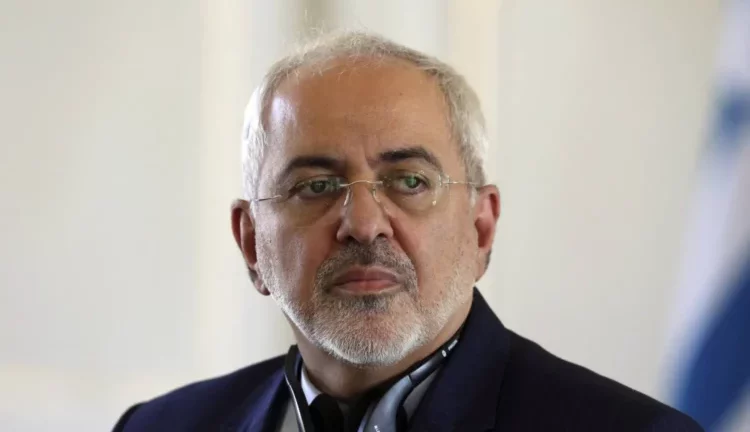
OXFORD, UK | 29 April 2026 (IDN) — I spent hours with Ambassador Javad Zarif, Iran’s Permanent Representative to the UN and Foreign Minister in 2015. Rather convincingly, he maintained that Iran was not seeking a nuclear weapon but merely insisting on its right to enrichment.
He called Iran’s nuclear program a matter of “Persian pride”. Since then, nothing fundamentally has changed in the conflict between Iran and the United States in connection with Iran’s nuclear program.
Now the US and Iran are at war. How did we get to this point?
After two years of painstaking negotiations, Iran agreed to the Joint Comprehensive Plan of Action (JCPOA) in 2015, limiting its nuclear activities in exchange for sanctions relief and enhanced verification. President Barack Obama called the negotiations the “most consequential foreign policy debate that our country has had since the invasion of Iraq.”
The JCPOA marked a high-water mark for diplomacy and a triumph for multilateralism. It was negotiated by the P-5 countries, five permanent members of the UN Security Council – China, France, Russia, the United States and the United Kingdom, with Germany. The European Union, represented by its High Representative for Foreign Affairs and Security Policy, was also a signatory.
Iran agreed to reduce uranium enrichment to 3.67% and limit stockpiles to 300 kg, far below weapons-grade levels, according to the Centre for Arms Control and Non-Proliferation. It agreed to cap enrichment capacity at Natanz and Fordow nuclear facilities and reconfigure the Arak heavy-water reactor so it could not produce weapons-grade plutonium.
Not only did it offer a way to limit Iran’s nuclear activities. It promised a path to restoring US-Iran relations and to Iran regaining legitimacy with the international community.
Ronald Reagan, no softie on negotiations, said of the Strategic Arms Limitation Talks, “Trust but verify”. The JCPOA embodied robust verification. It required Iran to agree with the International Atomic Energy Agency’s Additional Protocol, granting unprecedented access to monitor all nuclear sites. If Iran were found to be in violation of the terms, “snap back sanctions” would be immediately applied.
President Donald Trump called it the “worst deal in US history.” Trump objected to sanctions relief and the release of Iran’s overseas assets, even though much of the frozen assets were illiquid reserves and escrowed oil proceeds rather than cash sitting in U.S. banks. He also objected that the agreement did not address Iran’s missile program, a legitimate concern.
Israeli Prime Minister Benjamin Netanyahu echoed his concerns. Two years after the JCPOA went into effect, Trump withdrew the accord.
Donald Trump is adamant that Iran cannot be allowed to have a nuclear weapon. US policy makers and intelligence circles agree. Trump ignores the fact that the JCPOA was working. There was no indication of a “breakout” by Iran to develop a nuclear weapon.
Iran has been distrustful of the United States since the CIA-backed coup in 1953 that overthrew its prime minister and installed Shah Mohammad Reza Pahlavi. Hostilities continued when Iran seized 66 US hostages at the US Embassy in 1979.
The US provided missiles and chemical weapons to Iraq during the Iran-Iraq War (1980-88). And Trump ordered the assassination of Qasem Soleimani, the Qods Force commander, in January 2020.
Hardliners viewed Trump’s withdrawal from the JCPOA as proof of America’s untrustworthiness. Unfettered by the JCPOA, Iran accelerated enrichment to higher levels. It reduced the IAEA’s inspection at nuclear sites. Instead of peacebuilding, the attack intensified the proliferation risk and put the US and Iran on the path to war.
Recent talks in Islamabad represented a step forward. However, distrust between the US and Iran is not going to be cleared up in 21 hours, the time it took JD Vance and his team to conclude negotiations. Distrust is deeply rooted in history and cultural misunderstanding.
What’s the way forward? The upcoming ceasefire deadline should be extended. Pakistan should continue its mediation. As we’ve seen, starting a war is easy. Negotiating and building peace is a painstaking process that requires skilful diplomacy and takes time.
*David L. Phillips is a former US official who served in the Near Eastern Affairs Bureau of the State Department. He is currently an Academic Visitor at St. Antony’s College, Oxford University. [IDN-InDepthNews]