By Shabnam Baloch
The writer is the Country Director at Oxfam in South Sudan.
JUBA, South Sudan | 2 July 2026 (IDN) — As experts gathered in New York earlier this month to discuss the future of the humanitarian landscape and durable solutions for displaced people, the conversations touched on linking humanitarian response to long-term development.
These are important conversations to have, but they also raise a simple question that rarely gets enough attention: whose definition of durable solutions are we using? In South Sudan, where I’m based, the answer looks very different from the discussions in conference rooms.
For millions of displaced people in South Sudan, a durable solution to the challenges they are facing isn’t a combination of frameworks, indicators, or policy work – it’s being able to return home, have access to lifesaving assistance, and hope they won’t be forced to flee again.
Yet too often, durable solutions are defined as technical milestones measured through coordination structures and plans, which often miss the reality facing families living through conflict, climate shocks and shrinking humanitarian funding, such as in South Sudan.
Displacement does not end because systems declare it resolved. It ends—or persists—when people can actually rebuild their lives with safety, dignity and agency.
And that depends on who holds power in defining what “success” looks like.
Local Leadership Matters
National NGOs, civil society, and especially women’s rights organisations working in fragile contexts do not play a secondary role in establishing durable solutions. They are at the centre of these solutions.
They operate across the humanitarian–development–peace nexus in ways formal systems often struggle to replicate – sustaining trust with communities, linking emergency response with recovery and supporting governance structures long after international attention has moved elsewhere.
Yet despite this, they continue to be treated primarily as implementers rather than as equal partners shaping outcomes, accountability, and legitimacy.
That gap is no longer a technical oversight. It is a structural constraint on progress, and if durable solutions are to be meaningful, systems must genuinely redistribute the decision-making power. But how?
To achieve this, external support must empower and strengthen local actors, rather than substitute them.
In South Sudan, local civil society—particularly women-led organisations- are often the ones holding communities together. They support survivors of gender-based violence, help women access services and navigate local realities outsiders struggle to understand. For this to work, they must be resourced and embedded in governance, planning, and monitoring structures.
We all can agree that recovery cannot be designed from major cities like New York. It has to be shaped by people who understand the realities of displacement because they live alongside affected communities.
Funding is also part of the problem, and this requires a fundamental shift. Durable solutions are not short-term interventions. They are long-term processes of rebuilding social and economic contracts. That demands predictable, flexible, multi-year financing aligned with the reality of recovery—not with the cycles of humanitarian programming and reporting.
In the era of shrinking budgets, local organisations are expected to do more with fewer resources. In the context of South Sudan, that’s simply impossible. Resources were already overstretched, and now the conflict in Sudan is placing an even greater pressure on communities and organisations supporting them.
Measuring What Matters
The second structural flaw lies in measurement. Too often, we measure what is easiest to count: the number of people relocated, shelters built, or services delivered. These metrics are administratively convenient but tell only part of the story in determining whether a solution is truly durable.
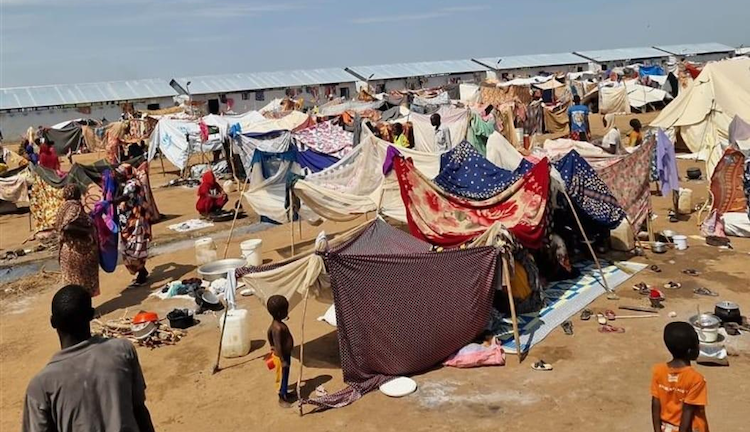
For instance, earlier this year, in Akobo, Jonglei State, over 270,000 people were displaced by conflict. Since then, many have returned home, but this says very little about the durability of this return. Are families safe? Can they farm their land without fear of a renewed conflict? Do people have access to clean water, sanitation facilities, health centres, and schools? In short, can people have a normal life?
These are the questions that determine whether displacement has truly ended or paused.
In our context, many families return because they have exhausted every other option, not because conditions are safe or sustainable. Renewed displacement is often treated as a setback when it should instead be treated as evidence that underlying vulnerabilities were never resolved.
Durable solutions must therefore be measured through lived reality—not institutional performance. This includes whether people, especially women and girls, can move safely in public spaces, access services with dignity, make informed decisions about return or integration, participate in decisions that affect their lives, and rebuild without fear of renewed displacement.
Without this shift, there is a risk of labelling situations ‘durable’ when they remain fragile in people’s everyday lives. A durable solution is not simply the end of displacement on paper. It is when people can move beyond survival and rebuild their lives with stability, dignity, and choice.
That shift cannot be captured solely through administrative systems. It must be defined by those experiencing it.
Three Essential Shifts
Getting there requires three shifts which are essential if durable solutions are to be credible.
First, local civil society and women-led organisations must be embedded in decision-making and monitoring systems—not as implementers, but as co-governors of outcomes.
Second, durable solutions frameworks must systematically integrate community-level realities into national and international reporting systems, ensuring that lived experience is not filtered out of formal measurement.
Third, monitoring systems must expand beyond outputs to include safety, agency, access to resources, and gender- and vulnerability-sensitive outcomes as core indicators of success.
Member States, the UN system, and donors all have a role to play in enabling this shift. Durable solutions will not fail because we lack frameworks. They will fail if we continue to design them without transferring real authority to the people who understand displacement most intimately: affected communities themselves.
And that will only happen when local civil society, especially women-led organisations, are not treated as partners in implementation, but as leaders in defining, designing, and holding systems accountable for what “durable” truly means. [IDN-InDepthNews]