
By Jonathan Power*
LUND, Sweden | 13 January 2026 (IDN) — Writing in 1751, Voltaire described Europe as “a kind of great republic, divided into several states, some monarchical, the others mixed but all corresponding with one another. They all share the same religious foundation, even though they are divided into several confessions. They all have the same principles of public law and politics unknown in other parts of the world.”
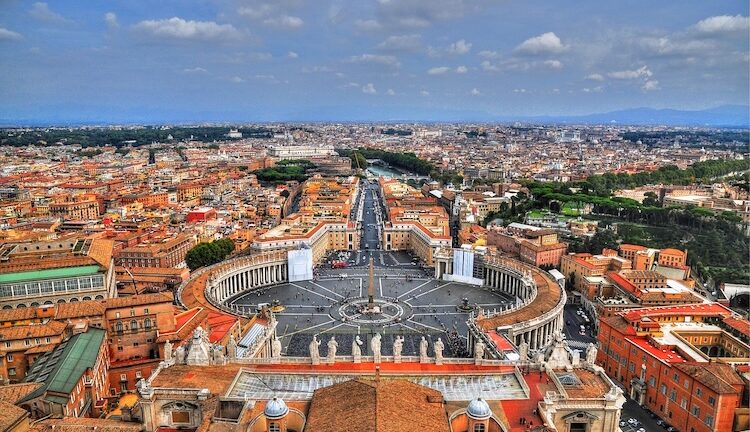
Seventy-five years ago, on 1 January, in a way that Charlemagne, Voltaire, William Penn, and Gladstone—the early advocates of European unity—could only have dreamed of, a united Europe became a reality with the creation of the European Coal and Steel Community by Germany, France, Luxembourg, the Netherlands, Belgium, and Italy. Since then, it has expanded from six founding members to the current European Union of 27 countries, most of which share a single currency.
A Continent Scarred by War
War, time and again, has interrupted Europe’s pursuit of harmony. Centuries of civil and international conflict have pitted the French against the Germans, the British against the French, the Spanish and Germans, the Russians against the Swedes, the French and Germans, the Czechs against the Poles, the Spaniards against the Spaniards, and Gentiles against Jews—reaching its dreadful climax in World War II.
As Jan Morris wrote in her superb Fifty Years of Europe: “Great cities lay in ruin, bridges were broken, roads and railways were in chaos. Conquerors from East and West flew their ensigns above the seats of old authority, and proud populations would do almost anything for a pack of cigarettes or some nylon stockings. Europe was in shock, powerless, discredited, and degraded.”
No other continent has witnessed so much war.
In 1945, many—perhaps most—wondered whether they would ever see Europe again in any state of grace or glory, let alone unified.
The Greatest Political Achievement of Modern Times
That the urge to bury the hatchet and forge common institutions has come so far, so quickly, against such a background is the greatest political achievement of the twentieth and twenty-first centuries.
(Following the Declaration of Independence, it took the United States nearly 90 years to establish a fully mature common currency; Europe accomplished the same in just 40.)
Yet this astonishing triumph raises a fundamental question: what is the glue that holds Europe together?
Geographically, Europe is little more than a peninsula protruding from Asia. Culturally, it has always been a potage of languages, peoples, and traditions. Politically, it is a movable feast: of the 35 sovereign states in post–Iron Curtain Europe, nine have been created or resurrected since World War II. Humanly, it should include Russia—and, one hopes, it will one day. Meanwhile, Britain should rejoin it.
Christian Roots and European Unity
It is religion—not politics nor economic and monetary union—that, through the ages, has made Europe one. It has held Europe together through its vicissitudes (many tragically of religious origin) and provided the common morality and shared identity that make a single currency possible today and political union a tangible, if still contested, goal tomorrow.
Nor should it be forgotten that today’s Russia is part of this Christian inheritance. The idea of going to war with her is blasphemous—and vice versa.
In a 1945 broadcast to a defeated Germany, the poet T.S. Eliot reminded his audience that, despite war and “the closing of Europe’s mental frontiers because of an excess of nationalism,” it is in Christianity that Europe’s arts developed and in Christianity that its laws—until recently—were rooted. An individual European, he said, may not believe the Christian faith is true, “and yet what he says, and makes, and does, will depend on the Christian heritage for its meaning.”
Brexit: A Mistake That Can Still Be Undone
One may ask what today’s cults of finance, sport, mass media, pop culture, eroticism, the internet, and artificial intelligence have to do with that heritage. Nevertheless, through changing fashions and repeated wars, the idea of Europe that endures is essentially Christian.
Economic self-interest alone would never have created a monetary union. That project was driven by idealists and visionaries—even if not practising Christians—from Jean Monnet to Helmut Schmidt, Valéry Giscard d’Estaing, François Mitterrand, and Helmut Kohl. Their purpose was to remove the causes of belligerency and build institutions capable of nurturing a common democracy.
Europe is not merely a political arrangement or financial convenience. For most Europeans—including most Britons—it is an ideal. The Brexiteers never understood this.
Some argue that Brexit may yet prove beneficial by removing Britain as a drag on deeper integration. They are wrong. So too are the Brexiteers.
Most British voters now regret their decision—especially the young. Pressure is mounting for a second referendum. The Labour government needs a higher purpose if it is to sustain its electoral dominance. Britain remains Europe’s second-largest economy; its political weight and historical perspective are indispensable, particularly as the United States strikes out alone, battering Europe as it goes.
There is no good reason to delay a second referendum when the outcome is already clear. Britain’s return would strengthen the European Union politically and strategically, enabling it to balance the United States more effectively.
Britain would once again be part of Europe’s long march toward real freedom.
*Jonathan Power has been an international foreign affairs columnist for over 40 years and a columnist and commentator for the International Herald Tribune (now The New York Times) for 17 years. [IDN-InDepthNews]
Copyright © Jonathan Power