
By Renu Nauriyal*
MUMBAI, India | 28 April 2026 (IDN) – While missile attacks and bombardments fill our feeds, front pages, and screens, cameras are not following the volunteer doctors operating on the injured, often without anesthesia. Journalists are not rushing to capture the teams that have crossed frontlines on foot to rescue marooned families. Rarely do we get reports from the community kitchens where peace workers are feeding conflict-displaced families, or from the war-hit locations where peace organisations arrived when the first shot was fired.
All of this and more, goes unreported. And therefore unrecognised. The world hardly ever gets to know about the massive wave of peace work that springs into action the moment a conflict or war begins.
Media Economics
This is not an accidental omission. This is media economics, because War sells.
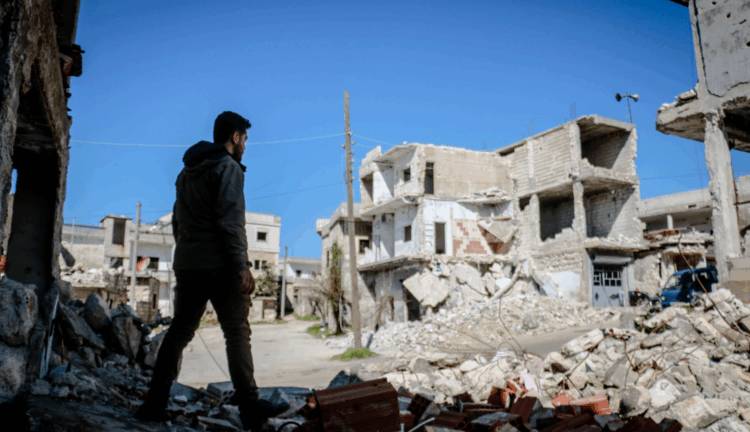
It carries all the ingredients of a thriller — immediacy, destruction, survival, and raw human endurance. Viewership spikes the moment conflict breaks out. For a war correspondent, action, valour, pain, and suspense are the currency of the craft, keeping audiences gripped. Missile attacks, bombardment, gunfire, and killings are high-value stories. The footage is urgently sought after. Violence, arson, and debris make for the most impactful visuals.
Journalists covering conflict are doing extraordinary work, often at great personal risk, and they deserve every bit of recognition they receive.
In recent decades, coverage of conflict has certainly grown more trauma-sensitive. There is greater awareness around the ethics of photojournalism and news reporting. Concepts such as the “dignity of the dead”, “death knock syndrome”, and the ethics of depicting graphic imagery are now debated within journalism circles, and increasingly acted upon.
Conflict Reporting Tilts Towards Violence
But conflict reporting remains structurally tilted towards violence. The cameras continue to miss the countless stories of rescuing, feeding, sheltering, counselling, and rebuilding that are quietly unfolding in every war and conflict zone.
In every conflict, hundreds of individuals and organisations spring into action. Some work to prevent violence before it escalates. Others arrive immediately — healing, housing, feeding, holding. But most of these stories go unreported. And with that, unacknowledged.
The Stories We Never Hear
Sudan’s prolonged civil war that has displaced over 14 million people from their homes is covered by the media across the world. But how often do we receive reports about the relief work that is carried out in Tawila, Darfur? Hundreds of thousands of hungry and exhausted men, women and children fleeing from attacks by warring factions. A small group of local volunteers did what they could. They went into their own kitchens and pulled out flour. They cooked aseeda, a thick, jelly-like porridge, cooked with nothing more than flour and water, and fed the displaced families.
That was the beginning. This initiative grew an active relief network, then a nationwide mutual aid movement, now serving an estimated four million people across Sudan.
These community kitchens run against all odds. The volunteers do so at profound personal risk, aid workers in this region being deliberately targeted and killed by warring forces.
How many media houses are giving those volunteers regular coverage? How many names do we know?
Denys Khrystov
How many global news networks have given due coverage to the volunteer evacuation work being carried out on Ukraine’s frontlines.
Who knows Denys Khrystov? How will they?
News networks covered every missile strike. They covered mass evacuations in the early weeks when the footage was dramatic. But how many follow-up stories were done to tell the world of the quiet work that continues to pull people back from the edge in these war-ravaged regions?
A popular YouTuber and television host, Denys Khrystov signed up as a volunteer immediately after the Russian invasion in February 2022. Since then he has been evacuating people from frontline areas. But there is hardly any media coverage of the risks taken and the work done by volunteers like him, who continue to help and rescue traumatised families in regions targeted by missiles and drones.
These volunteers work under hostile conditions: infrastructure has collapsed and the threat of shelling is constant. The people are also often psychologically shattered, unable to process the danger and destruction around them. Others have retreated into denial, insisting the danger will pass and are unwilling to leave their homes. To reach these people, to earn their trust, to help them move, demands courage and compassion.
Shouldn’t the media document their contribution?
Myanmar earthquake
Myanmar was four years into a civil war in March 2025 when its central region was hit by a 7.7
magnitude earthquake that killed 4000 people and thousands more were trapped in rubble. Local volunteer groups and global bodies like the RedCross got into action, rescuing and helping the victims.
Internet access was restricted. There was a severe shortage of fuel and electricity. Bureaucratic hurdles and corruption was rampant. Reaching the affected areas was challenging due to the ongoing conflict. The volunteers also faced the risk of forced conscription.
Groups of Thai and Malaysian volunteers navigated all these challenges and worked relentlessly to set up networks that collected donations and delivered food, medicine, mosquito nets, water filters and other aid to the survivors.
Doesn’t such peace work deserve extensive media coverage?
A Dedicated Beat for Peace
Media houses must deploy ‘Designated Exclusive Peace Correspondents’ alongside War
Correspondents; not as a footnote, not as a segment tucked at the end of a bulletin, but as a dedicated, respected beat: reporting live from community kitchens, pop-up hospitals, and relief corridors, these correspondents would give voice to the urgent and the overlooked:
“If milk does not arrive within 48 hours, these babies will survive on nothing but soup.”
“This 30-year-old will lose his leg unless he is airlifted out today.”
These are not soft stories. These are life and death stories — told in real time, from the ground, with the same urgency we give to every missile strike. Peace efforts need to be documented and shown to the world. In real time. Without delay. Without exception.
*Renu Nauriyal is a journalism professor at the University of Mumbai, India. [IDN-InDepthNews]