
By Jonathan Power
LUND, Sweden | 2 September 2026 (IDN) — “In the beginning there was a river. The river became a road, and the road branched out to the whole world. And because the road was once a river it was always hungry.”
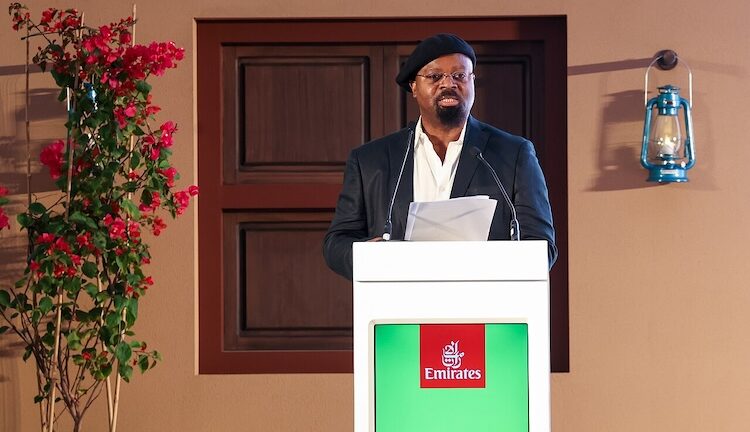
This must be one of the best opening lines ever penned by a novelist. It’s the work of the Nigerian novelist, Ben Okri, who won English literature’s premier annual award, the Booker Prize, for his book, The Famished Road.
It’s an exceptional novel. The words are often thrown up in the air and then, catching the sun’s rays, light up like emeralds, rubies, diamonds, gold and silver as they tumble down onto the page.
Nigeria’s Remarkable Literary Harvest
When I met Ben Okri at Denmark’s annual literary festival at the Louisiana Museum of Modern Art, I wanted to ask him how it is that Nigeria has become a veritable factory of good novelists. Besides the Nobel Prize winner for literature, Wole Soyinka, there has been Chinua Achebe with his “Things Fall Apart,” which schoolchildren all over the world read. Today, two great women writers stand out: Chimamanda Ngozi Adichie and Helen Oyeyemi. Every five or six months, another good novelist emerges.
Why has Nigeria become a literary factory? Okri says it’s a mystery. “But there are certain elements that might give another explanation. It’s because of Nigeria’s 200 or so languages- 200 ways in which the language negotiates reality, 200 ways of linking up with the world. Then you take it and shake it up. You throw in all the changes and strife and struggle. And out of that comes a special story, in English…The inclination for stories was always there, tremendous vitality, tremendous dialogue of stories and myths.”
Under British rule, as these tribal languages were brought into one political whole, English became the lingua franca out of necessity. As a result, a very high level of good English is spoken and written. Okri argues that because these languages were thrown into a melting pot, they fused and created richness in written and spoken English.
Novel writing in English is a relatively new art form in Nigeria. “This generation of novelists”, he continued, “had to fight their parents who wanted them to be doctors, lawyers or engineers. I was bloody-minded, and I had to fight my parents. Not my mother. She always believed I was crazy”.
Development Beyond the Statistics
When economists write about development in Nigeria, they see the micro language map as a problem. Maybe it is if one wants to build a road or an irrigation system that crosses tribal boundaries, but not if the object is to write novels that are as good as the best in the English-speaking world.
Indeed, the lesson is learnable throughout the developing Third World- don’t just look at the national income statistics; look at progress in the round, including culture. One measure might be fast rising literacy and novel output. Another, fast falling death rates for children.
Writers Create Their Own Roots
I asked Okri- thinking of the negative fuss about immigration (which led to Brexit)- whether he felt British or Nigerian?
“Why don’t you want to be in a writing community in Nigeria?” “The writing community of Nigeria is now living all over the world- for many different reasons. Our special relationship with Africa richly aids the literature we create, but we do our work elsewhere.
“Many of the great Russian writers spent quite a long time abroad- Dostoevsky went to Germany. Chaucer spent time in Europe. Konrad lived away from Poland.
Literature and place don’t work the way you think. Writers create their own roots, all sorts of landscapes of the mind. It’s not where you are; it’s what you are doing with the gifts you have been given”.
Immigration and the British Spirit
“Are you comfortable living in Britain?” I asked. “Each place has its own troubles. In Britain you have Brexit, but in Nigeria we had bad military governments”.
“Is Britain a good place to live?” Does London life stimulate you?” I asked. “Yes, to write you need calm. I interjected. “But we’re going to have rioting if the present war against immigrants carries on. “Yes, there’s going to be fire in the streets”, he observed. “I’m going to be on the front line.” I added, “There’s a profound distortion in the British spirit, and it’s happening in broad daylight.” Until the pent-up emotions explode, Okri continues his brilliant writing in London but often returns to his homeland.
Okri’s writing cuts to the heart of society. As an immigrant, he has contributed an enormous amount to literature in Britain and around the world. When governments get worked up about immigration, they should read Okri and his fellow Nigerian novelists. He gets under the skin of a developing country, probably teaching us more than if we went there, and more about the British than the British themselves understand. [IDN-InDepthNews]
Copyright Jonathan Power