
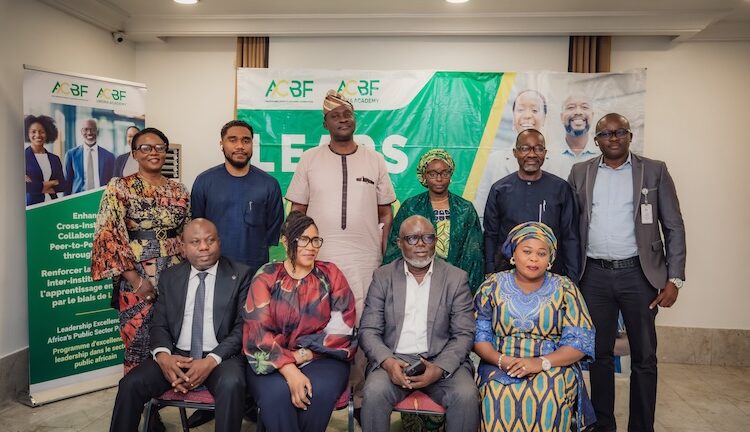
The African Capacity Building Foundation and the Gates Foundation are expanding a programme designed to help officials turn sound policies into lasting institutional change.
By Jeffrey Moyo
HARARE, Zimbabwe | 19 September 2026 (IDN) — African governments must invest more seriously in leadership development if ambitious public-sector reforms are to produce lasting results, according to the African Capacity Building Foundation (ACBF) and the Gates Foundation.
The two organisations made the case during a 3 September webinar, “Leading Public Sector Transformation in Africa: Leadership Lessons from the LEAPS Programme”. The discussion examined how stronger leadership could help governments overcome resistance to reform, improve public financial management and turn policy initiatives into measurable institutional gains.
Mamadou Biteye, ACBF’s Executive Secretary, said public-sector reform in Africa was rarely held back by a shortage of good ideas.
“More often, the real challenge is our ability to lead change by bringing people together, building trust, overcoming resistance, and sustaining momentum,” he said.
Leadership beyond technical skills
ACBF created the Leadership Excellence for Africa’s Public Sector (LEAPS) programme with backing from the Gates Foundation. The six-month executive-development initiative is delivered through ACBF’s Ubora Academy, a learning and knowledge-sharing platform offering courses, webinars and educational resources across several fields.
Since its launch in 2024, LEAPS has enrolled more than 295 participants. The programme combines self-paced online study with live facilitated sessions, executive coaching, group mentoring, technical seminars and exchanges among peers.
Biteye said African governments were pursuing wide-ranging public financial management reforms intended to increase domestic revenue, improve public investment, strengthen budgeting and manage expenditure more effectively. Progress, however, remained uneven because leadership, coordination and implementation continued to present major difficulties.
Technical knowledge was essential but could not, on its own, deliver complex institutional reform, he said.
“Reform leaders must do more than understand systems; they must inspire people, build trust, navigate competing interests, manage resistance, and sustain momentum when reforms become difficult.”
From training to institutional change
The programme was first piloted in Côte d’Ivoire, The Gambia, Ghana, Kenya, Senegal and Zimbabwe. Nigeria, Tanzania and representatives of the African Union Commission joined the second cohort, while Ethiopia became the ninth participating country in the third.
According to Biteye, accounts from members of the first cohort indicate that participants have begun applying what they learnt within their institutions.
In Ghana, coaching helped improve accountability, goal-setting and cooperation between finance and audit institutions. In Zimbabwe, the programme supported officials working through difficult reforms despite institutional and resource constraints. Kenyan participants, meanwhile, showed how people-centred leadership could support digital public financial management reforms and secure the backing of stakeholders.
“We believe leadership is a core institutional competence that enables governments and their respective institutions to translate policies, strategies, and technical reforms into sustainable results,” Biteye said. ACBF is therefore introducing a LEAPS Executive Programme open to public-sector officials across the continent.
Biteye put the argument plainly: “Systems do not reform themselves; budgets do not implement themselves; digital platforms do not transform institutions by themselves; and policies do not deliver results by themselves.”
“People do — and when they are equipped, inspired, and supported, institutions change.”
Public finance affects daily life
Adil Ababou, Senior Programme Officer for Development Policy and Finance at the Gates Foundation, said the experience of reform efforts had shown that technical capacity alone could not produce lasting change.
Many of the hardest problems facing public-finance officials were questions of leadership, he said: building agreement around difficult reforms, managing resistance, working across institutional boundaries and maintaining momentum when political or economic conditions changed.
Effective public financial management mattered because decisions by finance ministries, revenue authorities, treasuries and other institutions shaped governments’ ability to pay for education, healthcare, social protection and other essential services.
“In the context of abrupt aid cuts, government finance is now, more than ever, the backbone of sustained and nationally owned development,” Ababou said.
Reform must belong to countries
Ababou identified national ownership as another central lesson from LEAPS. Leadership, he argued, could not remain the preserve of a single prominent official.
“Successful reform requires teams, institutions and networks of officials who are able to work across the administrative silos that often characterise government,” he said.
Sustained improvements in public financial management therefore required investment not only in systems and technical skills, but also in the people responsible for guiding those systems through change.
Ababou said the ACBF–Gates initiative did not impose predetermined reforms or solutions on participating countries. That approach was becoming increasingly important as African governments placed greater emphasis on policy ownership, national sovereignty and the right to define their own development priorities. [IDN-InDepthNews]
Participants in the Leadership Excellence for Africa’s Public Sector programme, an ACBF initiative supported by the Gates Foundation. Photo: ACBF