By Jonathan Power
LUND, Sweden | 22 July 2026 (IDN) –Donald Trump will find out the hard way in Iran that, as Winston Churchill famously observed, “Jaw-Jaw is better than War-War.” If war can be avoided through a warm, lengthy, private conversation—without advisers, accompanied by generous gestures and promises of international recognition when his opponent, Mojtaba Khamenei, is invited to the White House—then Trump would have shown genuine statesmanship.
But we know he will not do that. American public opinion would support such an initiative. Congress would likely support it. The Pope would praise it. The United Nations would probably pass a resolution commending the United States. Yet Trump appears too proud to climb down.
He seems incapable of learning from experience. During his first term, he threatened to incinerate North Korea, prompting counter-threats that could have led to the deaths of 30 million people in South Korea alone, not to mention the casualties that might have resulted from attacks on American forces stationed in Japan and at the naval base in Guam. Eventually, he had to retreat from confrontation and instead sought a peace meeting with President Kim Jong Un.
If peace were to arrive in the Gulf, and also in Ukraine—and perhaps later on the Korean Peninsula—it would turn modern American, European and Russian military history on its head. The record of the past 80 years has been deeply troubling.
The Charter and the Use of Force
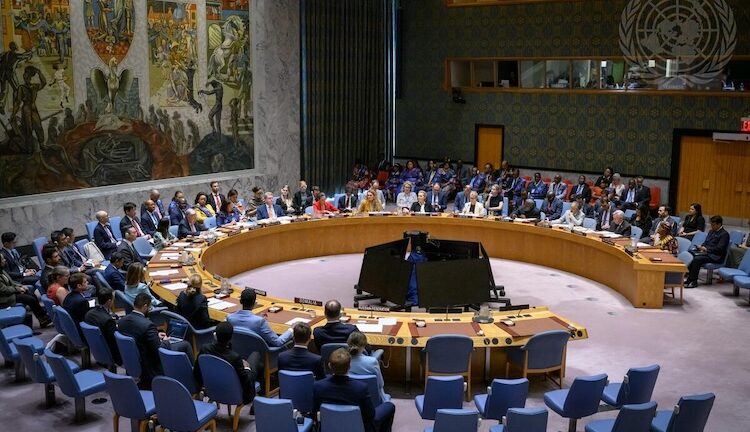
The UN Charter was conceived during the Second World War. Its early drafts were written in the basement of the U.S. State Department. It prohibited the unilateral use of force. Military action was to be legitimate only when supported by the Security Council.
Four years ago, Russia took over the Ukrainian territory of Crimea without Security Council arbitration or authorisation. This year, the United States and Israel unilaterally attacked Iran.
In the early years of his presidency, Barack Obama decided to go to war against the regime of Muammar Gaddafi in Libya, with active support from several European countries. On that occasion, they sought and obtained Security Council authorisation. But Russia later argued—reasonably—that it had been seriously misled. The resolution it had supported, Moscow maintained, was intended to protect civilians and preserve peace, not to facilitate the overthrow and killing of Gaddafi. As Libya descended into chaos, Obama himself later acknowledged that the intervention was the worst mistake of his presidency.
A Record of Double Standards
China has intimidated its neighbours into passivity while building military installations on islands and reefs in the South China Sea. One can assume these facilities would be used, if necessary, without seeking Security Council approval. Likewise, if China were to invade Taiwan—as it increasingly threatens—it would not ask the United Nations for permission.
Looking further back, there were the U.S. wars in Vietnam, Cambodia and Laos; the invasions of Grenada, Panama and the Dominican Republic; the mining of Nicaragua’s principal port; NATO’s bombing of Belgrade; the NATO war over Kosovo; and the U.S.-British-French invasion of Iraq. With only one exception, none of these actions sought UN authorization. Only a handful achieved their stated objectives.
The Soviet Union also violated the Charter when it sent tanks to crush the uprisings in Hungary and Czechoslovakia, and later invaded Afghanistan.
What a record of abuse of the Charter. But if the United States and Europe break the rules, why should Russia and China not do the same? And vice versa.
The Charter Still Matters
Yet the rules have often been respected. The United States, the European Union, Russia, China and many smaller countries have, at various times, worked together to strengthen the Charter, improve peacekeeping, and advance international law and humanitarian practice. When they choose cooperation over confrontation, the system can work.
This is one important reason why the number of wars has declined dramatically since the end of the Second World War. Today there is only one major interstate war, and although civil wars in the Middle East and Africa have recently pushed conflict levels upward again, the overall number of civil wars remains lower than at the end of the Cold War. Humankind has, in many respects, become less violent. At present, some 80 per cent of the world’s people are not living in war.
If Donald Trump could reach a genuine agreement with Iran, it would represent a momentous victory not only for diplomacy but also for the principles of the United Nations Charter.
Only fools continue to believe that War-War is better than Jaw-Jaw. [IDN-InDepthNews]
Copyright: Jonathan Power