
By Thomas George Tofaeono
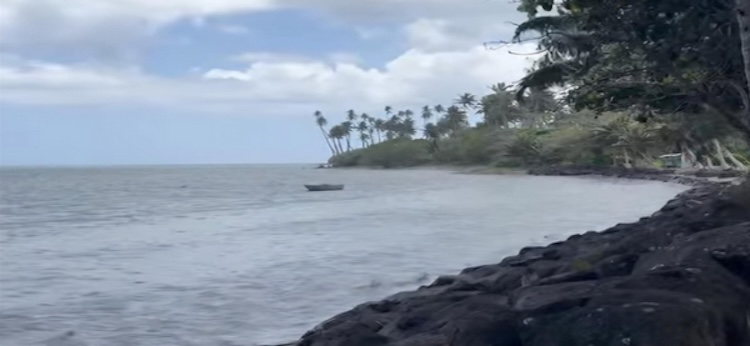
APIA, Samoa. 8 July 2026 (IDN/Wansolwara) — Waves no longer appear in the usual areas they used to in many Samoan Villages, and the lands that connect our homes to the sea are becoming smaller. This raises concerns about how we should fight this threat. After heavy rainfall, it is saddening to learn that it has now entered some homes near the sea.
These are the worries of many Siumu people – they believe that the changes we see now seem to be an everyday issue.
Manutalisoa, an older woman who lives near the coastal areas of Siumu, stated that the sea is much closer today than it used to be.
“Before there was a huge gap between the sea and our homes”, she stated. “Now when there is too much rainfall, the tide is high, and we will always expect the level of the sea to rise, and it appears to be even closer to our homes, unlike how it used to be, and it makes us worry”.
Taulaga, an old male resident, stated, “The trees that were once there at areas we used to see are now being erased away by the sea”.
Across the Pacific and in Samoa, people notice that sea levels are rising and that weather patterns continue to change over time. Scientists and researchers have stated that small Pacific Island countries are at risk from climate change.
A report published in August 2024 by the University of Hawaii, supported by the NASA Sea Level Change Team, warned that beyond 2050, the amount of sea level rise Samoa will experience is heavily dependent on future emissions. Samoa is expected to experience around 82 cm of sea-level rise under a 3.0°C scenario by 2100.
But for the people of Siumu village, it is now something they already expect in their daily lives.
Fisherman Afoa Koroseta said the ocean is now harder to understand.
“In the past we understood different sides of the sea that we should be fishing at, but now we barely find any fish at those areas, and many areas have seen changes over time because our people are now starting to build sea walls to protect us from the rising sea level,” he explained.
He also stated that the sea is now dangerous and that they are only using boats for fishing.
“I use to dive and do fishing, but now I am relying on fishing boats because there are now strong waves that I can’t handle when diving” says Afoa.
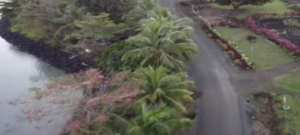
Looking closely at the gap (see picture above) between the land and the sea, people and youths are even raising concerns because they are worried that this could be an ongoing issue and that they should be doing something now before it’s too late and to be better prepared for their future and upcoming generations.
Liliu Tofaeono is a Samoan youth interested in effecting change for this generation and the future.
“Sometimes I sit and wonder what I could be doing to solve this,” she says, adding, “I want to be a change maker and act as a youth leader that leads the youth of my village and Samoa to start working on things that we know could protect us for the future”.
She even mentions that there is hope, but it will take a village to make it happen, just like how it takes a village to raise a child. “We need to protect our land and our homes because it is our future; we must act now,” says Liliu, with a determined expression.
As the day fades and the sea continues to rise, Samoans want to be change-makers without worrying anymore, but to put their worries into action. They want their homes to be there for future generations, though it saddens them to know that the ocean is slowly taking it all.
As Liliu says, “It takes a village to raise a child.” It takes a whole community to make a change, and we should start working on it to bring that change into action.
In recent years, Samoan leaders have expressed concern about Samoans fleeing to Australia under the Pacific Australia Labour Mobility (PALM) scheme, even though the country receives millions of dollars in remittances from these seasonal workers, who usually work in the Australian farming sector to plug a labour shortage there.
But in February this year, Samoan Prime Minister La’aulialemalietoa Leuatea Polata’ivao Schmidt signalled that his government will introduce legislation to limit families’ dependence on remittances from foreign workers. Government figures have indicated that there are 3000 working in Australia and another 3000 in New Zealand. Samoa’s overall population is about 215,000.
Schmidst said the impact on the Pacific island nation goes beyond the unskilled labour of Samoa’s population. “At present, teachers, nurses, police and hospitality workers are leaving (Samoa), and this has hindered operations of these sectors nationally,” he said.
* Thomas George Tofaeono is a journalism student at the University of the South Pacific (USP) in Fiji. This story is transmitted as part of an arrangement with USP’s student newspaper Wansolwara. [IDN-InDepthNews]