By Kester Kenn Klomegah
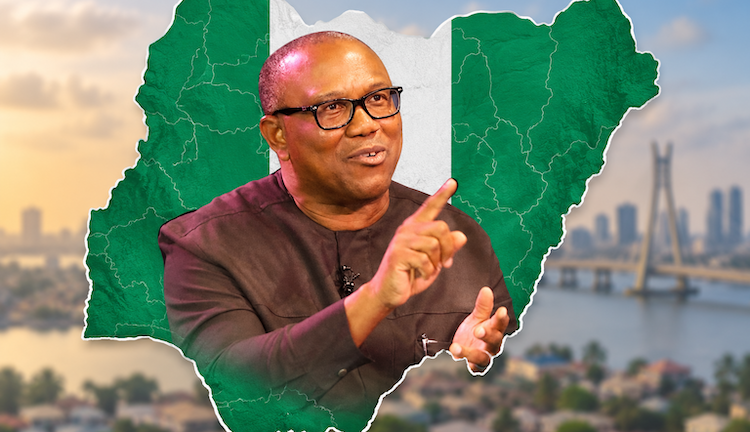
MOSCOW | 22 September 2026 (IDN) — As the Federal Republic of Nigeria prepares for the 2027 presidential election, the Obidient Movement is seeking to build on the political momentum it generated around Peter Obi’s 2023 candidacy.
The movement attracted significant support among younger Nigerians and sections of the country’s professional and diaspora communities. Its supporters have sought to present it as an alternative to Nigeria’s established political parties, emphasising accountability, economic management, and a different approach to governance.
In this interview, Professor Maurice Okoli, an economist and research fellow associated with the Russian Academy of Sciences, including the Institute for African Studies and IMEMO, and an expert with the Valdai Discussion Club, discusses his involvement in the movement, its international outreach and what he believes it must do differently before the 2027 election.
From the PDP to the Obidient Movement
What was your political background before Peter Obi entered the presidential race?
Maurice Okoli: Before Peter Obi entered the presidential race, my political background was shaped by a combination of academic expertise, formal party politics, diaspora leadership and international engagement.
As a professor of geopolitics and international economics, I had developed an analytical understanding of international relations, political systems, economic policy and the strategic forces shaping Nigeria’s position in the global community. My academic background allowed me to examine Nigeria’s political development not only from a domestic perspective but also through the broader lenses of international affairs, economic cooperation, global strategy and diaspora engagement.
Within Nigerian party politics, I was actively involved with the People’s Democratic Party (PDP), where I served as Chairman of PDP Russia and the Commonwealth of Independent States. This gave me direct experience working within a formal political organisation, coordinating party members, engaging stakeholders, mobilising support, and representing the party’s interests within the Nigerian community in Russia.
At the same time, I served as President of the Nigerian Community in Russia. That responsibility went beyond party politics because I was representing Nigerians in the diaspora. It exposed me directly to the challenges Nigerians faced abroad and strengthened my experience in community organisation, representation, advocacy and conflict resolution.
I also served as Vice President of the Russian-African Diaspora Foundation. This broadened my perspective beyond Nigerian politics and allowed me to engage with the wider African diaspora and promote cooperation between African communities and Russian institutions.
So, before Peter Obi became a presidential candidate, my experience covered four interconnected areas: Nigerian party politics, academic and professional work in geopolitics and international economics, Nigerian diaspora leadership and broader African diaspora engagement.
My decision to support Peter Obi was therefore a deliberate political choice, not the beginning of my political involvement. I believed he represented an opportunity to build a different kind of political movement—one that could combine popular participation with competent leadership, institutional reform, economic development and a stronger connection between Nigerians at home and in the diaspora.
You had already occupied a significant political position in Russia as Chairman of the PDP. What about Peter Obi, personally and politically, persuaded you to abandon your previous political trajectory and put your own money, reputation, relationships, and political capital behind him?
Maurice Okoli: What made me support Peter Obi was the same thing that persuaded many Nigerians to reconsider their political alignment when he emerged as the Labour Party’s presidential candidate. For me, it wasn’t simply the excitement surrounding a new political movement. I believed I was looking at someone whose character, record and philosophy were remarkably consistent.
My decision to support Peter Obi was publicly reported on 21 October 2022 in Vanguard and several other newspapers. But the decision itself went much deeper than the headlines.
What struck me most was the consistency between the man, his record in public office, and what he was saying on the campaign trail. I saw someone who understood that leadership wasn’t about the prestige of holding office, but about accepting the responsibility that came with it.
I was attracted to his discipline and his emphasis on competence. I was particularly drawn to his approach to public resources—not as something belonging to politicians or as an entitlement that came with office, but as something held in trust for the people.
I did not make my decision solely on campaign promises or political rhetoric. I could examine his record, decisions, conduct in office and the principles he had demonstrated over time.
Politically, I eventually came to believe that supporting Peter Obi was bigger than supporting one individual. It was about supporting a different political culture—one in which competence should matter more than patronage, public resources should be treated as a trust rather than a political entitlement, and accountability should be expected.
I was prepared to put my own money, reputation, relationships and political capital behind him because I believed the stakes were bigger than my personal political interests.
My support was not based on a belief that Peter Obi was perfect. It was based on my conviction that he possessed the will, competence and discipline to confront Nigeria’s challenges.
For me, that was the point at which political loyalty became secondary to national responsibility.
Building an International Support Network
In supporting Peter Obi, who were the people, organisations and institutions you brought into his support network?
Maurice Okoli: In supporting Peter Obi through the Obidient Movement, particularly from the diaspora, I worked to bring individuals, institutions, professional networks, media personalities and business stakeholders into a broader international support network.
My objective went beyond generating political support. I wanted to build international awareness and relationships around his candidacy while opening channels that could potentially strengthen Nigeria’s international relations in diplomacy, trade, investment, business, media and people-to-people engagement.
Among the institutions with which I engaged was the Institute for African Studies of the Russian Academy of Sciences.
I also introduced Mrs Damila Tasmagambetova, proprietor and editor-in-chief of Caravan Info news agency, to Peter Obi’s political ideas. She subsequently became a channel through which awareness of Obi increased in Russia and parts of the Commonwealth of Independent States.
I also brought a member of the Russian Duma into the network. After becoming familiar with Peter Obi’s profile and political vision, he expressed considerable enthusiasm for his candidacy and discussed forming an informal committee to promote his election.
His involvement was valuable because of relationships he could facilitate with Russian business interests, non-governmental organisations, professional networks and other stakeholders.
Professor Zenebe Kinfu of Ethiopia, President of an African-Russian diaspora organisation, also became interested in Peter Obi’s candidacy. His involvement brought a wider African diaspora perspective to the network.
I engaged with the Russian Chamber of Commerce and the Moscow Chamber of Commerce with a longer-term objective. I wanted to explore whether a Peter Obi presidency could create opportunities for trade, investment, business partnerships, technology transfer and stronger economic relations between Nigeria and Russia.
Other organisations included Nigerians in Diaspora Russia, the Nigerian community in Russia and the African community in Russia.
The network was deliberately multidimensional. Political actors provided advocacy and access. Media personalities created visibility. Diaspora organisations mobilised communities. Business organisations opened discussions about investment, trade and economic cooperation.
This reflected my broader understanding of diaspora politics. Nigerians abroad should not be viewed merely as a source of electoral support or remittances. The diaspora possesses intellectual capital, professional expertise, international relationships, institutional access and business networks that can be deployed in the national interest.
My role, therefore, was not simply to campaign for Peter Obi. I sought to connect people and institutions that could amplify his message while creating relationships that could potentially serve Nigeria’s broader interests. In these activities, I worked closely with Valentine Ozigbo, Peter Obi’s special adviser.
Rethinking International Outreach for 2027
Did Peter Obi and the Obidient Movement adequately understand how to communicate with foreign governments, diplomatic institutions, international media, investors and the Nigerian diaspora?
Maurice Okoli: Peter Obi had extensive international outreach in 2022 and 2023. He held consultations with Nigerians abroad, spoke at Harvard and discussed foreign policy, diaspora remittances and foreign investment. He made clear that he considered the diaspora important to Nigeria’s future.
For the 2027 election, however, the movement needs to recognise that different international audiences require different forms of engagement. These include foreign governments and investors, diaspora organisations, Nigerian professionals abroad, international journalists, democracy and human rights organisations, international financial institutions, embassies and high commissions in Nigeria, and international organisations.
I would advise the Obidient Movement to establish a professional diplomatic and geopolitical team covering Africa and ECOWAS; the United Kingdom and Europe; the United States and Canada; the Middle East and Asia; international financial institutions; foreign investment; international media; and diaspora affairs.
Such a team could help ensure foreign governments and international institutions have accurate, timely information about Nigeria’s electoral process.
International politics is also shaped by powerful actors seeking to protect their economic and geopolitical interests. Nigeria, as one of Africa’s largest economies, inevitably attracts such attention. The movement therefore needs serious and discreet diplomatic engagement abroad.
Something significant happened in the 2023 election. What do you think Nigerians are still discussing about it today?
Maurice Okoli: Something genuinely new happened in Nigerian politics in 2023, and it is important to acknowledge how significant the Obidient Movement became.
Peter Obi and the movement took what was initially a relatively small Labour Party and transformed it into a national political force in an extraordinarily short period.
Whatever interpretation one attaches to the outcome of the 2023 election, the movement achieved something important.
I believe Peter Obi won that election and that the result was manipulated against him. That remains my position.
For many Nigerians, particularly younger Nigerians, Peter Obi represented a political alternative built around accountability, honesty, competence and rejection of the traditional political establishment.
People who had never previously participated in electoral politics became deeply engaged. They discussed politics, attended rallies, organised communities, mobilised others and contributed their own time and resources.
I say this not as an outsider but as someone who was part of the movement. Like many other Obidients, I invested financially, emotionally and personally because I believed Peter Obi represented an opportunity to change the direction of Nigerian politics.
The movement’s importance therefore goes beyond the final electoral numbers or arguments surrounding the 2023 result. Its greatest achievement was demonstrating what was possible.
It showed that young Nigerians could become politically engaged and mobilised on a scale the traditional parties had underestimated. It also demonstrated that a political movement could emerge through ordinary citizens, social networks and grassroots enthusiasm rather than being built entirely through established party structures.
Whatever one’s political position, the Obidient Movement was one of the defining political phenomena of Nigeria’s 2023 election. It brought a new generation into political participation and demonstrated the existence of a substantial constituency seeking a different kind of politics.
Lessons From 2023 and the Road to 2027
What happened in the 2023 election, and what do you believe must be done differently in 2027?
Maurice Okoli: I believe the 2023 presidential election was a wake-up call for the Obidient Movement, particularly for those who assumed that winning an election was simply a matter of mobilising voters and turning up on election day.
The experience exposed what I regard as serious weaknesses in Nigeria’s electoral process. The approach to the coming election must therefore be different, particularly in protecting the integrity of every vote and ensuring that the people’s mandate is not subverted.
The movement should use every lawful means available to protect votes and make manipulation of the results as difficult as possible.
I had raised this concern before the 2023 election. In an article published in Nigerian newspapers, including Vanguard and The Guardian, on 9 October 2022, I warned the Obidient Movement that the APC and PDP were highly organised political machines and should not be underestimated.
My argument was simple: political enthusiasm and popular support were not enough. The movement needed to be organised, vigilant and strategically prepared to protect every vote.
Unfortunately, the reaction I received suggested to me that many people within the movement did not fully appreciate the nature of the political contest they were entering. In my view, what happened in 2023 demonstrated the consequences of that lack of preparedness.
INEC must organise a free, credible, fair, verifiable, peaceful and transparent election.
Election rigging and manipulation must stop in Nigeria. If politicians believe they can remain in power through manipulation rather than by serving the public, they have fewer reasons to listen to citizens.
A country becomes stronger when politicians know that the dependable way to remain in power is to serve the people. That is the real power of free, fair and transparent elections.
What do you think will happen if Bola Ahmed Tinubu wins the 2027 presidential election?
Maurice Okoli: If Tinubu wins the 2027 presidential election through a peaceful, credible, transparent, free and fair election, I will heartily congratulate him, because a free and fair election is the foundation upon which a democratic society is built.
It is the mechanism through which citizens exercise their right to determine who governs them, and that process must remain free of corruption.
Many things may happen, which I would not wish to speculate about here.
I do, however, have serious concerns about the extent to which foreign economic and geopolitical interests could influence Nigeria during another Tinubu term. In my view, Nigeria could become increasingly subject to powerful foreign interests rather than pursuing policies primarily determined by its citizens. (IDN-InDepthNews)