
By Jonathan Power
LUND, Sweden | 28 October 2026 (IDN) — Moscow and Washington urgently need to resume talks on a new framework for controlling nuclear weapons, said Dmitry Peskov, the Kremlin’s spokesman, on 20 October. “The absence of a treaty-based framework is creating a very dangerous situation”, he said.
Indeed, there has been no progress since 2010, when The New START Treaty, capped each side at 1,550 deployed weapons. This was a step forward—as recently as 2013, the total on both sides was 6,400. The treaty expired in February 2026. President Donald Trump did not want to extend it.
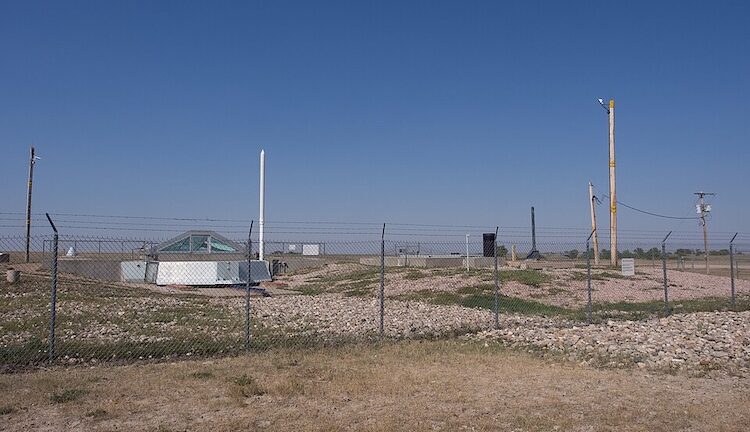
Fading ever more into the background as a popular issue is the possession of nuclear weapons. Once upon a time, there were regular marches down the streets all over the industrialised world. In the US, the nuclear freeze movement of the 1980s was an important factor in pushing President Ronald Reagan to reach out to Soviet president Mikhail Gorbachev with a proposal to abolish all nuclear weapons. It didn’t happen, but there was significant progress on nuclear arms reduction, sometimes at a price.
In return for getting the US Senate to approve a treaty with Russia’s then president, Dmitry Medvedev, to cut long-range nuclear missiles by a thousand each, President Barack Obama had to concede to Congress that the US would spend a trillion dollars more on modernising its nuclear arsenal. Trump has built on this, accelerating planned programs and seems uninterested in renewing the Medvedev-Obama treaty.
When Nuclear Disarmament Had a Constituency
Nuclear disarmament has rarely been on the front pages anymore—except when America decided to scrap one or another of the treaties meant to reduce stockpiles. Yet a sizable part of civilisation could be blown up in minutes.
We know there have been near-accidental launches of nuclear weapons. We also know that an unstable character like President Donald Trump, with a finger on the button, could attempt to initiate a launch with a flick of a finger, without consulting anyone.
Some of America’s most significant past and present thinkers on nuclear issues have warned that we are entering dangerous times—George Kennan, Henry Kissinger, Brent Scowcroft, Jimmy Carter and Zbigniew Brzezinski. They’ve all called for unilateral disarmament initiatives. The influential former chairman of the Senate’s Armed Services Committee, Sam Nunn, wrote in Foreign Affairs that we are arguably in a situation more dangerous than existed during the Cold War.
Alas, in Europe, no heavyweight voices seem to be rising above the parapet.
Six Minutes to Decide
Old-time military concepts like “launch on warning” or “use them or lose them” are still in vogue. An American or Russian president would only get 6 minutes to make a decision after warning of a possible attack.
What does the president do if he is told that the incoming Russian missiles are targeted only at Washington, D.C., but not elsewhere in the US, and that if there is an American retaliatory launch then the rest of America’s big cities would likely be flattened? Would he decide to launch American missiles to destroy as a quid pro quo the best part of Russian life, one of Europe’s great civilisations, containing much learning, tremendous scientific knowledge, the world’s second greatest art collection, a tradition of producing some of its greatest novelists, artists and ballet companies, and a serious claim to be the “Third Rome”, that is, the successor to the authentic Christian church, seated in Constantinople after the Emperor Constantine moved its headquarters from Rome?
Which person should be put on the spot in this way? No human being on earth should be asked to make such a momentous decision in so short a time. Probably all, except a madman or Hitler or Mao-type figure, would crack under the psychological pressure of making a decision in which no second thoughts are possible.
Even Trump is far away from being such a personality type—for starters, he has forged a close-knit, loving family (unlike Stalin, Hitler or Mao) and would not want to see it turned to ashes.
After stepping down as president of the Soviet Union, Mikhail Gorbachev was asked what he would have done if he had been told that an American missile attack was on the way. He answered that he would not have believed it and would have assumed it was mistaken intelligence, since he knew the Americans were reasonable and sane people. He wouldn’t have ordered retaliatory action.
How Much Deterrence Is Enough?
President Dwight Eisenhower, commander-in-chief of allied forces during World War II, said that 20 would be enough for deterrence, which is self-evidently true when one considers that each submarine has 24 missiles, each with at least 3 multiple warheads, each 25 times larger than the single bomb that was dropped by the US on Hiroshima (many historians now say unnecessarily), eviscerating the whole city.
In fact, a crippling nuclear attack could be carried out by “decapitating” the US, using only a dozen or so missiles. If Russian submarines (one would be enough) could manoeuvre to be close offshore, say within a thousand miles of the American coast in the mid-Atlantic, it could take out Washington, the US nuclear command centre and most of the eastern seaboard’s power supplies after a few minutes of flight time.
No president could digest the warning information coming into the White House (probably only 5 minutes before impact), check its accuracy (there have been so many false alarms) and then order retaliation.
Who, once the president, vice president and the speaker of the House of Representatives were dead, could give the order to retaliate, a retaliation that, if it did happen, would meet with a Soviet full-scale response, obliterating nearly half the country?
General George Lee Butler, who once headed the Strategic Air Command, the body that was responsible for implementing the president’s command to attack, and who later became a vigorous opponent of nuclear weapons, once said, “We escaped the Cold War without a nuclear holocaust by some combination of skill, luck and divine intervention, and I suspect the latter in greatest proportion.”
Accidents are less likely today, but that doesn’t mean they couldn’t happen.
After New START
There may now be a small opening. President Trump said on October 19 that he was prepared to join Vladimir Putin and Xi Jinping in talks on nuclear arms, possibly as early as November. That is welcome, but it is still only an indication of willingness, not the beginning of a new arms-control process.
What is needed is for that possibility to become serious negotiations on substantial reductions. Trump could reinforce such a process by following the example of George Bush senior and announcing unilateral cuts in part of the American arsenal. If Washington moved first, Moscow might find it difficult not to respond.
Why is nobody marching for this? As President John F. Kennedy once said, we run the danger of “turning this planet into a flaming funeral pyre”.
Copyright: Jonathan Power
Editor’s Note: This article is published as opinion. The views and interpretations expressed are those of the author and do not necessarily reflect the editorial position of IDN-InDepthNews.