
By Alon Ben-Meir*
NEW YORK | 18 February 2026 (IDN) — As U.S.–Iran negotiations over Tehran’s nuclear program continue under the shadow of possible military action, both Washington and Tehran must weigh carefully the potentially catastrophic regional consequences of failure.
If Prime Minister Benjamin Netanyahu convinced President Trump during their recent meeting that now is the ideal moment to attack Iran — citing Tehran’s weakened proxies and internal turmoil as an opportunity to trigger regime change — they would both be gravely mistaken.
Every peaceful avenue must be exhausted to prevent war. There would be no winners — only prolonged regional instability and horrific cycles of violence.
The Risk of Regional Escalation
A U.S. attack on Iran would carry a high probability of regional war.
Iran has already vowed to strike American bases and Israel in retaliation. Gulf states hosting U.S. military installations would face missile attacks, jeopardizing their internal stability. Turkey and Saudi Arabia would be forced to navigate the tension between their security partnerships with Washington and the need to preserve regional equilibrium. Global energy markets would convulse.
The illusion that a limited strike could remain limited is dangerously naive.
Iran’s Retaliatory Options
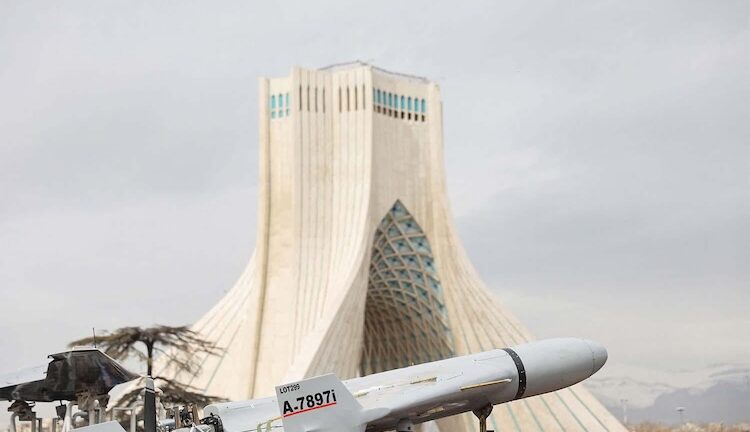
Although Iran’s proxy network has been degraded, and internal unrest and economic distress constrain its options, Tehran still retains formidable retaliatory capabilities. An all-out response could threaten regime survival, so Iran would likely calibrate its retaliation to demonstrate resolve while avoiding a war it cannot win outright.
Nevertheless, Iran possesses multiple means of retaliation:
- Missile and Drone Strikes on U.S. Bases
Iran could launch ballistic missiles and drones at American installations across the Persian Gulf, including Al Udeid Air Base in Qatar, which it struck in June 2025 following the U.S. bombing of Iranian nuclear sites. - Massive Missile Assault on Israel
Tehran could fire up to 2,000 ballistic missiles at Israel in a single coordinated attack — roughly four times the volume used during the recent 12-day conflict — targeting military and strategic infrastructure. - Closing the Strait of Hormuz
Iran could deploy naval mines, fast-attack boats, and submarines to disrupt shipping in the Strait of Hormuz, through which more than 20 percent of global liquefied natural gas and roughly a quarter of maritime oil trade pass. The resulting energy shock would reverberate worldwide. - Proxy Attacks in Iraq and Jordan
Iranian-aligned militias such as Kataib Hezbollah could resume drone and rocket attacks on U.S. forces in Iraq and Jordan, similar to the January 2024 strike that killed three American soldiers. - Strikes on U.S. Installations in Gulf States
Iran could target American facilities in Bahrain (home to the U.S. Fifth Fleet), Kuwait, and the UAE. Iranian officials would frame these attacks as directed at “U.S. bases stationed in them” rather than at the host nations themselves, attempting to limit backlash from Arab governments.
Even calibrated retaliation could spiral beyond control.
The Perils of Externally Imposed Regime Change
Although many Iranians desire political change, they are fiercely nationalistic. Any externally imposed regime change would almost certainly trigger a nationalist backlash, uniting even regime opponents behind the government.
The memory of the 1953 CIA-backed coup remains deeply embedded in Iran’s political consciousness. That episode fueled decades of anti-American sentiment and contributed directly to the 1979 Islamic Revolution.
Destroying the regime without a viable successor risks a catastrophic power vacuum. Iraq’s de-Baathification demonstrates how dismantling entrenched security structures can create ungovernable chaos. Military decapitation strikes often scatter weapons, empower extremist factions, trigger refugee crises, and destabilize neighboring states — consequences American planners have repeatedly underestimated.
Foreign-installed governments are widely perceived as puppet regimes. Historical data are sobering: over 60 percent of the United States’ 64 covert regime-change operations between 1947 and 1989 ultimately failed.
The fantasy that regime collapse would yield a stable, pro-Western Iran is not supported by history.
Why Internal Change Has Greater Prospects
Internal regime change offers a more plausible path.
Many Iranian scholars argue that the military — whether elements of the Artesh (regular army) or the IRGC — is best positioned to oversee a transition. Such actors would maintain institutional continuity and retain control over weapons, finances, and governance mechanisms.
A transition driven by Iranians would avoid the stigma of foreign imposition and thus enjoy greater legitimacy and durability. Military insiders understand the regime’s levers of power and are better equipped to manage reform without institutional collapse.
Contrary to claims that Iran lacks credible successors, numerous activists, intellectuals, Nobel laureates, and imprisoned dissidents represent viable political alternatives.
Sustainable transformation must come from within.
The Path to a Sustainable Agreement
Despite hardened rhetoric, an agreement remains within reach.
Iran has signaled its willingness to dilute its stockpile of 60-percent enriched uranium. While Tehran insists that enrichment itself is non-negotiable and resists discussions on missile capabilities, there is room for compromise.
Iran’s support for regional proxies such as Hamas and Hezbollah has already weakened, partly due to Israeli operations and partly because Tehran faces economic and logistical constraints — especially after losing its strategic foothold in Syria following the Assad regime’s collapse.
A comprehensive agreement could include:
- Limits on long-range missile scope and range — structured so that Iran can claim it made no humiliating concession.
- A binding U.S. commitment not to attack Iran, coupled with restraint on Israeli military action.
- Gradual normalization of relations contingent upon Iranian compliance and cessation of existential threats toward Israel.
In return, Washington could offer:
- Comprehensive sanctions relief, including lifting primary and secondary sanctions.
- Restoration of oil exports and banking ties.
- Assistance with civilian nuclear power reactors under strict international monitoring.
- Gradual unfreezing of Iranian assets abroad.
- Phased diplomatic normalization.
Such measures would address Iran’s economic desperation while enhancing regional security.
The Illusion of Control
Trump and Netanyahu must understand that Iran is not a fragile construct that can be bent to external will.
It is a proud civilization with thousands of years of history, vast natural resources, and a deeply ingrained sense of national dignity—pressure alone, whether from Americans or Israelis, will not compel capitulation.
The belief that Iran can be controlled through force is an illusion.
Ultimately, both Washington and Tehran must remember what Sun Tzu taught centuries ago: the greatest victory is achieved without fighting.
Avoiding war is not a weakness. It is strategic wisdom. [IDN-InDepthNews]
*Dr. Alon Ben-Meir is a retired professor of international relations, most recently at the Center for Global Affairs at NYU, where he taught courses on international negotiation and Middle Eastern studies.