
By Raghav Kumar*
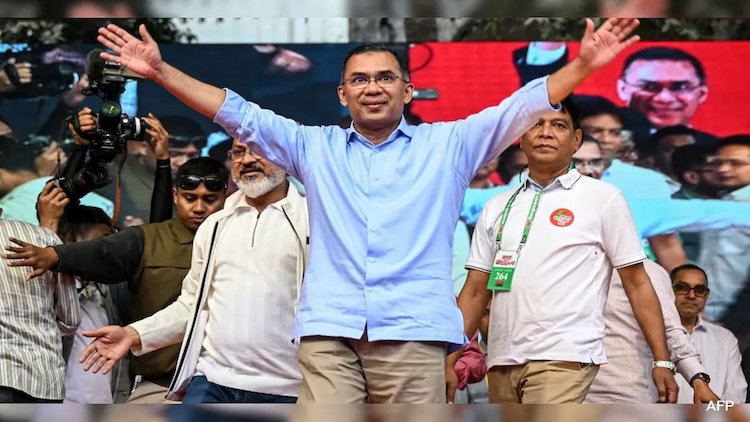
SYDNEY | 15 February 2026 (IDN) — The Bangladesh Nationalist Party (BNP) secured more than two-thirds of parliamentary seats in the 13th general elections, reports Hindustan Times. India, the United States, the United Kingdom, and China were swift to congratulate BNP’s leadership while emphasizing the elections’ peaceful, transparent nature. BNP’s decisive victory will now enable its alliance to form the next government, ushering in the party chairman, Tarique Rahman, as Prime Minister for the first time.
Rahman’s rise to office follows a dramatic political comeback. He returned to Bangladesh on 25 December 2025, after 17 years in exile in London, where he had lived since 2008. The 60-year-old leader is a central figure of the influential Zia political family, the son of former President Ziaur Rahman and former Prime Minister Khaleda Zia. His return came after the previous Awami League government was ousted in August 2024.
The BBC reported that during the Awami League’s tenure, Rahman had faced multiple criminal investigations. Still, he was cleared of all charges following the government’s fall, paving the way for his political re-entry and eventual electoral victory.
A defining feature of this election is the influx of new leadership. South Asia Newslog reported that more than half of the winners—151 incoming members of parliament (MPs)—have never served in parliament before. This group of newcomers includes the chief of five parties, including BNP chief Tarique Rahman.
Their entrance signals a generational and leadership shift that could significantly influence parliamentary dynamics and policy direction.
Gender representation, while still limited, made modest gains. Seven women were elected as MPs, of whom six are BNP-nominated, and one is independent. This represents, as the aforesaid South Asia Newslog report suggests, an 8.4% success rate out of 83 women candidates who participated in the elections.
However, in the context of the results declared for the 297 parliament seats, women constitute only 2.36% of all incoming MPs. These figures highlight the ongoing challenge of increasing female representation in Bangladesh’s political system, despite 50 reserved seats for women.
The elections were conducted on a massive scale, as Asia Pacific Newslog reported that 127.7 million registered voters cast ballots at 42,779 polling centers, with nearly 800,000 election officials ensuring smooth operations. Security deployment exceeded 350,000 personnel across the army, navy, police, and border forces.
Observers, both local and international, described the polls as free, fair, and in line with international standards, thereby validating the credibility of BNP’s landslide win.
Decisively ‘Yes’ Vote
Alongside the parliamentary elections, a referendum on implementing the July Charter was held, with a 60.26% voter turnout. The “Yes” vote won decisively, with 48.1 million ballots in favor and 22.6 million against. This outcome signals broad public support for the proposed reforms.
The 12 February twin polls carry distinct implications. The parliamentary election, noted Dhaka-based geopolitical analyst and columnist Bahauddin Foizee, is likely to shape the country’s immediate political direction. At the same time, the referendum could influence—whether positively or negatively—Bangladesh’s social and institutional landscape over the longer term.
With 209 seats secured independently and additional victories by alliance partners, BNP is well-positioned to advance its legislative agenda. Jamaat-e-Islami, as the principal opposition with 68 seats, maintains a meaningful role in parliamentary scrutiny. The voter engagement in both the parliamentary elections and the referendum reflects high civic participation and confidence in the electoral process.
As Bangladesh’s 13th parliament convenes, it will feature a significant wave of first-time MPs, modest female representation, and leadership poised to shape a new era under BNP governance. The coming months will test how effectively this mandate translates into policy, reforms, and political stability for the nation.
*Raghav Kumar is an independent current affairs journalist. He is also a commentator on politics, history, heritage, legacy, and social issues, with work published in GAC-Initiative’s South Asia Politics blog, Columnist, Foreign Policy News, and Star Tribune Newslog. [IDN-InDepthNews]