By Kadhija Mohamed
TOKYO | 8 September 2026 (IDN) — This past couple of months, our planet has seen a seemingly significant rise in the number of higher magnitude earthquakes in regions near tectonic fault lines all over the world.
Last month alone there were devastating earthquakes with a magnitude of five or higher in Egypt, the Philippines, Colombia, Indonesia, and Japan. The country most affected by earthquakes this year was Venezuela, which was hit by twin earthquakes, respectively with magnitudes of 7.2 and 7.5, claimed the lives of over 6000 people this June.
Other developing nations that were hit this year such as Colombia, the Mindanao region of the Philippines and Afghanistan, while not as severely, also reported over a hundred casualties in addition to serious damage to their infrastructure. What is shocking, however, is the fact that this number of great earthquakes is in fact normal and within range for the predicted number of earthquakes annually.
According to the US Geological Survey, there can be approximately 15 earthquakes within the magnitude-7 to magnitude-8 range per year on average. The biggest change this year lies in the fact that most of the earthquakes affected regions that were both underprepared and underequipped to deal with the vast destruction that ensued. The one key exception to this trend is the nation of Japan.
Japan’s Culture of Earthquake Preparedness
Japan is one of the most earthquake-prone countries, with the highest number of recorded quakes, thanks to dense monitoring through organizations such as the Japan Meteorological Agency, which keeps citizens warned and prepared through their “Earthquake Early Warning System”.
The country is also prominently known for its thorough earthquake and disaster preparedness measures, taken both by the government as well as their citizens. The extent of this preparation can clearly be seen in the aftermath of the Kumamoto Earthquake that occurred in late July.
On the 28th, a magnitude 7.1 quake hit the central and southern areas of Kumamoto prefecture in Japan. Unlike the other earthquake-affected countries this year however, even hit with such a high magnitude, the prefectural government recorded only 38 fatalities, with roughly 6900 people having been safely evacuated to 130 evacuation shelters in the city. A week after the incident this number remained unchanged, with officials stating that the figure also includes an individual suspected of succumbing from post-disaster causes.
Thus, this leads us to the question, what separates Japan from the others, and what measures do they take both in advance and after disaster occurs that makes the difference between lives saved and lives lost?
Laws and Institutions Built Around Disaster Risk
To begin with legislation, the Japanese “Basic Act on Disaster Management” as passed in 1961 clearly places responsibility in its national and local governments regarding the establishment of “basic policy on necessary disaster control measures including formulation of disaster management plans, disaster management, emergency disaster control measures, disaster recovery efforts, and financial measures concerning disaster management, thus developing and promoting a comprehensive and systematic disaster management administration and contributing to the preservation of social order and security of the public welfare” as stated subsequently in Article 1.
Consequently, the Disaster Management division of the Japanese Cabinet Office has a structured Basic Disaster Management Plan that illustrates the order of disaster management phases, and the different countermeasures that must be taken by each stakeholder (National government, local governments and residents respectively). Also included in the structure is the “Comprehensive Countermeasures Basic Act of 1961” and their corresponding articles detailing the measures needed to be taken in accordance with the Disaster Management Operations Plans.
In summary, along with the preparation of essential evacuation plans and the creation of Disaster Management councils, the government also provides training for central and local government officials that train them as disaster management specialists, in addition to conducting comprehensive disaster reduction drills and role-playing simulation exercises that specially take place on Disaster Reduction Day (September 1st) annually, in commemoration of the 1923 Great Kanto Earthquake.
From Mega-Quake Drills to Local Preparedness
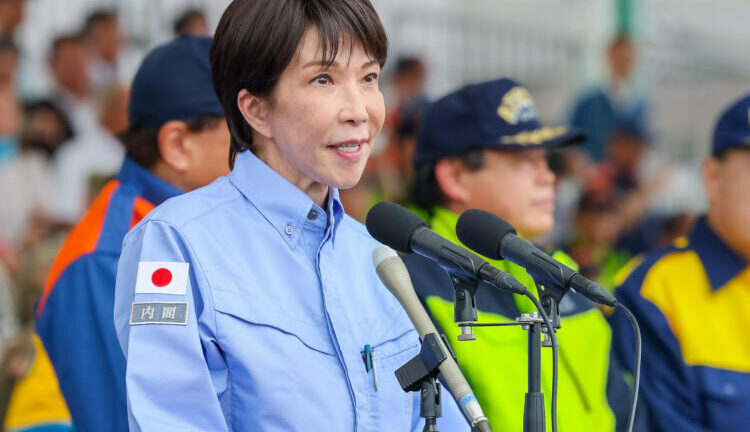
Just last week, the government staged a mega-quake drill scenario. In sequence, cabinet ministers and other officials gathered at the Prime Minister’s Office and established an emergency task force. Video conferences were held with the officials in Hokkaido and Aomori Prefectures. The Prime Minister even held a mock news conference explaining the government response and the consequent steps that the residents should take, emphasizing the need to remain calm and to not hoard essentials.
Drills were also run in other major cities, with Tokyo in particular running a joint drill with neighboring prefectures. Furthermore, local governments have disaster preparedness manuals prepared in advance that are provided to citizens in each city that specifies what to do and prepare ahead, as well as what must be done during and after such a disaster occurs. In Tokyo, these are additionally provided in multiple languages including English, Simplified Chinese and Traditional Chinese.
For more information, residents are encouraged to download the official Disaster Preparedness app which provides alerts based on your area, disaster preparation maps, checklists and more.
Preparedness Can Mean the Difference Between Life and Death
Evidently, a country cannot be too prepared, as shown by the extensive measures and steps that Japan has taken after their experiences with the Great Earthquakes of 1923 and 2011. While countries that have been deeply impacted by the harsh earthquakes slowly recover, they must also take the time healing to learn from their past mistakes as Japan did and implement measures that can prevent the extent of damage that occurred this year. A few simple changes made to a pre-existing system can mean the difference between lives lost and lives saved.
*Fathima Kadhija Mohamed is an undergraduate student at the School of International Liberal Studies, Waseda University, Tokyo. She is scheduled to graduate in March 2028 and plans to specialise in International Relations. [IDN-InDepthNews]