

NEW YORK (IDN | GIN) – The outlines of the Rwandan genocide are known by many. The time it took place (April to July 1994), the troubling silence of the international community, the number of those brutally murdered (as many as 800,000 mostly of the Tutsi minority and some Hutus) and the ever-debated questions – what could turn a people against their neighbour with a cruelty that was both devastating and inhumane?
NEWSBRIEF: Guessing Game about Nigerian President’s Health
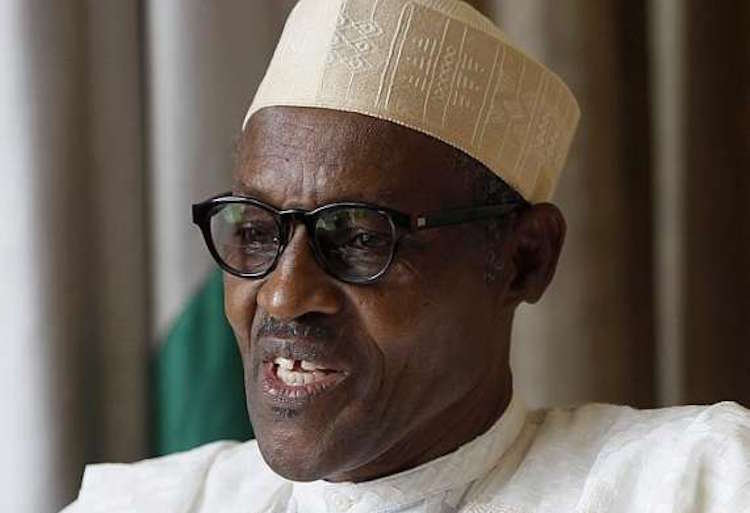
NEW YORK (IDN | GIN) – Cancellation of the scheduled appointments of President Muhammadu Buhari and the arrangement of a 10 day trip to England for treatment of an ear infection have raised concerns that a serious health issue is afflicting the recently-elected leader.
Though it would not be the first time a Nigerian president claimed to be receiving treatment abroad but was actually at an advanced stage of a serious illness. In 2010, President Umaru Musa Yar’Adua was reportedly receiving treatment in Saudi Arabia for a long-standing kidney ailment when in fact he was near death and died quickly upon his return.

Asia-Europe Meeting Spurs Media Dialogue on Connectivity
Analysis by Shastri Ramachandaran
GUANGZHOU | China (IDN) – Twenty years of striving to strengthen understanding, trust and cooperation between two continents through political dialogue, economic cooperation and socio-cultural exchange is a remarkable effort.
In the course of these two decades, the Asia-Europe Meeting (ASEM), as the pre-eminent trans-regional forum in this part of the world, has come a long way for its modest beginnings in Bangkok in 1996 attended by 25 Asian and European leaders.
Today, it has 53 members, and more than 200 of their representatives gathered in Guangzhou on May 9-10 for the Media Dialogue on Connectivity held for Promoting Public Awareness and Partnership. It was a milestone on the eve of the ASEM’s 11th Summit scheduled in Ulaan Baatar, Mongolia, in July 2016.

Timber Smuggling Could Eliminate Senegal’s Forests in Two Years
DAKAR (IDN | GIN) – Illegal timber smuggling is devastating the lush Casamance region of Senegal and could strip it completely within two years, predicts Senegalese environmentalist and former minister Haidar El Ali.
Casamance in southern Senegal contains the country’s last remaining forests, an area of 74,000 acres that could be depleted by 2018 as smugglers feed the demand for rosewood furniture in China, said El Ali.
Exporting timber from Senegal is illegal, so traffickers smuggle it to neighbouring Gambia for shipping to China.

Anti-Mugabe Movement Takes on New Life Not Seen in Decades
HARARE (IDN | GIN) – A “Million Men” march in support of Zimbabwean President Robert Mugabe that drew thousands in support of the aging leader failed to diminish the impact of an opposition rally last month that brought out thousands of citizens concerned with the country’s troubled economy.
Despite his advanced age, Mugabe has vowed to run for another term in office at the next election in 2018 when he will be 94.
At the “Million Men” march, Mrs Mugabe declared that her husband would rule Zimbabwe even from the grave.
The opposition, meanwhile, has been energized by a Twitter campaign called #ThisFlag, or what The Guardian newspaper called “an accidental movement for change”.

Ghana Still Target of Lethal e-Waste Dumping
LONDON (IDN | GIN) – Digital dumping ground, world’s largest e-waste dump – whatever you call it, Agbogbloshie, a former wetland and suburb of Ghanaian capital Accra, is one the top ten “worst polluted” places on earth where tonnes of discarded electronics, refrigerators, microwaves and televisions, also known as e-waste, end up decomposing in a massive scrap heap.
“Mercury, lead, cadmium, arsenic – these are the four most toxic substances [in the world], and they are found in e-waste residues in very large quantities,” Atiemo Sampson, an environmental researcher at the Ghana Atomic Energy Commission, who has conducted several studies of the Agbogbloshie site, said in an interview with the BBC.
Exposure to these toxins is known to cause a whole range of illnesses from cancers to heart disease and respiratory illnesses.

Chad’s Former Ruler Given Life Sentence for Brutal Crimes
DAKAR (IDN | GIN) – Former president of Chad, Hissène Habré, was sentenced May 30 to life behind bars, ending a long journey for justice by his victims and victims’ relatives who filled the court.
The specially convened African Union-backed court in Senegal convicted him of rape, sexual slavery and ordering killings during his rule from 1982 to 1990.
Victims and families of those killed cheered and embraced each other in the courtroom after the verdict was read.
Building Regional Connectivity Key to China’s ‘Silk Route’ Projects
Analysis by Kalinga Seneviratne
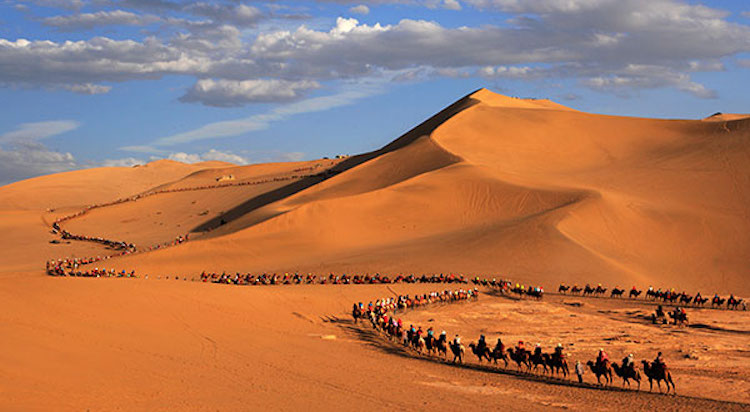
BANGKOK (IDN) – China is keen to demonstrate that its ‘One Belt, One Road’ initiative, dubbed the “New Silk Route” by the media, is not geared to exclusively serve China’s economic interests, but to build connectivity in the region and beyond for the benefit of all.
This was the message from a high-powered Chinese team taking part in a ‘side-event’ organised by China at the 72nd UN Economic and Social Commission for Asia and the Pacific (ESCAP) sessions here May 17-19. It is also an idea that ESCAP is strongly endorsing as it embarks on promoting a new development paradigm for the region.
In an opening address to the event, China’s Deputy Foreign Minister Qian Hongshan said that the ‘Belt’ is designed “to form synergy between the development strategies of various countries, draw on their respective strengths and unleash the huge development potential of this region to achieve common progress”.

Duterte’s Victory in Philippines Could Bring Hope to Disillusioned Democrats
Analysis by Kalinga Seneviratne
SINGAPORE (IDN) – Both in the Philippines and internationally, corporate media predicted doom for Philippines’ democracy after Rodrigo Duterte, the tough-talking mayor of Davoa in southern Philippines, won a landslide victory at the presidential polls (on May 9) in one of the world’s most vibrant democracies. Rather than heralding in a new era of dictatorship, it may well bring hope to those who are disillusioned with democracy around the world.
The tough campaign rhetoric to kill criminals and override Congress if it got in his way, and his sometimes crude or vulgar language may have alarmed the Filipino elites, but it hypnotised the masses of marginalised Filipinos who voted for the “Mayor” in droves.
Asian UN Body Calls for Paradigm Shift in Development Thinking
Analysis by Kalinga Seneviratne
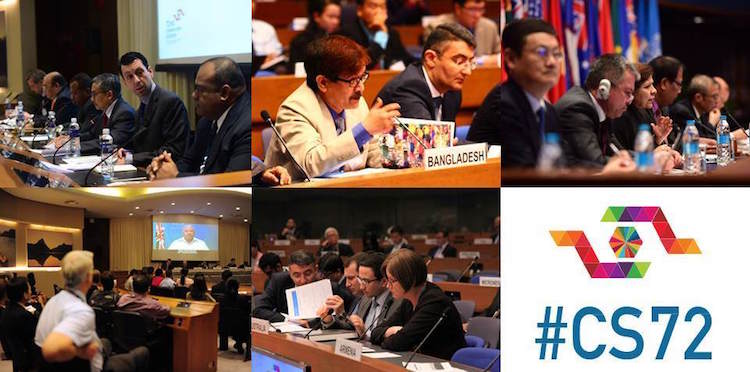
BANGKOK (IDN) – The major United Nations agency overseeing development in the Asia-Pacific region has called for a major rethink in the development paradigm for the region.
In an ‘Economic and Social Survey’ of the region presented to its 72nd sessions here from May 17 to 19, the Economic and Social Commission for Asia and the Pacific (ESCAP) says that while the centre of global economic gravity continues to move eastwards, the time has come for the Asia-Pacific region to adopt a development model that relies more on domestic and regional demand.
Arguing that it is futile to continue the exclusive reliance on export-led development, ESCAP is also calling for more rural agriculture and industrial development, with better rural-urban connectivity via transport and communication links.