By Kester Kenn Klomegah*
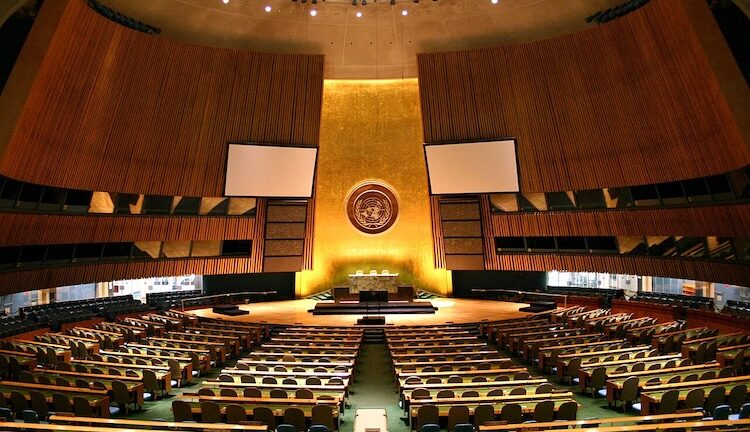
MOSCOW | NEW YORK | 3 October 2026 (IDN) — The 81st session of the United Nations General Assembly (UNGA), the main deliberative, policymaking and representative organ of the United Nations, brought world leaders and delegations to New York in late September 2026.
Their speeches addressed political governance, economic development, conflicts, inequality, climate change, technology and humanitarian concerns. Reform of the international system—and the demand for a greater voice for developing countries—also figured prominently in the debate.
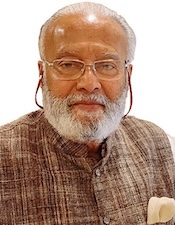 In this in-depth interview following UNGA 81, Pradeep S. Mehta, Secretary General of CUTS International and Professor of Practice (Public Policy) at JCERC University, Jaipur, discusses emerging trends at the General Assembly and their implications for Asia and Africa.
Asia and Africa demand a greater share of power.
Many important issues came up at the 81st UNGA in late September. How would you characterise Asia and Africa’s positions in a changing world?
Pradeep S. Mehta: UNGA 81 took place against a difficult backdrop. Artificial intelligence, the Israel-Palestine conflict and the US-Israel war on Iran dominated much of the discussion. Secretary-General António Guterres said humanity faced four defining “tests of power”: war or peace, inequality, climate change and artificial intelligence. The session’s theme—”Restoring Trust, Managing Transformation: A United Nations That Delivers for All”—fits the moment. The multilateral system is under strain, and many of the countries bearing the highest costs are in Asia and Africa.
From where we sit, the most striking feature of this Assembly was that Asia and Africa have moved from asking for a voice to asking for a share of power. Asia spoke as a region that already carries considerable economic weight. India’s External Affairs Minister, Dr S. Jaishankar, drew particular attention to pressures on food and fertiliser supplies and the Global South’s vulnerability to disruptions from ongoing conflicts.
Africa, for its part, spoke with unusual coherence about rebalancing global power—across UN reform, debt, critical minerals, climate finance and the international financial system.
The demands were concrete. Nigeria called for at least two permanent African seats on the Security Council, with veto rights for as long as the veto exists, and five non-permanent seats in total. Channels Television Kenya: President William Ruto said a continent of 54 countries and more than 1.4 billion people could not remain on the margins of decisions central to global peace and security. Ghana’s President John Mahama put the broader demand succinctly: “Africa does not seek charity. Africa seeks equal partnership anchored in mutual respect.”
In short, Asia arrives at the table as a centre of growth, while Africa arrives as a centre of demography, resources and political argument. The UN’sUN’sdibility over the next decade will depend on whether its institutions reflect this shift or continue to resist it.
Another important development was the launch of the Partners for Multilateralism (P4M) initiative on the margins of UNGA High-Level Week. Its initial co-sponsors were Australia, Barbados, Brazil, Canada, the European Union, India and Kenya. It seeks to defend multilateralism and international law while pushing for reform of the UN and other international institutions.
Hopefully, this platform will gather momentum as the world moves towards an order increasingly marked by power politics and unilateral action. It could provide a useful counterweight to hegemonic tendencies among major powers.
A changing economic map
Is the economic architecture in the Asia-Pacific being rapidly transformed, with links to Russia and the Eurasian space? Is Africa being left out?
Pradeep S. Mehta: Yes, the transformation is real. Russia’s economic orientation towards Asia is one indication, while regional frameworks and connectivity projects are becoming increasingly important.
The International North-South Transport Corridor, ASEAN, RCEP, the Shanghai Cooperation Organisation and the Eurasian Economic Union are part of an increasingly dense network of economic relationships linking Asia and the wider Eurasian space. The growing use of national currencies in trade between Russia and several of its partners is another element of this change.
We should be clear-eyed about this, though. The emerging architecture is not a single bloc. The Russia-China relationship has become increasingly asymmetric, while India continues to keep its options open through strategic autonomy and relations with multiple partners. What is emerging is a multipolar and somewhat fragmented architecture, not a new consolidated system.
Is Africa being left out? Not by design, but it risks being included on unfavourable terms. Competing powers court Africa for its minerals, markets, and diplomatic support. It is less often a co-designer of the corridors, standards and financial systems being built.
The core weakness is internal fragmentation. Intra-African trade remains comparatively low. Afreximbank estimated its value at US$220.3 billion in 2024, representing only 14.4 per cent of Africa’s trade. Afreximbank Media: A continent that trades so little with itself risks negotiating as dozens of individual economies rather than as one large market.
The remedy is already on the table: the African Continental Free Trade Area (AfCFTA). Greater implementation of the agreement, combined with mechanisms such as the Pan-African Payment and Settlement System, could strengthen Africa’s gaining position. PAPSS enables cross-border payments in African currencies and is intended to reduce dependence on third-country currencies in intra-African transactions. Afreximbank
If Africa engages Eurasia and the Asia-Pacific increasingly as a continental market, it has a better chance of becoming a pole in this emerging architecture rather than remaining on its periphery.
At the political level, the African Union became a permanent member of the G20 under India’s presidency in September 2023. Its integration into global economic decision-making nevertheless remains a work in progress.
Five priorities for African economic sovereignty
What do you see in the coming years? Which economic sectors should African leaders prioritise to secure economic sovereignty? Is Africa experiencing a second “awakening” in the 21st Century?
Pradeep S. Mehta: We are cautiously optimistic. The fundamentals are improving. After 4.5 per cent growth in 2025, sub-Saharan Africa entered 2026 with hard-won stabilisation gains. The IMF expects growth of 4.3 per cent in 2026, but warns that the Middle East war, higher commodity prices, and other global uncertainties have clouded the outlook.
Debt remains a major constraint. World Bank analysis shows that in nearly four out of five countries in the region, government interest payments exceed public spending on health and/or education. The World Bank Docs: External market access has also become less predictable. The African Growth and Opportunity Act was extended only through the end of 2026.
Economic sovereignty in this environment means choosing where to build capability. From CUTS International’s perspective, drawing on our long engagement in Africa, five priorities stand out.
Mineral value addition. Africa holds about 30 per cent of global reserves of critical energy-transition minerals and produces more than 77 per cent of the world’s salt and 65 per cent of its manganese. Yet much of this wealth leaves the continent with little processing. Beneficiation, regional battery and component value chains, and transparent, competitive licensing regimes should therefore be a major industrial priority. Ghana’s warning at UNGA against another scramble for African resources was well placed.
Agro-processing and food systems. Shocks affecting fuel, fertiliser, and shipping have again exposed dependence on food imports. Agriculture remains central to employment across Africa, and greater processing can create jobs while improving food security.
Energy and industrial infrastructure. Reliable and affordable power—especially renewable energy, for which Africa has enormous potential—is a precondition for a serious manufacturing strategy.
Digital public infrastructure and services. Interoperable payments, digital identity and digital trade can reduce transaction costs and strengthen continental integration. India’s experience with digital public infrastructure offers one possible South-South model.
Financial and regulatory sovereignty. This means fairer debt restructuring, stronger coordination among borrowers, African institutions such as PAPSS, and stronger competition, consumer-protection and trade-facilitation regimes. Domestic monopolies and non-tariff barriers can weaken sovereignty as easily as foreign creditors.
BRICS is another part of this changing landscape. The September summit in New Delhi brought together the grouping’s members and its partner countries and produced a joint New Delhi Declaration despite substantial differences among its members. World Health Organisation
BRICS does not currently have a permanent secretariat; its presidency rotates annually. BRICS: In my view, establishing an independent permanent secretariat deserves consideration. Such a body could give the grouping greater institutional continuity and eventually perform some of the research and policy-coordination functions that the OECD provides for its members.
From awakening to renaissance
Is this a second “awakening”? We believe it is, with an important qualification.
The first awakening, in the 1950s and 1960s, was political: independence and the right to self-rule. The second, now underway, is economic and institutional: the right to shape the rules governing trade, finance, technology and resources.
The unity Africa displayed at UNGA 81 and the development of the AfCFTA signal this. But an awakening becomes a renaissance only through execution: agreements turned into functioning customs arrangements, mineral policies turned into factories, and debt relief translated into schools and clinics.
African leaders themselves acknowledged in New York that demanding a fairer global order also requires action at home. If that internal discipline matches the external ambition, the 21st Century can indeed be AfriAfrica’sester Kenn Klomegah is a veteran journalist, policy researcher and business consultant. His work focuses on international relations, geopolitics, and AfriAfrica’s economic development amid global power shifts. His writing regularly appears in leading international publications.
*Kester Kenn Klomegah is a veteran journalist, policy researcher and business consultant. His work focuses on international relations, geopolitics and Africa’s economic development in the context of global power shifts. His writing regularly appears in leading international publications. [IDN-InDepthNews]