
Those who recognize this will help shape the future
By Ramesh Jaura
This article first appeared on rjaura.substack.com
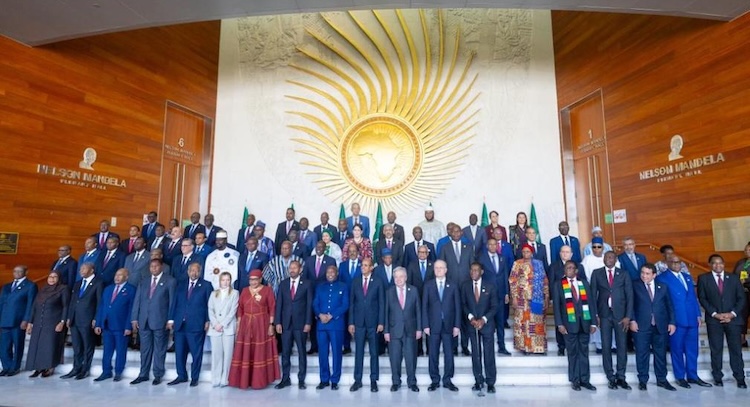
BERLIN | 24 February 2026 (WorldView) — From a European vantage point, with transatlantic ties on shaky ground, the recent African Union Summit in Addis Ababa felt less like a formal gathering and more like a seismic shift in global politics.
Official communiqués echoed themes of unity, reform, and grand visions such as Agenda 2063, while African media zeroed in on heated debates over peace and security crises spanning from the Sahel to the Horn.
Global media fixated on the usual suspects: the United States, China, the Gulf states, and Europe. Chinese outlets trumpeted ‘South–South cooperation’ and opened the door to African exports. American coverage spotlighted democracy and the race for strategic minerals. Yet African commentators cut through the noise with a sharper question: who will deliver?
For Europeans, the summit underscored a pivotal truth: Africa now stands at the heart of global strategy—economically, demographically, and politically.
Financing, Debt, and the Arithmetic of Urgency
Beneath the polished speeches lies a stark reality. Africa faces a yawning financing gap, unfinished infrastructure, worsening climate shocks, surging youth unemployment, and public debt that squeezes government budgets.
African Union statements during and after the summit (11-15 February 2026) stressed structural reform, economic transformation, and industrialization under the framework of Agenda 2063. The African Development Bank used the summit platform to reiterate its strategic priorities: energy access, food security, industrialization, regional integration, and improved quality of life.
Yet even the most ambitious blueprints cannot take flight without real funding.
Across the continent, debt weighs heavily. China may be the largest lender, but Western bondholders and global institutions also hold significant stakes. Attempts at restructuring have dragged on, uneven and slow. Now, African leaders are raising their voices, demanding fairer terms and faster action.
For Europeans, these realities pose uncomfortable questions. The EU likes to see itself as Africa’s primary development partner. Still, in times of crisis, navigating among Chinese lenders, Paris Club creditors, and private investors becomes a high-stakes geopolitical negotiation.
Debt is more than a financial headache; it is a lever of strategy.
China’s Embedded Presence
The very setting of the summit—the AU headquarters in Addis Ababa—stands as a concrete symbol of China’s deep imprint on Africa.
Over the past two decades, Beijing has financed railways, highways, ports, and power plants across the continent. Chinese reporting surrounding the summit emphasized continued cooperation, trade facilitation, and tariff concessions for African exports. The message was consistent: China stands with Africa as a partner in modernization.
European observers often fret over murky contracts, mounting debt, and over-reliance on resources. Yet many African leaders point out that Chinese financing has delivered tangible infrastructure where Western institutions hesitated.
Infrastructure is not an abstract concept. It is roads stitching together markets, railways carrying goods, and power plants fueling factories.
China’s interests are also very real. Africa’s supplies of cobalt, lithium, copper, and rare-earth elements are vital to electric vehicles and renewable energy. Controlling these supply chains is becoming more important for global influence.
For Europe, this is a looming worry. The EU’s green ambitions hinge on steady mineral supplies. If China dominates processing and refining, Europe’s grip on its own industry slips away.
What appears as development finance in Addis is, at its core, a contest for control over supply chains.
Washington’s Re-engagement
American coverage of the summit framed Africa within a broader strategic competition narrative. U.S. officials have, in recent years, emphasized renewed engagement, democratic governance, digital standards, and partnerships in the critical minerals sector.
The U.S. approach is different from China’s. It depends more on private investment, development finance agencies, and governance-related conditions. The U.S. also emphasizes transparency, but African policymakers often note that private investment moves cautiously, and blended finance crawls. The demand for infrastructure is urgent.
Reports from Addis suggested that U.S.–Africa relations are increasingly tied to mineral supply chains and security partnerships. Washington sees Africa as indispensable to technological competition with China.
For Europeans, this is an old refrain: major powers turn their gaze to Africa only when it serves their own strategic interests.
Youth Discontent and Demographic Reality
African and international media also spotlighted a force beyond Beijing or Washington’s reach: the restless energy of youth discontent.
Africa boasts the world’s youngest population. Each year, millions surge into the workforce, but economic growth lags behind this demographic tide. Protests erupt across countries, fueled by frustration over joblessness, governance, and inequality.
Some summit discussions addressed youth empowerment and job creation. However, the challenge is enormous.
In Europe, these demographic waves ripple straight into migration debates. Africa’s economic struggles shape migration flows, making stability and prosperity in Africa urgent matters for European policymakers at home.
Supporting Africa’s development is not mere charity; it is in Europe’s own self-interest.
Climate, Water, and Energy
Another major topic at the summit was water security and climate resilience. Africa produces very few greenhouse gas emissions but suffers the most from climate change, facing droughts, floods, and crop failures.
African leaders continue to demand equitable climate finance and recognition of loss and damage. China promotes renewable technology exports. The United States emphasizes clean energy partnerships. European institutions highlight green transition cooperation.
But African policymakers insist on pragmatism. Many argue that gas remains essential as a bridge fuel. Electrification and industrial growth demand abundant energy, not austerity—integration with Europe. The EU wants rapid decarbonization, while African countries focus on development and poverty reduction. Balancing these goals needs careful discussion, not pressure.
Security and External Rivalries
Global reporting also noted that the summit unfolded against the backdrop of conflicts in the Sahel, instability in Sudan, and broader geopolitical rivalries, including competition among Gulf states in the Horn of Africa.
Security concerns shape investment decisions. Infrastructure cannot rise without stability, and military alliances often redraw the map of diplomatic ties.
The United States continues security cooperation across Africa. China’s security role is still small but carries symbolic weight. European countries, especially France, have adjusted their military presence after setbacks in West Africa.
For Europeans, the message is unmistakable: any retreat leaves space for others to fill.
The Institutional Question: AU Reform and Global Governance
Summit discussions also touched on Africa’s role in global governance. Calls for a permanent African seat on the UN Security Council reflect longstanding frustrations over representation. The demand is both symbolic and practical.
If Africa is vital for global growth, minerals, and climate resilience, its marginal role in global decision-making grows ever harder to defend.
For Europe, backing more African representation could make global institutions more legitimate. Still, changing these institutions is politically difficult.
Yet the very debate signals Africa’s rising confidence on the world stage.
Europe’s Strategic Dilemma
From Europe’s perspective, the AU Summit reveals unease.
Europe’s long, complicated history with Africa is filled with both promise and pain. It remains a major trade partner and donor, yet in Addis, the spotlight often shifted to Washington and Beijing.
The EU’s Global Gateway initiative promises major funding for infrastructure. But what truly counts is visibility and speed. African leaders measure commitment by finished projects, not lofty promises.
If Europe moves too slowly, gets tangled in bureaucracy, or comes across as patronizing, it risks being sidelined.
The summit hands Europe a stark choice: adapt to a crowded field of powerful players or fade into irrelevance.
Africa’s Strategic Autonomy
The key takeaway from Addis Ababa is that Africa refuses to be boxed into a two-sided contest. African leaders often stress their desire for strategic independence. They accept Chinese infrastructure, American investment, European partnerships, Gulf funding, and South–South cooperation all at once.
This is not Cold War-era non-alignment. It is a pragmatic strategy to diversify partnerships and maximize leverage.
Europe should not mistake this for indecision. It is Africa’s way of gaining leverage.
Rivalries among major powers open new negotiating space for African governments. They can demand better financing, more local mineral processing, technology transfers, and a bigger stake in industry.
The African Continental Free Trade Area amplifies this leverage, boosting intra-African trade and loosening dependence on any single outside partner.
The Mineral Future
One of the fiercest fronts in the U.S.–China rivalry in Africa is the contest for what lies beneath the soil.
Cobalt glimmers in the Democratic Republic of Congo, lithium pulses in Zimbabwe and Namibia, copper runs deep in Zambia, and rare earths are scattered across the continent.
China has seized commanding stakes in mining and processing. Now, the United States and Europe scramble to diversify their supply chains.
African leaders are drawing a clear line: extraction alone will not suffice. They want battery factories, refineries, and homegrown industries.
For Europe, which seeks both a green transition and greater independence, genuine partnerships that help build African industry will outlast mere resource extraction.
Beyond the Chessboard
European commentators often paint Africa as a chessboard, a stage for Washington and Beijing’s rivalries.
But this perspective underestimates Africa’s own agency and power to shape its destiny.
The AU Summit in Addis Ababa made it clear: African leaders understand the stakes. They are not passive spectators but active negotiators of their own future.
The real test for Europe, the United States, and China is whether their engagement is transactional or truly transformative.
Will funding keep Africa dependent, or will it accelerate industrialization, regional integration, and resilience? Africa’s path will shape the world’s economy, climate, and politics for years to come.
For Europe, the message rings clear: this is no side story. Africa is central to the emerging multipolar world order.
Africa is not a chessboard.
Africa is a key player. Those who recognize this will help shape the future. [WorldView]
Original link: https://rjaura.substack.com/p/africa-is-not-a-chessboard
Related links: https://www.eurasiareview.com/19022026-africa-is-not-a-chessboard-analysis/
https://www.world-view.net/africa-is-not-a-chessboard/
About the author: Ramesh Jaura is affiliated with ACUNS, the Academic Council of the United Nations, and an accomplished journalist with sixty years of professional experience as a freelancer, head of Inter Press Service, and founder-editor of IDN-InDepthNews. His expertise is grounded in extensive field reporting and comprehensive coverage of international conferences and events.