
What artists and religious leaders reveal about the health and future of democracy
By Azza Karam
NEW YORK, 12 OCTOBER 2026 (IDN) — A concert can tell us more about a country than an election poll can. It can reveal whose suffering people are prepared to acknowledge, what powerful institutions will permit them to say, and whether others will stand beside someone who pays a price for speaking.
In September, Macklemore was removed from Ed Sheeran’s American tour after expressing support for Palestinians onstage. Sheeran said the promoter decided against objections from stadium owners. Robert Kraft, whose company owns Gillette Stadium, defended excluding Macklemore, citing what he described as antisemitic rhetoric and imagery. Macklemore disputed that characterisation. Other supporting performers withdrew in solidarity—Reuters reporting and Associated Press reporting.
The democratic significance lies in that response. Whatever their individual motives, their withdrawals challenged the expectation that commercial interests would prevail over public conviction. Defending Palestinian rights and opposing antisemitism are compatible obligations; a democratic public culture must make room for both.
Does this mean the tide is turning against the Trump administration? Perhaps. The episode suggests that some influential cultural actors are less willing to remain silent or defer to powerful gatekeepers. That willingness could strengthen resistance to the administration where its policies or practices threaten equal rights and public accountability. But this dispute involved private institutions, not a government ban. It cannot, by itself, establish a nationwide change in political allegiance.
It does, however, illustrate my central argument: the conduct of cultural actors can help us gauge whether democracy is sustainable. Their choices can also signal the direction a society is taking, before that direction becomes visible in elections or institutional change.
Democracy depends on what people learn to accept.
Democracy requires more than elections and a constitution. It depends on people accepting that opponents have rights, that power must answer to scrutiny, and that membership in society does not depend on belonging to the dominant religion, ethnicity, or political party. These commitments must be practised between elections if they are to survive during them.
Artists, writers, journalists, educators, and religious leaders help shape those commitments. They influence who becomes visible, whose pain commands attention, and which abuses begin to seem ordinary. Their work can widen public concern or narrow it. They can encourage people to question authority or make obedience seem patriotic and exclusion morally justified.
Several scholars help explain why these choices matter. Almond and Verba connect democratic stability to civic habits. James Davison Hunter shows how struggles over moral authority shape public conflict. John Fiske highlights the political force of media and representation. Jeffrey C. Alexander explains how solidarity can extend equal membership to people previously excluded. Together, these perspectives help us see culture as part of the everyday work that sustains or weakens democracy.
Cultural actors are therefore both participants in political change and indicators of it. When they excuse cruelty, ridicule vulnerable people, or treat dissent as betrayal, they help prepare the ground for democratic decline. When they defend people beyond their own communities and accept personal costs, they demonstrate the habits democratic renewal requires.
This is how their behaviour can foreshadow a society’s future. It reveals which uses of power are gaining acceptance and which are losing legitimacy. It also helps shape that acceptance. A performer’s refusal or a religious leader’s intervention may permit others to challenge something they had felt unable to confront alone.
Yet visibility is not the same as influence, and influence is not automatically democratic. Celebrities can spread prejudice as readily as solidarity. A popular protest can demand freedom for one group while denying it to another. The relevant question is what cultural actors defend, for whom, and with what consequences.
Religion belongs at the centre of this discussion.
Religious actors deserve particular attention because they combine moral language with durable community networks. Congregations and faith organisations meet repeatedly, cultivate trust, mobilise volunteers, and often reach people whom political campaigns or cultural institutions do not. They can turn conviction into sustained public action.
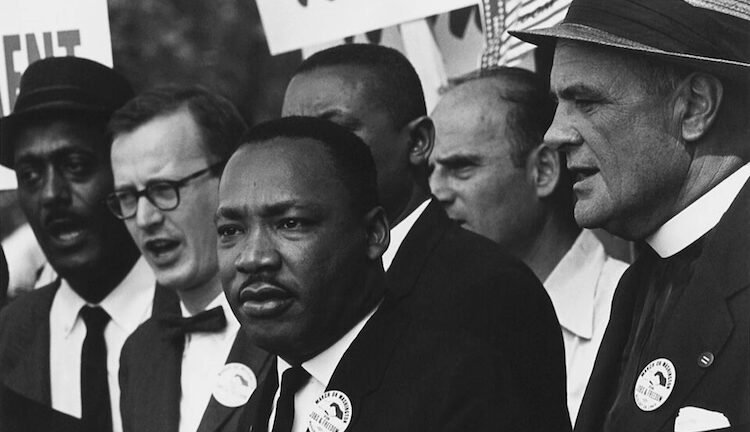
The American civil rights movement showed the democratic potential of that capacity. Religious leadership, congregational organising, and moral appeals helped challenge racial exclusion. Faith supplied both a language of equal dignity and institutions through which people could act on it.
Religious authority can also serve exclusion. When leaders suggest that a country belongs more fully to one faith, portray political opponents as enemies of God, or grant favoured politicians immunity from criticism, they weaken democratic accountability. Religious conviction becomes especially dangerous to democracy when it places the exercise of power beyond questioning.
The test is not how loudly someone invokes faith. It is whether the rights they defend extend to people who do not share it. Do they protect religious minorities and nonbelievers? Do they oppose abuses committed by their political allies? Can they acknowledge suffering outside their own community without requiring agreement or conversion?
The same standard applies to secular cultural actors. Solidarity has democratic value when it reaches beyond the people most likely to applaud it. The concert stage and the congregation become useful gauges of democracy when we examine whose dignity they defend under pressure.
A change in mood must become a change in power.
Research on inequality adds a necessary caution. Michelle Alexander, Ta-Nehisi Coates, and Matthew Desmond show, in different ways, how exclusion can persist beneath public declarations of progress. Rights have limited practical meaning when people face barriers to voting, insecure housing, or conditions that leave them little capacity to participate.
Their work strengthens the cultural argument by asking what solidarity actually changes. A moving performance, a public apology, or charitable generosity may matter. But democratic sustainability also requires institutions that protect rights and opportunities that allow people to exercise them.
Harry Eckstein’s account of political change offers a related warning: institutions can adapt to criticism while preserving their underlying arrangements. A controversy may produce concessions without changing who holds authority. We should therefore look beyond the public statement to the decision, the organising that follows it, and the protections that endure.
Cultural resistance becomes politically consequential when it connects people to civic work: defending access to the ballot, supporting independent journalism, protecting vulnerable neighbours, and demanding accountability through lawful institutions. Religious networks can sustain that work between moments of public attention. Artists can bring new audiences to it. Neither can substitute for the institutions democracy needs, but both can help build the public commitment that keeps those institutions alive.
The hopeful signal in the Macklemore controversy is that exclusion did not simply end the conversation. It prompted others to take a position and accept a cost. That response may indicate that, within parts of American cultural life, silence is becoming harder to justify and solidarity harder to dismiss.
Whether this develops into a broader turn against the present administration remains uncertain. The democratic promise will depend on whether resistance reaches beyond a single controversy, welcomes people across differences, and holds every exercise of power to the same standards.
America’s democratic future will be decided partly through choices made far from the ballot box. What cultural actors normalise, what they refuse, and whom they defend can warn us of decline or point toward renewal. When influential voices begin to insist that other people’s dignity matters more than their own convenience, there is reason for hope. Democracy becomes more sustainable when enough people turn that insistence into a lasting public practice.
*Professor Azza Karam is President of Lead Integrity LLC, and Director of the Kahane United Nations Program at Occidental College. (IDN-InDepthNews)