
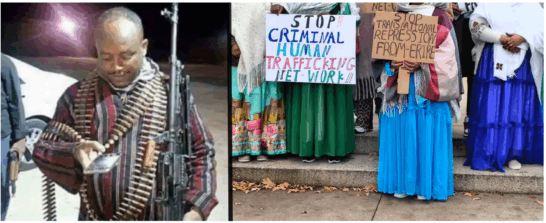
ZWOLLE, The Netherlands| 10 December 2025 (IDN) — The Dutch public prosecutor has demanded the maximum sentence of 20 years of prison, and over 2 million EUR in damages in the case of alleged Eritrean smuggler Tewelde Goitom “Walid”, accused of earning large sums of money through the kidnapping, torturing, and extorting of refugees in a global crime network.
This maximum sentence, however, does not reflect the gravity of the offences and the far-reaching consequences for the victims, argues the prosecution.
Walid is said to have smuggled refugees from mainly Eritrean descent to Europe under false promises and through violent means. Victims were detained in camps in the Libyan desert, where they suffered daily torture while forced to call relatives from whom large sums of ransom were demanded. During the case, the testimonies of victims spoke of horrific circumstances, lack of food, punishment and deaths in the camps, where refugees were held by the thousands.
The case is one of the largest prosecutions of a human smuggler to date, especially in the context of migration and kidnapping for ransom. The investigation into the networks spanned years, involved extensive international cooperation, and resulted in a case file totaling 25,000 pages.
Through a provision in Dutch law, the case could be tried in the Netherlands because victims and extorted family members now reside there or hold Dutch citizenship. The suspect’s actions also caused “wide-ranging consequences for Dutch society”, the prosecutor stated, emphasizing the lawless nature of the crimes committed, of which the suspect cannot face prosecution in Libya nor in Eritrea.
Alongside Walid, alleged smuggler “Kidane”, who is believed to have to have worked closely together with Walid, is also set for trial in The Netherlands. Kidane was arrested in Ethiopia in 2020 after a victim recognized him in public, yet he escaped a year later from the Ethiopian courthouse. In 2023, he was arrested in Sudan during a joint operation by Interpol and the United Arab Emirates, and he is expected to be extradited to the Netherlands at any moment.
Five other suspects have also been arrested in the Netherlands for allegedly collecting, bundling, and transferring ransom payments from Dutch citizens, and are set for trial in April 2026.
Libyan camps
Victims of these smugglers described the conditions in the extortion camps as “inhumane”. They reported receiving an average of four bites of bare macaroni per day, along with a small amount of water, sometimes mixed with gasoline to prevent them from drinking too much. Tuberculosis, scabies, and other diseases were widespread, without access to medical care. Many saw fellow detainees die, and girls were regularly taken away and sexually abused.
People were held for several months to years, until relatives had transferred between 6,000 and 10,000 USD through the underground Hawala banking system. Refugees described being exchanged and sold to traffickers “like cattle”.
Walid was described to have ruled “like a king,” having complete control over every aspect of people’s lives. He always walked around with a firearm with which he frequently threatened his victims. “When he arrives, even a baby shuts up,” testified a survivor.
He treated the people in his camps as his property, telling them “I bought you” upon arrival. Listening to the testimonies, the presiding judge remarked: “I thought slavery had long been abolished; it makes one question how a human being can do such cruel things to another human being”.
Many victims remain deeply traumatized by their journey to Europe, with some unable to be interviewed due to lasting psychological harm. They were further afraid of cooperating with the investigation due to security risks. This fear shown as validated by intercepted phone calls in which Walid instructed associates to track down witnesses whose names he recognized, and pressure them to change their statements.
Eritrean community
Feelings of fear became clearly tangible on the first day of the hearings, where a group of Eritrean women staged a demonstration in front of the courthouse against transnational repression by the Eritrean regime. They explained that the protest during the preliminary hearings a year prior was significantly larger, and that taking part had become increasingly risky because of threats against the Eritrean community, with the human trafficking networks forming part of this repression, they stated. Whilst the alleged smugglers were on trial, protesters received videos that same day showing the torture of their own relatives still being held in Libyan camps.
A witness stated that Eritreans help each other to make the ransom payments: “It can happen to any Eritrean. Almost everyone experiences this situation at some point.”
The Netherlands holds a large Eritrean community of approximately 28,000 people, many of whom still do not feel secure despite residing in a safe country.
The defense
The defense pleaded for an acquittal, centering its arguments around the question of jurisdiction. They claimed The Netherlands lacks jurisdiction to prosecute Walid, since the acts were committed abroad by a foreign national, regarding foreign victims, with Italy as the intended destination.
They further invoked the ‘ne bis in idem’ principle, noting that Walid had already received an 18-year sentence in Ethiopia before his extradition to the Netherlands, and could thus not be prosecuted for the same crime twice. The suspect known as ‘Walid’ additionally continues to claim he is a victim of mistaken identity, even as tapped phone calls and recognition of pictures by victims appear to show otherwise.
During the hearings, the suspect refused to speak, repeatedly calling upon his right to remain silent. Some of the victims did choose to speak out:
“At the moment Mr. Walid is a suspect to you. To me he is not. I was there, I am a victim and a witness, I saw everything. To you he may be a suspect; to me he is a perpetrator,” Witness E. stated.
The verdict is expected to be delivered on 27 January.