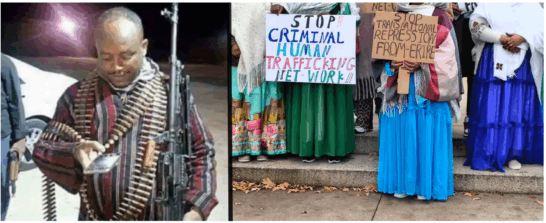
On 27 January 2026, the Dutch court in Zwolle delivered a significant verdict in the case against a suspect known as Walid, or Tewelde Goitom, convicting him on nearly all charges related to widespread human rights abuses against refugees in Libya. The court, in a comprehensive ruling totaling around 100 pages, sentenced Walid to the maximum penalty of 20 years in prison for leading a violent criminal network involved in detention, torture, rape, and extortion. The judge emphasized that Walid acted “without compassion, ruthless and without any regard for human dignity” in extorting from vulnerable individuals.
The court affirmed its jurisdiction over the case, which was the main point of contention between the public prosecutor and the defense. The court stated that not only were parts of the crimes committed within the Netherlands, but the effects of the extortion were felt there as well. Families of the victims in the Netherlands received threatening phone calls aimed at extracting money from those detained and tortured in Libya. Testimonies from refugees, supported by physical evidence and satellite images, painted a harrowing picture of their ordeal.
Representatives of the Eritrean community expressed gratitude for the ruling, highlighting that they had followed the case for years. They welcomed the court’s decision, which they view as a crucial step towards justice for victims of human trafficking and exploitation.
Walid’s trial
The case of Walid was one of the largest prosecutions of a human smuggler to date, especially in the context of migration and kidnapping for ransom. The investigation into the networks spanned years, involved extensive international cooperation, and resulted in a case file totaling 25,000 pages.
During the trial, the judge read out parts of the testimonies on what they had been through in the camps of Walid. They described being locked up in compounds in Bani Walid, Libya, where they were packed together in inhumane circumstances. They were underfed and had to face unhygienic conditions and disease, for months or years.
Meanwhile, they had to stand in line every day to call family members while being tortured, to put pressure on their family to pay ransoms. Witnesses also stated that Walid would take girls and women to his house, where he raped them. One harrowing testimony of a woman was shared in court, which detailed how she was raped by Walid, managed to escape and then was recaptured; she was beaten for three days straight and a pregnant woman accused of being her accomplice was also beaten, which caused a miscarriage.
Arrest and extradition of Walid and Kidane
Walid was arrested in March 2020 in Ethiopia together with another well-known trafficker, Kidane Zekarias Habtemariam (“Kidane”). Both men are from Eritrea originally. Together, they held and tortured thousands of refugees, the majority also from Eritrea, and extorted them for ransom.
Walid was found guilty on five counts of smuggling and trafficking in Ethiopia, and was then extradited to The Netherlands to stand trial for his crimes in Libya.
Although Kidane initially managed to escape from the court in Ethiopia, he was later re-arrested in Sudan on 1 January 2023. He stood trial in the United Arab Emirates (UAE) for money laundering. The UAE extradited Kidane to The Netherlands on 24 December 2025. Kidane will also stand trial in The Netherlands; his trial will start on 31 March 2026.
Continued torture in Libya
Trafficking and torture for ransom continue in Libya. Refugees and migrants continue to be detained, tortured and extorted for ransom. This ransom is paid by their families and communities in their countries of origin, or in the diaspora. The severity of this is underpinned by discoveries of mass graves and refugees and migrants bearing signs of torture.
The International Organization for Migration (IOM) estimates that there are almost 900.000 refugees and migrants currently residing in Libya. Libya is not party to the 1951 Convention relating to the Status of Refugees or its 1967 Protocol, so refugees face a lack of protection. This irregular situation for refugees and migrants contributes to the proliferation of human trafficking networks, trapping victims in a continuous cycle of abuse, according to research.
Human trafficking for ransom has been called enslavement. The torture includes extreme violence such as beatings, burning, torture with molten plastic, being tied up in extreme stress positions, and electric shocks, all while being detained with thousands together in dark warehouses with little food and no basic needs.
Researchers estimated that between 2016 and 2021, over 100,000 Eritrean refugees travelled through Libya to reach Europe. Researchers also estimated that between 2016 and 2021, the payments from families of Eritrean refugees alone generated over USD 1 billion.
The Royal Netherlands Marechaussee (KMar) called upon survivors that made the journey to Europe via Sudan and Libya between 2014 – 2024 to get in touch and testify, as the investigation into the criminal network continues.
The Eritrean community in The Netherlands
There are around 28.000 people with an Eritrean background in The Netherlands. The Dutch prosecution has linked hundreds of Eritreans in The Netherlands to trafficking networks, with many more survivors likely to be off the radar. Most of the asylum applications in The Netherlands in 2025 were done by Eritreans, many of whom came through Libya. In The Netherlands and elsewhere in the diaspora, Eritrean asylum seekers continue to face pressure from the Eritrean regime. According to a report presented to the Dutch parliament, Eritreans in the diaspora are threatened and coerced to pay 2% tax and other financial contributions and face transnational repression – including surveillance, threats, targeted violence, arrest or detention of relatives back home, in efforts to silence critics of the ruling Eritrean party.
Trials continue
The trial against alleged smuggler Kidane, accused of crimes similar to Walid, will start on 31 March 2026. In addition, five Eritrean agents working in The Netherlands to transfer ransom money from the diaspora to the traffickers have been arrested. The cases against these suspects are planned for April 2026 at the investigative judge.