By Syafruddin Arsyad*
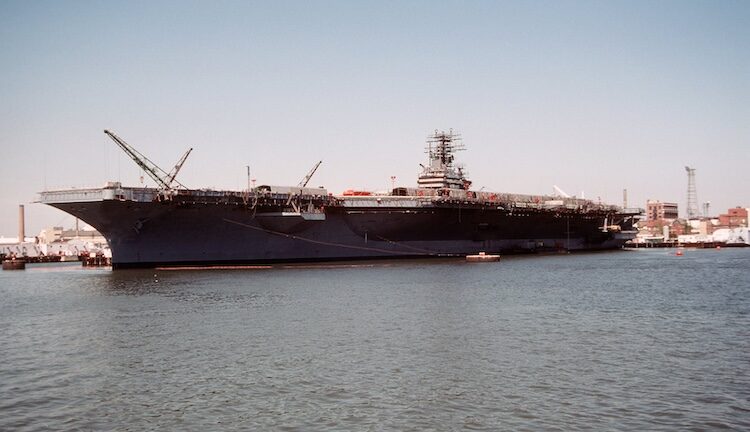
JAKARTA | 28 January 2026 (IDN) — As United States naval forces assemble in the Gulf while Washington simultaneously signals openness to dialogue with Tehran, the U.S. appears to be pursuing a carefully calibrated—but inherently risky—strategy. By pairing visible military pressure with diplomatic outreach, Washington seeks to coerce Iran into concessions without committing itself to a wider conflict. This approach, however, carries consequences that extend beyond state-to-state signalling, particularly for actors inside Iran and for U.S. partners assessing American resolve.
At its core, the current U.S. posture reflects an attempt to maximise leverage while preserving flexibility. The presence of an aircraft carrier group and accompanying assets communicates readiness and deterrence, while diplomatic overtures suggest that escalation is not an end in itself. Such a strategy is not new; it rests on the assumption that the credible threat of force can shape adversary behaviour more effectively than force alone. Yet credibility depends not only on capability, but on clarity of intent—something that remains ambiguous in the present case.
Coercive Signalling Without a Defined Endgame
The dual-track approach toward Iran appears designed to influence Tehran’s calculations rather than to decisively alter the political order. Military deployments signal that the U.S. retains escalation dominance, while diplomatic language leaves open the possibility of de-escalation. The challenge lies in the absence of a clearly articulated political objective. It remains unclear whether Washington seeks behavioural change from the Iranian leadership, long-term containment, or internal political transformation.
This ambiguity may be strategically useful in dealings with Tehran, but it creates interpretive risks elsewhere. Signals intended as leverage at the negotiating table can be read as commitments by other audiences—especially those operating under far more immediate and personal risks.
How U.S. Signals Were Interpreted Inside Iran
The recent protests inside Iran emerged from longstanding economic and social grievances, but they unfolded in an international environment shaped by repeated warnings from Washington. Public statements by U.S. President Donald Trump cautioning Tehran against violent repression, combined with expressions of support for demonstrators, were widely circulated despite efforts by Iranian authorities to restrict information flows.
As Asia Times columnist Bahauddin Foizee has noted, these statements were not interpreted in isolation. Trump’s past record of translating rhetoric into action—most notably Nicolas Maduro’s capture and high-profile counterterrorism operations—contributed to the perception that U.S. warnings carried operational weight. For some protesters, this perception reinforced the belief that external pressure might constrain the regime’s response or alter the balance of power.
This dynamic illustrates the unintended effects of coercive diplomacy. Statements designed to deter state behaviour can also shape expectations among non-state actors, even when no formal commitment exists.
The Risk of Disillusionment and Strategic Blowback
Foizee cautions that if U.S. pressure does not produce tangible outcomes, the psychological effect may reverse. Once Iranian authorities reassert control after the recent protests, demonstrators face heightened risks of judicial punishment, imprisonment, or even execution. In such an environment, any U.S. action perceived as limited or symbolic may be interpreted not as restraint, but as abandonment.
From a strategic perspective, this presents a dilemma. A restrained use of force may align with Washington’s desire to avoid regional escalation, yet it may also undermine the credibility of its signals if expectations have been inadvertently raised. Over time, this gap between perceived intent and actual outcomes risks eroding trust—not only among Iranian protesters, but also among U.S. partners who assess American commitments through the lens of consistency and follow-through.
Credibility as Alignment, Not Escalation
For the United States, and for President Trump personally, credibility is often framed in terms of resolve and willingness to act. However, credibility also depends on alignment: between rhetoric and strategy, means and objectives, pressure and restraint. A dual-edged strategy can succeed only if its limits are clearly understood by all relevant audiences.
Without a defined political endgame, the combination of military pressure and diplomatic openness risks sending contradictory messages—deterring adversaries while simultaneously encouraging expectations that Washington may not intend, or be willing, to fulfill. In such cases, both deterrence and diplomacy can lose effectiveness.
The central question, therefore, is not whether the U.S. can apply pressure, but whether it can do so coherently. For Iranians navigating the consequences of protest, for allies gauging U.S. reliability, and for policymakers seeking to manage escalation, the effectiveness of the current approach will depend less on the size of the armada in the Gulf than on the clarity of the strategy behind it.
*Syafruddin Arsyad is an independent researcher on current affairs in the Middle East and their impacts on other regions of the world, including Southeast Asia. His work has been published through major global syndications, such as the OpEd Column Syndication, and in outlets including Daily Times, Eurasia Review, Modern Diplomacy, Foreign Policy News, and The Insight International. [IDN-InDepthNews]