By Simone Galimberti*
KATHMANDU, Nepal | 17 December 2025 (IDN) — If there is one word that represents both the challenges and opportunities to create a better Nepal, that word is “trust”.
While the creation of the Republic on 28 May 2008 was predicated on the imperative of ensuring more inclusion, the efforts towards this goal have lost steam as a political priority. At the same time, it is undeniable that the country is doing a better job at celebrating diversity.
The vast cultural and linguistic wealth of the many ethnic, cultural and religious minorities that have been ignored over the centuries is finally getting recognition and visibility. Their traditional practices are not just accepted but also celebrated with pride by their members.
Yet, it is safe to say that politics and economies, the two levers of power, did not transform themselves through a deliberate and holistic effort to embed and internalise diversity across society.
The recent September uprising changed the scenario with a direct challenge to the status quo dominated by traditional groups at the top of the Hindu caste system that, while no longer formally existing, remains well rooted in the daily social practices, through both veiled and open acts of discrimination.
Over the last three months, there have been plenty of discussions about the imperative of building a more inclusive Nepal that can better represent and include citizens from minority communities.
Therefore, it remains essential to focus on ways to foster an environment, a society that welcomes and celebrates not only diversity but also finds a pathway toward the next milestones: larger opportunities in the day-to-day life and inclusion and representation in the political spheres.
Trust is key, and this was one of the key words expressed by Mr Nicolas Levrat, the UN Special Rapporteur on minority issues, at a recent press conference at the UN office in Kathmandu, which wrapped up his visit to the country.
Indispensable to building a better society
More and better inclusion would lead to more and better representation in the decision-making of the nation, thereby turning Nepal not only more just and inclusive but also stronger.
Stronger because all citizens of the nation would participate in the national polity and see themselves represented at the highest levels of politics.
Therefore, it is indispensable to build a better society by doing away with the masked distrust and covert weariness towards others and by defeating the stereotypes often fed by sheer ignorance that is still so pervasive across society.
Building trust this should be a top priority for the whole nation, one of the most important “missions” that the current and future governments should unconditionally embrace.
But how do we start building trust? How do we create the conditions for trust to emerge and get strong?
Different measures can be undertaken, some of which directly lead to the core of policy making, but ultimately, it will be up to the citizens of the whole nation.
Good and affordable education and public health services remain the two top vital elements that can lay the foundations for a more just society, where those who lag, members of the minority communities, but also everyone else in vulnerable economic situations, have access to.
Re-inventing public education
For example, Mr Levret, in his remarks, highlighted how access to education is still full of barriers for many members of minorities, especially citizens from the Dalit community who, from an intersectional perspective, are often are also among the most economically deprived.
Rebooting or perhaps even re-inventing public education is a daunting task, but Nepal cannot aspire to become a lower-middle economy without drastic changes in the public education system.
Even private schools should have a big role to play, even beyond their already mandatory provisions of offering scholarships to students from indigent families.
The same could be said in relation to access to equitable health services for members of minority groups or to equitable access to housing, the latter also a major area highlighted by Mr Levret, where citizens from the Dalit community are often discriminated against.
Thinking about ways to build a new nation, it is clear that good governance is a prerequisite.
For the country to be able to step forward in its quest for social inclusion and representation, better forms of decision-making and policymaking are paramount.
We need to initiate a process of reform, something akin to institutions building to make the overall government more agile, more transparent, more effective and yes, also more inclusive.
‘State institutions must better reflect the diversity of the Nepalese society in their composition and leadership, the Special Rapporteur said in an official press release.
“Minorities must be able to recognise themselves in those exercising power. They must feel heard and understood by public servants- including teachers, judges, and the police, in their mother tongue language”, he further elaborated.
In the federal parliament that was dissolved following the riots that stormed the nation in September, there were only 16 citizens from the Dalit community in the 275-member House of Representatives and only 7 Dalit members in the 59-member Upper Chamber, the National Assembly.
Yet just relying on good governance to bring in more and better inclusion and participation only goes so far. The country needs a commitment towards better inclusion and representation of minority groups
Without such a commitment from political parties, but also from the local and national intelligentsia and representatives of the private sector, a more inclusive Nepal will remain just a goal, desired and longed by a few but ignored by the majority.
Only a commitment that could even be formalised through a symbolic but solemn pledge by any future federal administrations and members of the parliament would instil a sense of urgency about social inclusion across all members of society.
Without having the members of the “upper classes” fully on board and fully dedicated to the cause, we cannot implement the many legal provisions aimed at enabling a more inclusive Nepal.
And the lack of implementation was strongly highlighted by Mr Levrat.
Need for a collective or individual endeavour
“Nepal must close the gap between clear constitutional and legislative provisions and their meaningful implementation to effectively prohibit discrimination against persons belonging to minorities, including Dalits”.
Citizens from all walks of life should care about making an effort towards recognising the pain, the injustices faced by millions of peers belonging to minority groups.
If such a collective and individual endeavour occurs, then trust among people from different backgrounds will emerge. As a consequence, the search for diversity will no longer be doubted and questioned with scepticism, but instead it will be embraced.
Building trust is a time and energy-consuming exercise that might make some citizens feel somewhat uncomfortable to start with. But only through this process can society start not only a conversation about social justice but also about practical tools to achieve it through enhanced equality and equity.
From this prism, boosting public education will not only be seen as an important policy agenda but also as an indispensable element of social equalisation. Even a difficult and complex topic like affirmative legislation would be more likely to be processed and understood fully.
People, even those who criticise it, might end up realising that its overarching aim and goal are straightforward and simple: support and help level up the lives of those who have suffered forms of historical discrimination.
More trust could offer a formula to truly imagine and implement a new, different Nepal where everyone is not only accepted but also supported and encouraged to thrive and reach the top.
*Simone Galimberti writes about the SDGs, youth-centred policy-making and a stronger and better United Nations. [IDN-InDepthNews]
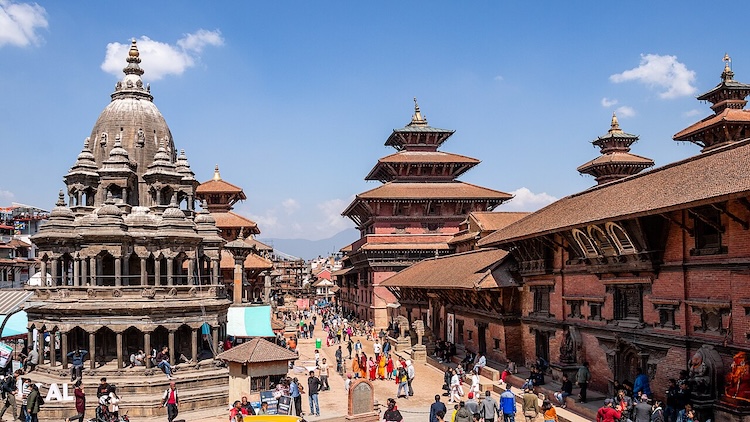
Image: Patan Durbar Square, one of the three palace squares in the Kathmandu Valley, was built by the Mallas in the 17th century. The Durbar Squares are a culmination of over a millennium of development in Nepali art and architecture. CC BY-SA 4.0