

Time for Peace, Dialogue and Nuclear Disarmament
By Ramesh Jaura
This article was first published on https://rjaura.substack.com
BERLIN | 24 November 2025 (IDN) — At a moment of rising nuclear danger, scientists, diplomats, and a global Buddhist community converged on Hiroshima and Tokyo in search of a different future for humanity.
From 1 to 5 November 2025, the 63rd Pugwash Conference on Science and World Affairs brought leading experts to Hiroshima, a city where the memory of nuclear devastation remains visible and unembellished.
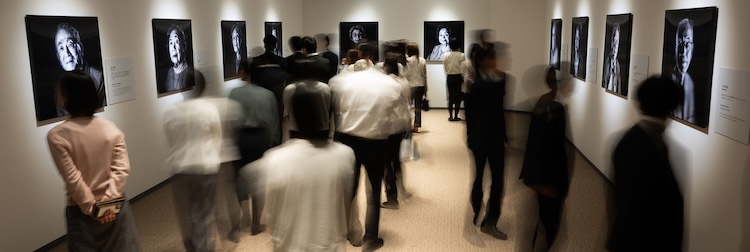
Delegates arrived against a backdrop of mounting geopolitical tension, the breakdown of arms control treaties, and the return of explicit nuclear threats to political discourse. Their arrival coincided with the final days of the “Portraits of Hibakusha—80 Years Remembered”. It was created by 80,000 Voices and photographed by Patrick Boyd. The exhibition was first shown in Tokyo from 16 March to 31 May 2024 and is intended to travel nationwide beyond the 80th year.
This exhibition was co-sponsored by the Pugwash Conference on Science and World Affairs. The display in Hiroshima during the conference offered delegates an unfiltered reminder of the human lives behind the policies they debate — a visual bridge between memory and the urgent discussions unfolding in nearby conference rooms.
Ten days later, on 15 November, hundreds of Soka Gakkai members from around the world gathered in Tokyo for a memorial service marking two years since the passing of Daisaku Ikeda, the Buddhist thinker and peace advocate whose decades-long campaign for nuclear abolition shaped global civil society movements.
Though vastly different in form — one a scientific forum, the other a religious memorial — the two gatherings reflected a common concern: that humanity is approaching a perilous point of nuclear instability and moral uncertainty.
Nuclear Risks Rising Faster Than Diplomacy Can Respond
The mood at Pugwash* was noticeably more sombre than in previous years. Delegates cited multiple factors driving global anxiety: the collapse of key arms control agreements, modernisation of nuclear arsenals in major powers, and the integration of new technologies such as artificial intelligence, cyber capabilities, and hypersonic delivery systems.
“The guardrails of the nuclear age are eroding, and we are unprepared for what comes next,” one senior arms control official said in a session closed to the press.
The Working Group on Nuclear Disarmament and the Future of Arms Control (WG1) identified several immediate risks:
- The return of explicit nuclear threats in major-power politics
- Strikes on safeguarded nuclear facilities, previously considered off-limits
- The targeted killing of atomic scientists, undermining international norms
- Compressed decision times created by dual-capable and hypersonic systems
- The fragility of launch-on-warning postures in an era of cyber vulnerability
The Bulletin of the Atomic Scientists’ Doomsday Clock, set at 89 seconds to midnight, featured prominently in discussions as more than symbolism — a reflection of concrete structural dangers.
WG1 recommended a set of urgent confidence-building measures:
- The U.S. and Russia should adopt No First Use (NFU)
- Nuclear-armed states should shift from launch-on-warning to launch-on-attack
- Arms control must move from warhead counting to system-based frameworks
- Missile defence should be brought into strategic negotiations
- The P5 process should be reinvigorated with confidential technical dialogue
- Controls on highly enriched uranium should be strengthened
In Hiroshima, these policy considerations were not abstractions. Delegates met within walking distance of the Atomic Bomb Dome, a constant visual reminder of what can happen when strategy fails.
The Hiroshima Declaration 2025: A Warning From the Survivors’ City
During the conference, the Pugwash Council issued the Hiroshima Declaration 2025, a sharply worded warning that the global nuclear order is approaching a “decisive moment.”
The document stresses:
- Erosion of international nuclear norms
- Rising proliferation risks
- Accelerating modernisation of nuclear forces
- Violations of longstanding rules governing nuclear facilities
- The weakening of diplomacy, especially U.S.–Russia communication
It calls for:
- Renewed engagement between nuclear-armed states
- Strengthening the Nuclear Non-Proliferation Treaty (NPT)
- Greater support for the Treaty on the Prohibition of Nuclear Weapons (TPNW)
- Entry into force of the Comprehensive Test Ban Treaty (CTBT)
- Commitment to preventing the weaponisation of outer space
Notably, the declaration reaffirms the moral principle rooted in Hiroshima and Nagasaki: nuclear weapons must never be used again, under any circumstances.
A Different Kind of Gathering in Tokyo
While the Pugwash debates focused on structural and geopolitical risks, the 15 November memorial service for Daisaku Ikeda addressed the human and ethical foundations of peace.
Ikeda, who died in 2023 at age 95, was among the most influential peace advocates of the late 20th and early 21st centuries. Through the Soka Gakkai International (SGI), he cultivated a global movement emphasising dialogue, human dignity, and what he called “people-centred multilateralism.” His annual peace proposals to the United Nations tackled nuclear disarmament, human rights, environmental protection, and youth empowerment.
The service was held at the Hall of the Great Vow for Kosen-rufu, a place of quiet architectural solemnity. Representatives from 75 countries attended. They chanted Nam-myoho-renge-kyo and recited passages from the Lotus Sutra. Many wept; many more sat in reflective silence.
Soka Gakkai President Minoru Harada urged participants to treat 2029, the sixth anniversary of Ikeda’s passing, as a milestone for advancing peace efforts rooted in dignity and nonviolence.
“His legacy is carried not by institutions, but by people,” Harada said.
The Legacy of Josei Toda: A Moral Framework for Abolition
Much of Ikeda’s worldview developed from the teachings of Josei Toda, the second president of the Soka Gakkai. Toda spent two years imprisoned during World War II for resisting Japan’s militarist government. His mentor, Tsunesaburo Makiguchi, died in prison.
The experience shaped Toda’s understanding of violence, state power, and the need for a moral foundation in public life.
In 1957, he issued a bold statement before 50,000 young people:
“I denounce nuclear weapons as the embodiment of absolute evil.”
The declaration shocked Japan’s political establishment and laid the moral groundwork for Ikeda’s lifetime of activism.
Toda’s emphasis on “human revolution” — the transformation of the individual as the basis for social change — continues to influence SGI’s peace activities worldwide.
When Science and Faith Converge
What made November 2025 notable was the convergence of two distinct communities — scientific and spiritual — confronting the same nuclear dangers from different angles.
The Pugwash delegates approached the issue through logic, data, and strategic risk analysis.
The SGI community approached it through ethics, memory, and a commitment to nonviolence rooted in Buddhist humanism.
Yet both groups stressed a common point: political structures alone cannot prevent nuclear catastrophe.
Public imagination, moral conviction, and civic movements must also play a role.
A young scholar who attended both gatherings put it this way: “Hiroshima tells us what we must never repeat. Tokyo reminded me why we have to try.”
Hiroshima’s Enduring Message
As the conference closed, many participants visited the Peace Memorial Museum and the Atomic Bomb Dome. They strolled past artefacts — a charred lunchbox, a melted tricycle, uniforms burned into shreds. Delegates emerged shaken, more aware than ever that nuclear policy failures end not in theory but in human suffering.
The fact that high-level nuclear deliberations were taking place a few hundred meters away reinforced the city’s central message: deterrence is not the same as security, and memory must shape policy.
The Work Ahead
If the early 21st century has demonstrated anything, it is that deterrence alone cannot guarantee safety. Technology evolves faster than treaties; mistrust grows faster than dialogue. Both Hiroshima and Tokyo underscored the need for a dual approach: the structural work of diplomacy and arms control, and the moral work of building a culture that rejects nuclear violence.
One Pugwash delegate, standing by the river at dusk, said, “We’re not here because we have the answers. We’re here because the alternative is unthinkable.”
Justice Unfinished
Three months after the atomic bombings of Hiroshima and Nagasaki, the world convened the Nuremberg trials — an unprecedented effort to hold leaders of the Hitler regime accountable for grave crimes. Yet no comparable tribunal was ever proposed for the atomic bombings themselves.
The silence reflects the geopolitical landscape of 1945. It also marks an unresolved moral tension at the heart of the nuclear age: whether humanity has ever fully confronted the ethics of its own destructive power. As delegates and mourners departed Hiroshima and Tokyo this November, that unasked question lingered — a reminder that the pursuit of peace is inseparable from the pursuit of truth.
*Note: Pugwash seeks a world free of nuclear weapons and other weapons of mass destruction. Through our long-standing tradition of ‘dialogue across divides’ that also earned us the Nobel Peace Prize in 1995, Pugwash aims to develop and support the use of scientific, evidence-based policymaking, focusing on areas where nuclear and WMD risks are present.
About the author: Ramesh Jaura is a journalist with 60 years of experience as a freelancer, head of Inter Press Service, and founder-editor of IDN-InDepthNews. His work draws on field reporting and coverage of international conferences and events. (IDN-InDepthNewsI
Image: Participants of the Pugwash Conference
Original link: https://rjaura.substack.com/p/hiroshima-takes-centre-stage-again
Related links: https://www.eurasiareview.com/23112025-hiroshima-takes-center-stage-again-oped/
https://www.world-view.net/hiroshima-takes-centre-stage-again-2/