
By Kalinga Seneviratne
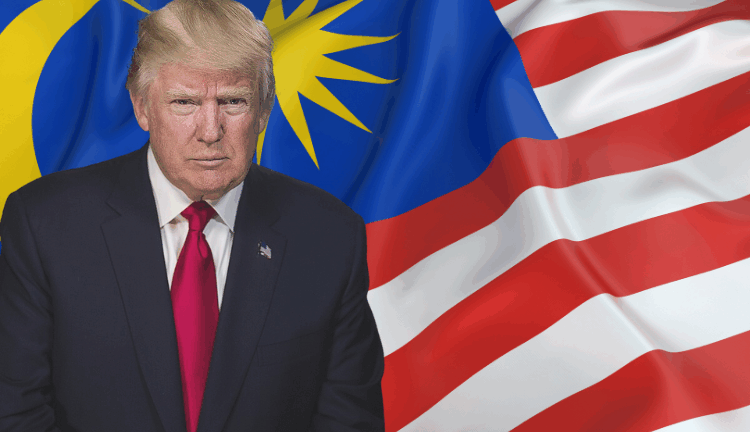
BANGKOK | 11 November 2025 (IDN) — After the United States President Donald Trump barged into the ASEAN Summit with the Malaysian leader Anwar Ibrahim providing him with Malay dancing music at Kuala Lumpur airport, a trade deal signed between the two countries on the sidelines of the Summit on October 29th has ruffled feathres in the country about whether Anwar has surrendered to Trump’s “gangster” diplomacy?
During his long battle with the former Malaysian Prime Minister Mahathir Mohamad (a staunch critic of the West) for the country’s leadership, it was the US that strongly supported his ambitions, that led to Anwar being seen as an American stooge. However, after becoming Prime Minister in November 2022, Anwar has leaned heavily towards China. But, his capitulation to what is seen as a one-sided trade agreement signed with Trump, has reopened old suspicions.
The reciprocal trade deal has pushed the Anwar government to defend itself from accusations domestically that it has surrendered the country’s sovereignty by trying to safeguard the economy from threatened, harsher economic sanctions.
The deal, signed by Anwar and Trump, maintains the White House’s unilateral 19% tariff on Malaysian exports, but grants exemptions for 1,711 essential products, including electronics, rubber, and palm oil derivatives. However, it is a clause requiring Malaysia to align itself with the US on matters of economic restrictions or sanctions against a third country that has raised alarm bells, with critics warning that it may threaten the country’s independence and longstanding neutrality stance, especially at a time that Kuala Lumpur was developing warmer relations with Beijing.
“There are some who said we surrendered our necks in the negotiations,” Investment, Trade and Industry Minister Tengku Zafrul Aziz Seri Zafrul told lawmakers the day after the agreement was signed, indicating that they had no choice other than negotiating with the US (under duress). “This is the geopolitical reality we face as a freely trading nation engaging with the world’s largest economic power, which is also our biggest trading partner.”
Trade between the two countries reached RM325 billion (USD 78 billion) in 2024, with Malaysian exports accounting for RM200 billion (USD 48 billion). The surplus led to Malaysia being hit with a 24% tariff, later raised to 25% before being revised again to 19% in September.
“Most trade and economic experts, upon reviewing the agreement, would likely conclude that the US gained a great deal more than Malaysia. Sadly, in many ways, it represents a weak deal – and for some nationalists, a bleak day for Malaysian sovereignty and a retreat from our carefully crafted principles of non-alignment and economic independence’” argues Chandran Nair, founder and CEO of the Hong Kong-based Global Institute For Tomorrow.
A Malaysian national, Nair questions Anwar’s eagerness to host Trump at the ASEAN summit, where he stole the limelight. He asked whether he agreed to sign this deal to “ host the US President and enjoy 24 hours of global media coverage?” He is critical of the colonized mindsets of Asian leaders. “We continue to fawn over Western leaders, as is often the case in former colonies where any deal with the West is seen as a good deal,“ he notes, asking, “or were we simply bullied- becoming the first in the region to capitulate- giving the President a chance to boast and send a message to our neighbours?”
Economist and international relations analyst Samirul Ariff Othman sees it a bit differently, “Everyone signs because it is cheaper to sign than to be sanctioned. For middle-income economies like Malaysia, these are survival instruments — a way to buy time in an unpredictable world,” he notes.
“Malaysia did secure tangible trade concessions, even if limited’” argues Othman. “The deal is not an empty handshake. It is a qualified one … Malaysia’s rationale was pragmatic. The Trump administration’s tariff threats had already unsettled exporters and weakened confidence in Asean’s collective bargaining power. Securing an agreement stabilised market access and helped avoid an estimated RM15 billion (USD 3.6 billion) in potential export losses for Malaysian electronics, rubber, and palm-based goods”.
But, as Othman notes that local criticism has been fierce. With commentators warning that the agreement’s language — replete with “Malaysia shall” and “US may” clauses — reveals an imbalance of obligation. Some opposition leaders have even branded it a “surrender disguised as diplomacy”.
“Trump’s diplomatic model thrives on symbolism over substance. These deals deliver headlines, not institutional integration,” he argues. “They enable the US to claim leverage without legislative cost, and partner countries to claim access without structural change”.
“The actual cost of this agreement is not measured solely by tariffs, but by the sweeping surrender of our policy autonomy. Malaysia has signed 16 free trade agreements (FTAs); none have contained such invasive and humiliating provisions,” points out Muhammed Abdul Khalid, a fellow at the World Inequality Lab at the Paris School of Economics, writing in his blog ‘Malaysian Must Know The Truth’.
He notes further that “critically, the agreement grants the United States a de facto veto over Malaysia’s trade relations, allowing the US to terminate the pact and reimpose tariffs if Malaysia sign an FTA with a nation deemed to “jeopardise essential US interests.” Malaysia has also waived its right to tax US social media platforms and cloud service providers, as well as loosened broadcast regulations mandating 80% of airtime to be dedicated to local programming.
“These two clauses clearly subordinate our national economic strategy to the geopolitical interests of a foreign power. This is a chilling throw back to the era of British adviser and the Malay sultans, where advice was, in effect, a command. If this is not a submission to a foreign country, then what is this?” asks Khalid.
Zafrul told parliament that the controversial Article 5.1 in the deal does not oblige Malaysia to adopt Washington’s policies, as “guardrails” within the broader text protect national interests. According to him, Malaysia is required to discuss such matters with the US and act only “if necessary”, in line with domestic laws and within a prescribed timeline.
But opposition lawmaker and former International Trade and Industry Minister Azmin Ali disagrees and argues that it forces Malaysia to take Washington’s side in its conflicts. “If Washington decides to block imports from China or Russia, Malaysia must do the same, even if it harms our economy,”
Parliamentary Select Committee on International Relations and Trade, has announced a hearing on November 12 to review the agreement, and representatives from Zafrul’s ministry and the US Embassy in Kuala Lumpur, as well as economists and business chambers, have been invited to explain the pact and its impact on Malaysia’s existing trade deals.