
By Riya Bhagawan*
MACUATA, Fiji | 23 February 2026 (IDN/Wansolwara) — Long seen as a quiet, small, and tranquil town nestled among lush mountains with a simple, peaceful lifestyle, Macuata is now rapidly evolving and positioning itself as a centre of attraction in Fiji’s second largest island of Vanua Levu with a population of 160,000.
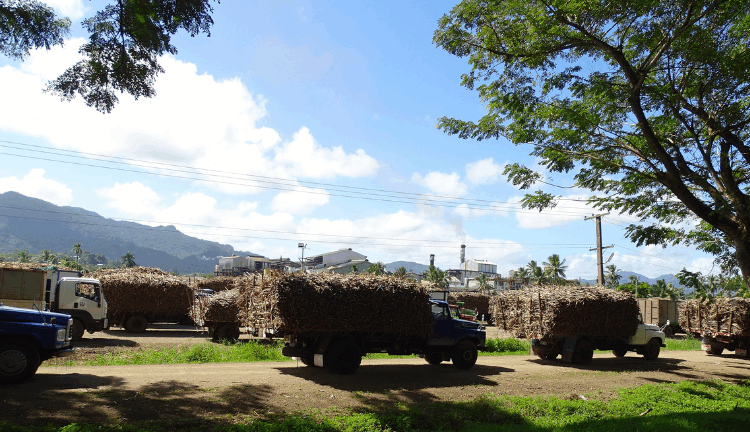
Vanua Levu’s economy has for a long time prospered on a thriving sugar industry based around its main administrative town of Labasa in the northeast of the island. The Labasa sugar industry is suffering from a “downturn” driven by systemic issues, including a, “generational exodus” of farmers and shrinking cultivation areas. In late 2025, the premature closure of the sugar mill left tens of thousands of tonnes of cane unharvested.
Sugarcane farming has been the mainstay of the island’s economy for generations, but the mainly Indo-Fijian farmers have been migrating overseas for the past 3 decades because of the uncertainties of land leases and the declining income from sugar farming.
Now the island’s tourism authorities have come up with a novel idea to exploit the island’s natural beauty, and entice those Fijians who have settled down overseas, especially in Australia and New Zealand to come back and invest in the tourist industry, or come back for holidays and spent more time in familiar surroundings.
Fiji Islands are also popular with tourists from Australia and New Zealand, and recently there has been attempts to lure in Asian tourists with direct flights available from Hong Kong and Singapore to Nadi (Fiji’s international gateway).
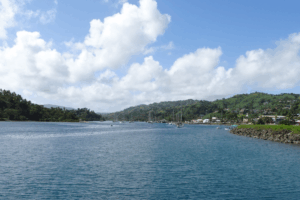
For long, it has been generally agreed that Macuata, because of its natural beauty, has the potential for both local and international tourism, especially by the Fijian diaspora. It is only recently that the Macuata Tourism Authority (MTA), has seen the potential, and is pushing ahead with developments aimed at sparking a major ecotourism boost in the region.
It is only now that some meaningful projects are being developed with budgetary support and World Bank funding of $200 million finalised recently.
Development Push
MTA Secretary Amelia Simmons told Wansolwara, that there are major plans for the famous Floating Island, including walking planks, an upgraded access road, and a visitor centre, to make this site more easily accessible, comfortable and appealing. A parking facility is also proposed along with small discovery expedition cruises for 200–300 visitors. Further upgrades are planned for the nearby Three Sisters Mountain and the Waiqele and Tambia Hot Springs.
“Labasa relies heavily on the sugar mill, and as a result, when the mill is running, business thrives, but as soon as it stops, the town feels the impact,” says Simmons. “That’s why there is a frantic push for us to develop ecotourism in Macuata,”
A former journalist with the Communications Fiji Ltd in the 1980s, Simmons who is originally from Labasa, returned from the United States to reinvest in her hometown.
Speaking on the impact of the planned developments, she said, “We envision that over the next five years, ecotourism in Macuata will be booming, and this will change the dynamics for the Northern Division(of the island).
“It will encourage people to move from the mainland and even entice Fijians living in New Zealand, Australia, and the United States to return home. People will want to come back, even if only for six months,” Simmons hopes, arguing that this would inject significant revenue into the economy, giving it a much-needed boost.
Labasa Town Council Special Administrator and MTA President Paul Jaduram confirmed that a $3.25m grant facilitated by former Finance Minister Biman Prasad will support these projects, which will be implemented with sustainability in mind.
To safeguard environmental protection, environmental stewards would play a central role in the soon-to-be Macuata Tourism Council, which will also generate income for the community and encourage them to protect the environment as a source of tourism.
Simmons stressed that extensive feedback would be sought from a wide range of community and industry representatives. They include members from the designated ecotourism sites, landowners, the Commissioner Northern, the Divisional Planning Officer, Labasa’s business community, and ratepayers, as well as other key individuals, all of whom will serve as key stakeholders in the Council.
Growth Benefits
These developments are expected to generate year-round income and provide a much-needed economic boost for Labasa, helping the town overcome its current challenges caused by heavy reliance on a single industry, sugar.
However, Simmons noted, that the town must overcome existing infrastructural challenges to fully realise the benefits of increased tourism.
“The community has been pushing for a bypass road for 40 years with little progress, and only recently has the government announced plans for a new bypass road and bridge,” she highlighted. Upgrades to the transport facilities is also an important aspect when looking at such developments, she emphasised. “With an expected influx of visitors, these structural issues need to be addressed now to ensure the smooth development of tourism in the region.”
Prasad acknowledged that while the North had been neglected, this trend had shifted under recent government policies. He highlighted that the 10-year World Bank tourism project which is currently underway will bring significant benefits for the town in coming years.
Tourism’s Ripple Effect
The developments are set to further boost investor confidence in the town. “Once the upgrades to these major tourism sites take place, more people will be encouraged to build their business in Labasa,” the MTA Secretary stated.
Shedding light on the town’s accommodation facilities to handle the expected wave of arrivals, Simmons noted that there is currently limited business potential to attract new investment. “Right now, we don’t have enough demand. Mostly it’s government ministers moving back and forth, with only a handful of local and international tourists. “That level of activity isn’t enough to encourage people to invest in building their businesses here,” Simmons said.
Ramada Encore by Wyndham at Damodar City Labasa, is the first international hotel brand in Labasa. The Charan Jeath Singh Group has invested $5m to expand the Grand Eastern Hotel to meet rising accommodation demand in Labasa this year.
As the planned tourism projects take off, other businesses are set to follow suit, and Simmons is confident that the tourism projects and the island will reap the eco-tourism driven benefits.
*Riya Bhagwan is a third year journalism student at the University of the South Pacific, and the editor of the student newspaper Wansolwara. This article is transmitted under a collaborative arrangements with Wansolwara.
[IDN-InDepthNews]