Iran: Moving Away From Hostile Confrontation at Home and Abroad

By Mohammad Mahdi Mojahedi* | IDN-InDepthNews Analysis

TEHRAN (IDN | Iran Review) – The true importance of the recent nuclear agreement between Iran and the P5+1 group of countries, more than being related to its text, should be seen in two other aspects of the deal. The first aspect is the process of the negotiations and the method that was “invented” through the negotiations, which led to this agreement. The second aspect is wanted or unwanted “outcomes” of the deal.

Invention of this useful negotiation process, along with the outcomes of the deal, will not only divide the history of international relations and Iran’s foreign policy into two parts – before and after the Vienna nuclear agreement – but is also a certain sign of the emergence of a new Middle East, which will come into being within the next couple of decades.

Due to clear geopolitical and geostrategic reasons, following the Constitutional Revolution in Iran, none of the policies of the world’s big powers in the Middle East could have been designed and pursued in the absence of due attention to Iran’s role. The Middle Eastern policy of big powers, especially during two world wars, in addition to all the developments that took place in the Cold War era, are good evidence to this fact.

India Confronts Reality at Shanghai Summit

By Shastri Ramachandran*  | IDN-InDepthNews Analysis

CHENNAI, India (IDN) – The Shanghai Cooperation Organisation (SCO) is a regional forum where India may not be able to have its way against Pakistan. To the contrary, Pakistan – which also became a full member of the SCO along with India on July 10 in Ufa (Russia) – may be better placed in the six-member regional grouping dominated by China and Russia.

Mapping India-China Cultural Links Crucial For Asia’s Emergence

By Kalinga Seneviratne* | IDN-InDepthNews Analysis

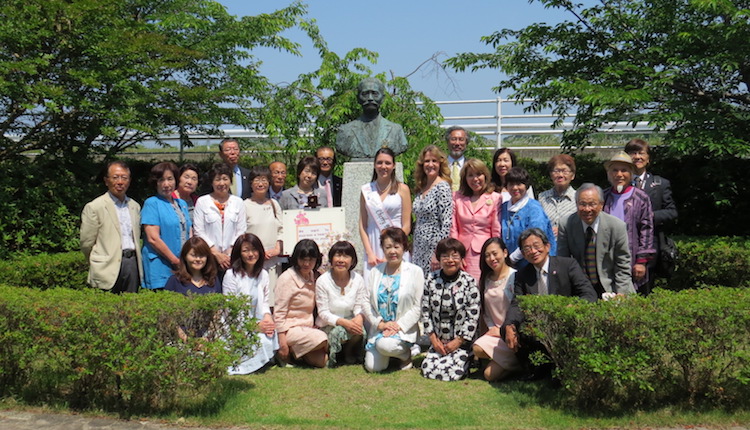
NEW DELHI (IDN) – When Indian Prime Minister Narendra Modi arrived on May 14 in the historic city of Xian, at the start of his three-day visit to China, he was almost immediately taken by Chinese President Xi Jinping to the Wild Goose Pagoda that symbolise the two countries’ umbilical cultural ties, thus setting the tone for the important visit. Xian is where the ancient Silk Route began.

This Buddhist temple which is today a major tourist attraction in China, and where the Chinese Buddhist scholar monk Xuanzang spent many years of his later life translating some 35 volumes of Buddhist scriptures into Chinese that he collected during 16 years he spent at Nalanda University in India in the 7th century. It is these volumes that helped to spread Buddhism across much of East Asia and later helped Indian scholars to find out about Nalanda University after Muslim Turkic invaders burned Nalanda into ashes in the 12th century.

Thus these two-way civilizational exchanges are significant milestones as Asia’s two leading civilizations led by two visionary leaders embark on building a new economic and cultural relationship that could transform the world.

Poland Asked to Reduce Reliance on Fossil Fuels

By Jaya Ramachandran | IDN-InDepthNews Report

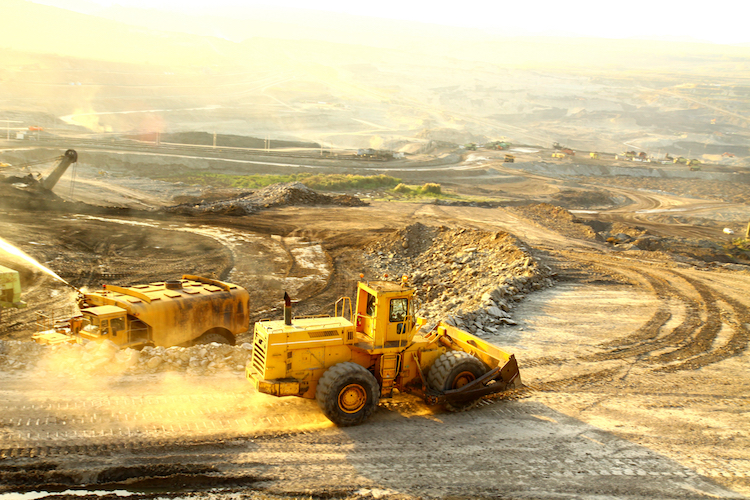
PARIS (IDN) – In a carrot-and-stick approach, the 34-nation Organisation for Economic Co-operation and Development (OECD) has commended Poland for having combined robust economic growth with reducing some of the pressures on its environment since it joined the European Union in 2004. At the same time, it asks Poland to decrease its economy’s reliance on fossil fuels and make growth greener.

Sri Lanka’s Souring ‘Revolution’

By Kalinga Seneviratne* | IDN-InDepthNews Analysis

COLOMBO (IDN) – It was a well-spelled out 100-day program to rid the country of endemic political corruption presented to the electorate by challenger Maitripala Sirisena that helped to topple Sri Lanka’s powerful president Mahinda Rajapakse in a shock vote on January 8 this year.

Liberia Needs a Marshall Plan

By Mirjam van Reisen* | IDN-InDepthNews Analysis

BRUSSELS (IDN) – At the height of the Ebola-crisis, scenarios predicted the deaths of around 1.4 million people, or around 20.000 deaths a month. Now the World Health Organization (WHO) has declared Ebola-free. This means that no new cases have been diagnosed in the last 42 days. The total number of lives claimed by the disease in Liberia is 10,722 deaths. What lessons can be drawn from this and what should be done now?

News of a first Ebola patient in Liberia was spread in March 2014. A doctor at a large public hospital in Monrovia had attended a meeting at the University and left that same night to sound the alarm. The danger was immediately recognised by the leaders of the healthcare system in Liberia. Nonetheless, a large number of doctors and healthcare workers died in the first period, because the knowledge and means to properly face and control the disease were lacking.

India-Denmark Relations at Their Lowest

By Shastri Ramachandaran | IDN-InDepthNews Viewpoint

NEW DELHI (IDN) – The Royal Danish Embassy in New Delhi is a reminder that Denmark has fallen off the map of India’s Ministry of External Affairs (MEA). Neither the change at the helm – from Manmohan Singh as prime minister to Narendra Modi – nor foreign secretary Sujatha Singh being replaced by S Jaishankar has altered Denmark’s situation.

The Government of India (GoI) barely acknowledges the Danish embassy as a diplomatic entity, which is kept out of official programmes. However, the embassy does not deny a visa to any Indian, including journalists, who want to visit the land of Hans Christian Andersen, known for famous fairy tales, including The Little Mermaid and The Emperor’s New Clothes.

OECD Urges Reforms for More Inclusive Growth in Japan

By Taro Ichikawa | IDN-InDepthNews Report

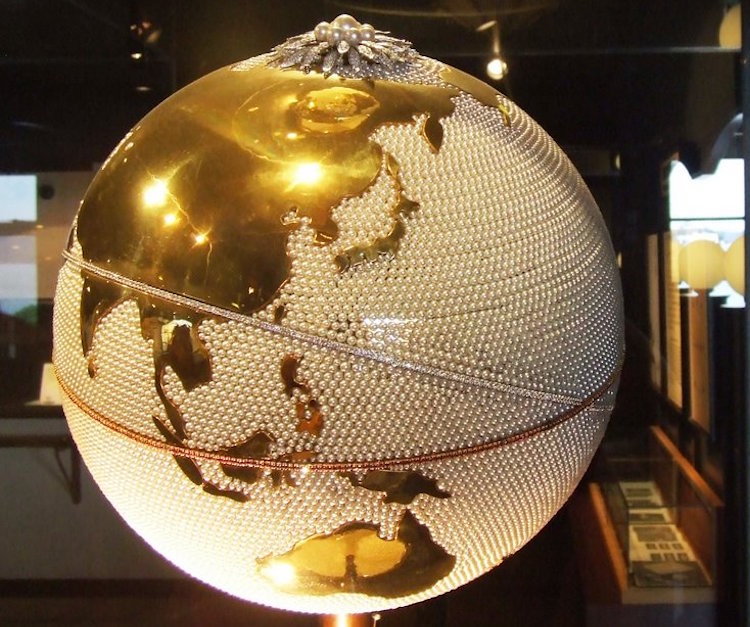
TOKYO (IDN) – The 34-nation Organisation for Economic Co-operation and Development (OECD) has called for narrowing “gender inequality” as part of “reforms for more inclusive and stronger growth” in Japan. Presenting the OECD’s 2015 Economic Survey of Japan, the influential economic bloc’s Secretary-General Angel Gurría also pleaded for boosting productivity that, he said, was “key to unlocking stronger growth”.

No Signs Yet Of Mass Destruction Weapon-Free Middle East

By Ramesh Jaura | IDN-InDepthNews Analysis

BERLIN (IDN) – In run-up to the four-week-long quinquennial review of the landmark Nuclear Non-Proliferation Treaty (NPT), the goal of a Middle East free of the weapons of mass destruction (WMD) and their means of delivery remains a distant dream. And so does the Helsinki Conference that should have been convened in December 2012.

All indications are that also the Foreign Ministers of the Group of Seven (G7) influential countries of the world – Canada, France, Germany, Great Britain, Italy, Japan, and the United States – do not see a silver lining on the horizon. They met ahead of G7 summit June 7-8.

Begin typing your search term above and press enter to search. Press ESC to cancel.

Back To Top