Uruguay Joins Prestigious OECD Development Centre

By Jaya Ramachandran | IDN-InDepthNews Report

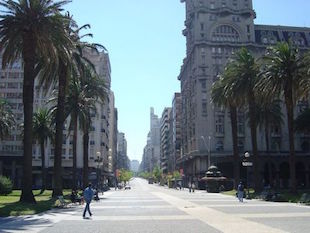
BERLIN | PARIS (IDN) – Uruguay has become the 10th member country in Latin America and the Caribbean to join a group of 50 OECD and non-OECD countries that are already members of the Development Centre of the Organisation for Economic Co-operation and Development.

Explaining the accession, a press release said, Uruguay’s structural characteristics, development experience and challenges offer rich opportunities for knowledge sharing among the Centre’s member countries.

Since its banking and financial crisis in 2002, it added, Uruguay has made remarkable progress. Stable macroeconomic policies and a favourable external environment permitted brisk growth and the financing of social policies, yielding the longest period of economic growth in decades.

U.S. Hedge Fund Threatens Use of Free Trade Accord to Sue Peru

By INPS* | IDN-InDepthNews Analysis

Washington DC (IDN) – An emerging-markets focused U.S. hedge fund that bought Peru’s 5.1 billion dollar decades-old military debts is threatening to sue the country.

Gramercy argues that the Peruvian government’s current repayment plan is inadequate and that if payments do not increase, it will sue Peru through a tribunal system embedded in the United States-Peru Free Trade Agreement (PTPA) that entered into force on February 1, 2009.

UN Consolidating Rule of Law in Haiti

By J. C. Suresh | IDN-InDepth NewsReport

NEW YORK (IDN) – “The objective of every peacekeeping mission is for the national authorities to take over the responsibilities to which the mission makes its contributions,” says Sandra Honoré of Trinidad and Tobago, who is Special Representative of the UN Secretary-General for Haiti and Head of the United Nations Stabilization Mission there, known as MINUSTAH, a position she assumed in July 2013.

“The outcome I would like to see in Haiti is one in which the four areas of focus of the Mission in this phase of consolidation is fully taken over by the Government of Haiti, so the Mission can leave with satisfaction that the Government has fully taken up its responsibilities and that security in country is be assured by the National Police with, as I’ve said, at least a minimum of 15,000 agents, putting it into a good situation to keep developing,” Honoré adds.

Good News On Latin America and the Caribbean

By Daniela Estrada | IDN-InDepth NewsAnalysis

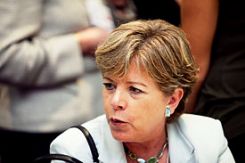
SANTIAGO DE CHILE (IDN) – Latin American and Caribbean countries registered an average global deficit of 2.4% of Gross Domestic Product (GDP) in 2013, but their fiscal revenues rose and kept their public debt situation stable, giving them more room to increase investment and social spending, according to a new study by the UN Economic Commission for Latin American and the Caribbean (ECLAC).

NATO Interests Colombia

By Peter Tase* | IDN-InDepth NewsAnalysis

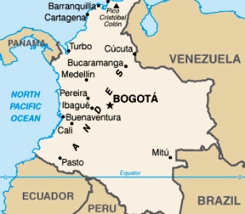
MILWAUKEE, Wisconsin (IDN) – Over the last two years, the Colombian government has given high priority to diplomatic efforts meant to shore up its immediate security situation, actively pursuing bilateral, trilateral and multilateral agreements with various governments in the region and beyond.

Colombia occupies a strategic position in the western hemisphere: it has a large territory connecting North America with the South, and it has enormous shores on both the Atlantic and Pacific coasts. This geostrategic advantage allows Colombia to act as a gate of entry for South America, and its network of sea ports processes a large volume of commodities and other shipments coming in and out of the United States and Europe on a daily basis.

Mixed Praise For Chile’s Economic Performance

By J C Suresh | IDN-InDepth NewsAnalysis

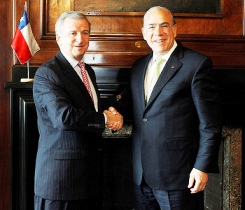
TORONTO (IDN) – Chile has received kudos for making significant economic progress in the previous three years but has been faulted for “some glaring inequalities”. A new study finds that – together with Mexico – Chile displays “the greatest inequality gap” in the 34-nation Organisation for Economic Co-operation and Development (OECD).

The average income of the wealthiest 10 percent in Chile and Mexico is 27 times that of the poorest 10 percent, in other words, a ratio of 27 to 1. By contrast, the OECD average is around 10 to 1, informs the 2013 Economic Survey of Chile.

Latin America: Headwinds Challenging Progress

By J C Suresh | IDN-InDepth NewsReport

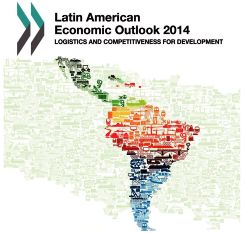
TORONTO (IDN) – Latin America has achieved economic growth and made significant progress in poverty reduction over the course of the last decade. But it is now facing headwinds, according to the latest Latin American Economic Outlook.

Jointly produced by the OECD Development Centre, the UN Economic Commission for Latin America and the Caribbean (UN ECLAC) and CAF – Development Bank of Latin America, the report was released in Panama City during the XXIII Ibero-American summit on October 18-19, 2013.

“Between 2003 and 2012, the region grew at an average annual rate of 4% thanks to the rapid rise of global trade and increasing commodity prices, and this despite the contraction brought about by the international financial crisis,” states the report.

Female Share in Latam Labour Market Rising

By Oscar Ugarteche, Valentina Ballesté* | IDN-InDepth NewsAnalysis

QUITO (IDN) – With no haste, but without pause, the participation of women in the labour market has seen accelerated growth since the 1970s, according to the Panorama Laboral 2012 of the International Labour Organization (ILO). There is a gradual closing of the differences in participation between men and women in the labour force.

The participation rate of women in Latin America in 2012 was 49.8%, the employment rate was 40.2% and the unemployment rate 7.7%, while for men the participation rate was 71.4%, employment 59.8% and unemployment 5.6%. (1)

The Myth and Reality of Venezuela-Iran Ties

By Ryan Mallett-Outtrim* | IDN-InDepth NewsAnalysis

CARACAS (IDN | Venezuelanalysis.com) – Two events that defy hawk logic have taken place in the same month. First, on June 5 United States secretary of state John Kerry met with Venezuela’s foreign minister, Elias Jaua, and stated that he had agreed to pursue a more “positive relationship” with Venezuela. Then, just weeks later, Iranians voted in a president who has openly argued against nuclear proliferation.

What happened? Iran and Venezuela’s amiable relationship of the last decade was supposed to be the sum of all fears for Washington. Two “tyrants”, Mahmoud Ahmadinejad and Hugo Chavez, were accused of co-sponsoring all sorts of wild, fantastical plots by Washington’s warmongers. But was the Iran-Venezuela relationship ever about crushing the “free world” by assembling an unholy alliance of druglords, Islamists and socialists, or is there a slightly saner explanation?

Behind the Brazilian ‘Spring’

By Ted Hewitt* | IDN-InDepth NewsViewpoint

LONDON, ONTARIO (IDN) – Much of the global media has focused on the protests occurring throughout Brazil. Almost all have drawn their own conclusions as to the cause of the tumult, and almost all in splendid contradiction. Similarly, there has been an enduring preoccupation in most news reports with the violence and looting associated with all such public demonstrations.

In reality, both the causes and the effects of the Brazilian protests are only poorly understood at this point; and for its part, the violence portrayed in the media has primarily been the exception rather than the rule.

Begin typing your search term above and press enter to search. Press ESC to cancel.

Back To Top