By Kester Kenn Klomegah*
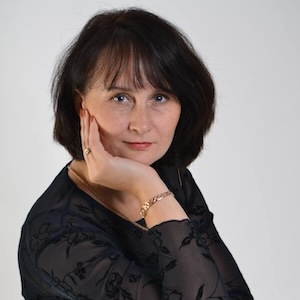
MOSCOW | 26 January 2026 (IDN) — A popular health science book titled “Traditional African medicine” represents the latest direction in interdisciplinary studies of African culture. This book, authored by Dr Lyuba Ivanova, Senior Researcher at the Institute of World History, Russian Academy of Sciences (Moscow), is primarily a historical study that outlines the major directions in the study of traditional African medicine.
The first volume presents a study of healing practices in Northeast Africa. Significant support was provided to the author by members of the African diaspora in the Russian Federation, and the book uses materials from the archives of Soviet medical doctors working in Ethiopia and Somalia, video footage, and field observations by the author, as well as foreign dissertations and several articles on problems of African medicine.
Russians are well-versed in Chinese and Ayurvedic medicine; the general public also has an idea of African medicine, usually picturing a sorcerer in leather, muttering something unreal.
Currently, graduates from African countries, more often than not, who received medical education in the USSR and now in the Russian Federation, perform therapeutic rituals in which a variety of medical treatments are applied.
The author’s combination of medicines is available in the Russian Federation. Their clients typically become the same patient-experimenters who practice alternative forms of Eastern medicine.
There is an obvious need to translate individual ritual healing practices to enhance their effectiveness and create a holistic medical practice. Scientific research should contribute to a more accurate perception of African traditional medicine in Russia, promote a “clear” image of Africa and African traditional healers, and foster the formation of another culture.
In our conversation mid-January 2026, Dr Lyuba Ivanova proposed to discuss the reasons behind the formation of a false perception of the primitiveness of African medicine and cited evidence of misinterpretation of healing practices and healers’ instructions.
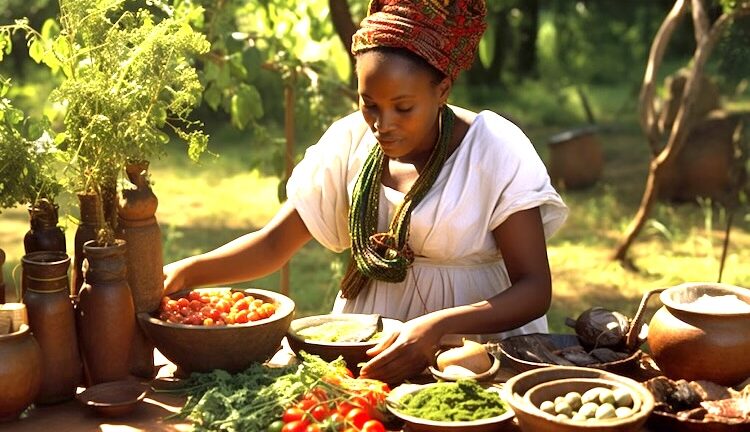
She gives classic examples of medicinal plants used in the region and their uses. The choice of plants is primarily due to their popularity among Russian readers.
L.V. Ivanova pointed out the real prospects for the effective use of traditional medicine in African countries, given the easy availability of drugs, their affordability, trusting relationships with healers, and a holistic approach.
However, she considers the main condition of effectiveness to be that the healer and their patients should be representative of the same culture. Here are excerpts of the conversation:
What is referred to as African’ traditional medicine’, and how does it differ from modern types produced in a pharmaceutical facility?
Lyuba Ivanova: African traditional medicine can be categorised as ‘mind and body medicine’, it’s a holistic discipline that encompasses folk medicine and African spirituality. It is because of this ‘wholeness’ that doubts arise as to whether African healers’ practices can, in fact, be called ‘medicine’.
Over time, the relevance of using folk remedies not only diminishes but also becomes less popular, especially when we’re talking about it within the same culture where patient and healer share the same values and lead similar behaviours.
Biomedicine possesses several features that make patients choose traditional treatment: easy availability and cheapness of medicines, belief in the healing abilities of the healer who is part of the community, individualised approach to each patient, providing comprehensive services, personal involvement of diseases as curable or incurable, and the sacredness of the healer’s knowledge. Of course, charlatans and those who want to cash in on others are found in both traditional and biomedicine.
Do we also have traditional medicine, for instance, in Asian and European regions?
Lyuba Ivanova: Traditional, or folk, medicine is everywhere. It’s one of the oldest healing modalities out of which, actually, biomedicine grew. However, in different countries, the state’s position towards it varies substantially. For example, the popularity of Chinese and Ayurvedic medicine in African countries is explained by the similarity of forming a relationship between patient and healer, the use of natural remedies in treatment, but the medicine is not traditional due to competition from African locals, as local authorities do not support it to the extent that it occurs in China and India.
That is, the government’s position determines the popularity of traditional medicine. In each African country, state healthcare priorities are ranked differently.
And how different are these from African traditional medicine?
Lyuba Ivanova: Traditional medicine, as I have earlier explained, reflects local features of the landscape, religious and cultural representations. Notably, Africans across different parts of the continent use characteristic, centuries-old remedies that may be effective only for certain groups, given their lifestyles, diets, and physiological characteristics.
The healing process combines herbal remedies with therapies that consider the psychological, physical, and social aspects of illness. Even for members of the African diaspora, the same local medical treatments may not work due to changes in climate, diet, and lifestyle.
The examples given in the book clearly demonstrate that what seems at first glance to be simplicity, or even primitivism, in representations of healing in Africa actually has deep cultural roots, and pre-existing cultures beyond vision with the advent of biomedicine and Western standards of medicine that eroded the notion of individuality and the paradigm of integrated human health.
What are the motivating forces for your research into these traditional aspects of medical practice?
Lyuba Ivanova: The study of African traditional medicine is an interdisciplinary field of research that involves social and medical anthropology, knowledge of African languages and history, and the readiness to conduct field research. Working as a consultant for the Union of African Diaspora in the Russian Federation helps me seek clarifications on specific issues from representatives of the African diaspora who are willing to help and offer interesting remarks.
This book is the result of applying my knowledge gained during my 10-year training at Moscow State University’s Institute of Asian and African Studies, and from field research in the North East African region and the UK. Perhaps my personal frustration with evidence-based medicine physicians who, denying the value of traditional tools and practices, has played no small role here.
What can you say, concretely, are the main results of years of studying traditional medicine, especially with a focus on the African context?
Lyuba Ivanova: The study of African medicine clearly demonstrates the broad prospects of its application at the present stage, “returning people to their roots”, although this is quite difficult to do in today’s technological world. Not sure a symbiosis of traditional and biomedicine will prove to be the best solution. Although the field of midwifery is well able to interact, involving especially local healers in remote urban settlements, local healers are to carry out the ‘management’ of pregnant patients.
Think it pays to provide patients with the option to choose the most appropriate treatment modality for them, given a variety of circumstances, including the type of services required. As research studies show, in treating illnesses related to people with a mental health condition, traditional healers are found to be the most effective. Think their help can be helpful for patients with “incurable” diseases.
What are the possible impacts on and future perspectives for the healthcare delivery system in Africa and elsewhere in the world?
Lyuba Ivanova: Outcomes of applying traditional methods of healing may include the revival of conventional healing culture, the more effective use of local medicinal plants, the composition of a pharmacopoeia, and the conduct of laboratory tests to confirm their properties.
There’s no doubt that traditional medicine will have a hard time standing up to Western pharmaceutical companies that can take the initiative and use the same plants, but already offer them in the form of expensive medicines.
The absence of a register of healers and the impossibility of compiling one will lead to the emergence of charlatans who will undermine the population’s faith in local medicine.
Would you finally agree that ‘nature’ has a wonderful gift for ensuring human health?
Lyuba Ivanova: No doubt, but given the environmental changes. For me, the most essential thing is complexity in treatment. In the application of traditional remedies, not only the medicine itself and its dosage are imperative, but also the ritual of its consumption, the philosophy of treatment itself, the visit to places of extraordinary healing power, and the authority of the healer. And to repeat, traditional medicine is efficient within the conventional way of life. So, in the end, everyone must seek practical solutions to health problems within their diverse conventional cultures.
*Kester Kenn Klomegah focuses on current geopolitical changes, foreign relations and economic development-related questions in Africa with external countries. Most of his well-resourced articles are reprinted in several reputable foreign media. [IDN-InDepthNews]