
By Busani Bafana
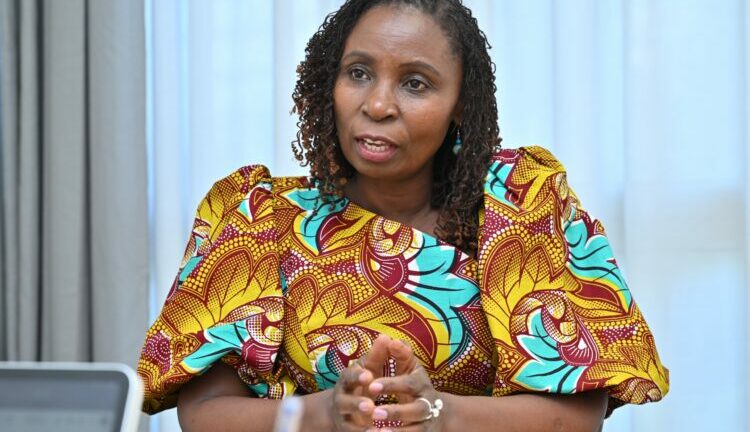
ADDIS ABABA, Ethiopia | 3 December 2025 (IDN)-Dr. Joan Kagwanja is the coordinator of the African Land Policy Centre, driving transformative land reforms across the continent. With decades of expertise, she champions policies that secure land rights for women, youth, and rural communities, while promoting pathways to restore land justice and position Africa for sustainable development. Dr. Kagwanja spoke to Indepth News on the sidelines of the Conference on Land Policy in Africa held in Addis Ababa, Ethiopia. Excerpts:
The African Union launched the Framework and Guidelines on Land Policy in Africa in 2009. How do you see these guidelines empowering African countries to tackle corruption in the land sector and the loss of land rights, especially for women and the youth?
The African Union not only launched the guidelines in 2009 but also endorsed a declaration on land issues and challenges. The African Union Heads of State and Government committed themselves to using the framework and guidelines for policy development and implementation, as well as to specific interventions. One of them was to reform the land sector through their ministries to address the land issues that continue to challenge Africa’s development. They also committed themselves to addressing issues of equity, i.e., equal land access for women and, indeed, for all land users. Since 2009, we have been supporting member states in implementing this declaration by developing programmes, tools, and guidelines. We developed guidelines for engaging in investments, including large-scale agricultural investments, without disenfranchising African communities and ensuring that smallholder farmers, pastoralists, and women are at the centre of those investments. We have also developed guidelines for curriculum development on land governance in Africa, which help universities develop degree and certificate courses to enhance skills to address Africa’s land issues effectively. We also developed guidelines for preventing and addressing conflict, as we know most conflicts in Africa are land-related. Most recently, we developed guidelines that strengthen women’s land rights. So all these tools and commitments form the foundation for stakeholder interventions and the basis for holding governments to account, including on tackling corruption in the land sector. In 2019, we had a conference focused on corruption in the land sector. A lot of knowledge emerged, and many programmes were developed, but we continue to see the land sector as quite corrupt.
What policy and legal reforms are needed to promote women’s right to inherit and access land, given that women are in many cases excluded from land ownership in Africa?
We have seen positive improvements through constitutional and legal reforms and inclusive policies. So, in most cases, we cannot say that the legal framework is a problem for women’s access to land. We have worked with governments to review their legislative acts in Parliament to see how we might mainstream gender. Constitutions have been fundamental in ensuring there are no clawbacks: we say we respect customs, but if those customs adversely impact women, they should not be allowed. In many countries, there are provisions in the law, and what remains is practice. With women’s land rights, it’s not just an issue of law; it’s an issue of practice, of empowering and engaging, mainly traditional authorities, who allocate and manage most of the land in Africa. Through the Forum for African Traditional Authorities, established in 2016, traditional leaders are addressing the issue of women’s land rights by allocating land to women and youth.
What programmes and models have worked in facilitating land rights in Africa at a time when the continent is promoting investment on the back of the African Continental Free Trade Area?
The basis of trade is usually the products we produce, and in many, many African countries, those are agricultural products. So, ensuring that trade itself and increasing trade do not have unintended consequences for the land is key. Land values rise when demand for land increases. When land values rise, those without documented rights are the ones who suffer. We always, if you look at the guidelines on scale-and-land-based investments, talk about documenting land rights. If possible, invite investors to the land before inviting others, so you know who claims the land and how you might be able to include them in inclusive investment models. If for instance, they are using the land for production themselves, look for land uses by investors which include them in outgrower type schemes or such where they can also productively use the land as opposed to them becoming squatters on the land or, in many cases, labourers on the land. The kinds of models that we have seen that are most inclusive are those that rely on solid data that can document the suitability of the land on the one hand, vis-a-vis the country’s vision and strategy for development, and so you’re choosing, for instance, crop and livestock investments based on what your strategy says you should. But the next step is to look at those already using the land and what they are using it for, and then include them in deciding the ‘what’ and ‘how’ of the investment.
We recommend that, as much as possible, you do not sell the land to investors because compensation issues are complex, and land values are not only monetary but also spiritual and cultural. So many things sometimes go wrong when people lose their land. This particular framework, provided by the guidelines on large-scale land-based investments, offers an avenue for responsible investment. We are encouraging the sharing of best practices on what is working out there, because the first wave of large-scale investments post-2008 did lead to the type of increase in production expected. This is because you had communities that were disenfranchised, leading to conflict, and we encourage adopting evidence-based models, including answering the question of who claims that land, to engage them in investment-related negotiations.
The 2025 Conference on Land Policy in Africa discussed colonial reparations for land dispossession. How do you see reparations correcting the past wrongs where women have been denied land access and land rights?
It starts by understanding the impacts of colonialism on Africans’ lives. Land dispossession is not just an economic issue but a social and cultural one. The basis of the struggle for independence in many countries was land, and reclaiming it from their settlers. Since then, we have not put in place programmes to ensure that those who lost their land regain it, with the understanding that land is not just a factor of production but a basis for our cultural heritage, for religion, and for spirituality. We need to re-examine the question, ‘What was lost and what needs to be regained, and how can we do it ?’. This is what underlies historical injustices. Colonialism affected what we grow, which is not usually our food or the basis of biodiversity. What we grow can form a basis for trade. We need to review our AfCFTA agenda and determine the basis of our trade. Instead of continuing to focus only on cash crops, many of which were brought to Africa during colonialism, can we refocus on producing and trading food-related products, which have a ready demand on the continent, to address Africa’s food insecurity challenge?
What is the African Land Policy Centre doing to build the capacity of the next land experts in shifting the narrative about the colonial land dispossession in Africa?
The African Land Policy Centre was established because we noticed that we have very few professionals in the land sector in Africa. Each country has very few; we have very few surveyors, for instance. You can have a whole country with only 15 licensed surveyors and other professionals. So we conducted a capacity gap assessment, focusing on the land sector to identify gaps in professionals and overall capacity in land governance. We also assessed the curricula offered by universities through a comprehensive review and found that our curricula are mostly borrowed from our colonial masters. This needed to change as legitimate traditional land governance systems are not being included in the curricula. We have so far supported the application of these guidelines to develop over 30 curricula and supported land professionals across African universities by establishing a network of excellence on land governance in Africa (NELGA).
NELGA helps to enhance university education and training of policymakers. We also established a journal on land policy and geospatial sciences, housed by a university in Morocco, but it’s a continental journal publishing African peer-reviewed papers. Most of the papers published have been presented at the Conference on Land Policy in Africa by African researchers. (IDN-InDepthNews)
Image: Dr Joan-Kagwanja, Coordinator, Africa Land Policy Centre. Credit: Daniel Getachew