
By Michael von der Schulenburg*
BRUSSELS | 5 March 2026 (IDN) — In the Western world today, there are an alarming number of politicians and media outlets that justify or even welcome military action by the United States and Israel against the Islamic Republic of Iran. Driven by the self-righteousness we are so familiar with, many believe that the US is once again standing up for good in the fight against evil. That is precisely why it is urgently necessary to pause and reflect. For with this war, the US and Israel are committing a crime of enormous proportions – not only against Iran, but ultimately also against themselves and against all of us. This war could have opened a gate to hell, at the end of which the West will stand as the loser.
This war is likely to be long and bloody.
Echoes of the Iraq War
Much of this is reminiscent of the start of the Iraq War in 2003. Back then, too, an American president was obsessed with the idea of ‘liberating’ Iraq from its dictator. Back then, George W. Bush also claimed that the regime had weapons of mass destruction from which the world needed to be protected. And a servile British Prime Minister, Tony Blair, even declared that Saddam Hussein could attack London within 15 minutes. None of this was true.
The war was supposed to be over quickly; just one month later, Bush announced ‘mission accomplished.’ But that, too, proved to be an illusion. Iraq sank into a brutal civil war, and one of the most dangerous terrorist organisations of our time arose from the ruins of the country: the so-called Islamic State. Many of the Iraqis who were supposedly to be ‘liberated’ paid with their lives and with the destruction of their country. Estimates speak of up to one million dead, some even of two or three million. The consequences of this war still weigh heavily on Iraq today, 23 years later.
We should remember all this, because much of it now seems to be repeating itself. The US and Israel are currently waging war against Iran, justifying this with alleged nuclear weapons, knowing full well that Iran does not possess any nuclear bombs and is not building any.
Once again, it is said that the Iranians must be ‘liberated,’ and once again, everything must happen quickly. But in Iran, the consequence of this invasion could be even more devastating than in Iraq. The population is twice as large, highly educated, and despite internal tensions, the country is more stable in terms of organisation. It has a stronger military, and its political system will not collapse with the elimination of individual leaders. In addition, Iran is now a member of the BRICS and is supported – albeit not openly – by Russia and China.
While the Bush administration at least claimed to be rebuilding Iraq politically and economically, the actions of the US and Israel today are aimed exclusively at destruction from the air. This will certainly not improve the chances of this invasion succeeding.
Could the West Lose?
Could the US and Israel lose this war, too?
Contrary to President Trump’s announcements, this conflict is unlikely to end quickly. On the contrary, there are many indications that we are facing a long, extremely bloody and costly war – a war that the US and Israel could lose both militarily and politically and morally. The consequences for the entire West would be considerable.
The outcome of this war could be decided less on the battlefield than by internal political developments in Iran, the US, Israel and neighbouring Arab states. In this respect, the US and Israel appear to be at a disadvantage. Their strategy – if one can speak of a clear strategy at all – is based on a ‘decapitation strike’. The hope was that the rapid elimination of the Iranian leadership would lead to massive uprisings in Iran and that parts of the armed forces would switch sides to the insurgents, causing the Islamic Republic to collapse. Although the decapitation strike appears to have been successful, neither an uprising nor a military coup has occurred so far – despite repeated appeals from Trump. We are already on the fourth day of the war, and the Iranian leadership has absorbed this blow remarkably well. There are no reports of tensions between the numerous centres of power in Iran. With each passing day, the likelihood of an internal uprising and military coup decreases. This would mean that the US-Israeli strategy has failed.
Political Risks for the US and Israel
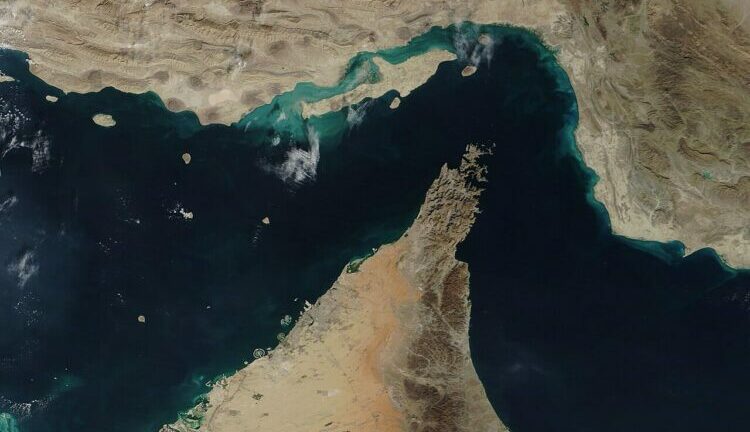
The war is extremely unpopular in the US – especially among Trump voters who trusted his promise not to start any new wars. With every new report of destruction, civilian casualties – including the 160 schoolgirls killed – and fallen US soldiers, domestic political resistance will grow. Added to this is the danger of a political rift between the US and Israel, whose interests in this conflict are far apart. Israel is already losing support in the US, even among evangelical groups in the Bible Belt. The sharp rise in energy prices resulting from the blockade of the Strait of Hormuz is further dampening the mood. Trump is facing midterm elections in November. If he fails to end the war quickly with a victory, the elections could be disastrous for him. Time is running out for him, while it is working in Iran’s favour. It is therefore not surprising that Trump has now raised the possibility of new negotiations with Tehran on several occasions. But Tehran is unlikely to respond.
A rethink could also be underway in the Arab Gulf states, which are densely dotted with US military bases. Iran is not only attacking US bases there, but increasingly also targets in the Gulf states themselves. With simple, inexpensive drones, it is forcing the US and its partners to deploy expensive and difficult-to-replace defensive missiles. Many Gulf states are therefore likely to question how reliable American security guarantees really are – especially since the US has so far been unable to counter Iranian attacks.
For Israel, the question arises as to how long it can withstand even more intense Iranian missile attacks. Iranian missiles are already breaking through the Iron Dome, David’s Sling and Arrow 2 and 3 systems. The situation could escalate further. Israel has exposed itself to enormous risk with this war. It has not been able to decisively win any of its recent conflicts – neither in Gaza, the West Bank, Syria, nor against Hezbollah in Lebanon or the Houthis in Yemen. A defeat in the war against Iran could therefore present the Israeli state with unprecedented existential challenges.
Damage to the West
The war against Iran is causing serious damage to the West.
The war against Iran began on 28 February with a ruthlessness that is hard to surpass. Even while promising negotiations were still ongoing and contrary to all international norms, Israel killed a large part of the Iranian leadership in a massive surprise missile attack – including the religious and state leader and members of his family in their residence. The images shown on Al Jazeera reveal only pulverised remains of walls; the intention was clearly to ensure that no one was spared. Describing the attack as a ‘decapitation strike’ is in itself evidence of a profound moral decline. The fact that European governments are also remaining silent on this action will weigh heavily on the entire West for a long time to come.
Yet Iranian negotiators had made significant concessions in Geneva on 26 February. A senior US government official confirmed to Axios magazine that considerable progress had been made. The Omani foreign minister, who acted as mediator, also spoke of a breakthrough. On 27 February, President Trump stated that he preferred a diplomatic solution to war. However, by that point, the decision to attack the following day must already have been made. So was it the case, as many observers suspected, that the US and Israel were only pretending to negotiate in order to lull the Iranian government into a false sense of security? Such a move would be an unprecedented breach of trust in the modern world.
This war has not only destroyed trust in the sincerity of the West. It has also finally destroyed international law based on the UN Charter – the very law that the West itself once created.
Relations with the UN Charter have always been tense, especially in Israel and the US. But the breach in connection with the attack on Iran is unprecedented. Whereas President George W. Bush still attempted – albeit in vain – to obtain a Security Council mandate for the Iraq war in 2003, President Trump did not ask anyone, not even his own Congress. In doing so, he has thrown open the door to a world order based solely on the law of the strongest. The fact that all this is happening without any outcry in the Western world says a lot about the intellectual and moral state of our societies.
The war will also undermine all efforts to curb the proliferation of nuclear weapons. Although the US and Israel claim that this war is intended to prevent the proliferation of nuclear weapons, they are likely to achieve the opposite. Their actions will reinforce the conviction in many countries that only the possession of nuclear weapons can protect against such attacks. The US and Israel – both nuclear powers – were only able to attack Iran because it did not possess nuclear weapons and was not on the verge of developing them. If Iran had nuclear weapons, this war would most likely never have happened.
And what does all this mean for us Europeans? Once again, we are unable to find the right words and the right attitude. As in the lost war in Ukraine, we are adopting the same bellicose rhetoric and the same empty threats, without any influence of our own. But long after the Americans have crossed the Atlantic to safety, we will be left sitting on the ruins and the enormous costs of a lost war in Iran. Europe may end up paying not only for the fallout from a lost Ukraine war, but also soon for a lost Iran war.
Many American politicians once regretted ever having gone to war in Iraq. We will all soon lament the current war with Iran as a cardinal mistake. But by then it will be too late. The damage will already have been done.
*Michael von der Schulenburg—a current member of the European Parliament—is a former Assistant Secretary-General (ASG) of the United Nations, who worked for the world organisation for more than three decades in development and peace missions in several crisis regions of the world, including Afghanistan, Iran, Iraq, Pakistan, Haiti, Somalia, Syria and Sierra Leone. He has published extensively on issues of war and peace, non-state armed actors and UN reform. [IDN-InDepthNews]